

212
R.H. Charlier and Chr. P. De Meyer
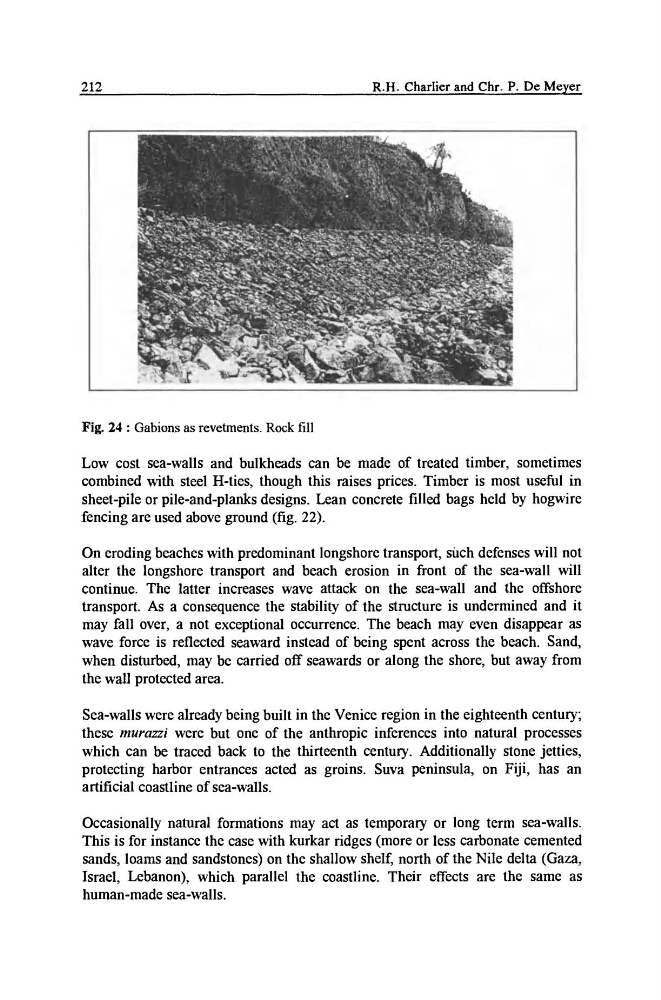
Fig. 24 : Gabions as revetments. Rock fill
Low cost sea-walls and bulkheads can be made of treated timber, sometimes
combined with steel H-ties, though this raises prices. Timber is most useful in
sheet-pile or pile-and-planks designs. Lean concrete filled bags held by hogwire
fencing are used above ground (fig. 22).
On eroding beaches with predominant longshore transport, silch defenses will not
alter the longshore transport and beach erosion in front of the sea-wall will
continue. The latter increases wave attack on the sea-wall and the offshore
transport. As a consequence the stability of the structure is undermined and it
may fall over, a not exceptional occurrence. The beach may even disappear as
wave force is reflected seaward instead of being spent across the beach. Sand,
when disturbed, may be carried off seawards or along the shore, but away from
the wall protected area.
Sea-walls were already being built in the Venice region in the eighteenth century;
these murazzi were but one of the anthropic inferences into natural processes
which can be traced back to the thirteenth century. Additionally stone jetties,
protecting harbor entrances acted as groins. Suva peninsula, on Fiji, has an
artificial coastline of sea-walls.
Occasionally natural formations may act as temporary or long term sea-walls.
This is for instance the case with kurkar ridges (more or less carbonate cemented
sands, loams and sandstones) on the shallow shelf, north of the Nile delta (Gaza,
Israel, Lebanon), which parallel the coastline. Their effects are the same as
human-made sea-walls.
R.H. Charlier and Chr. P. De Meyer
Fig. 24 : Gabions as revetments. Rock fill
Low cost sea-walls and bulkheads can be made of treated timber, sometimes
combined with steel H-ties, though this raises prices. Timber is most useful in
sheet-pile or pile-and-planks designs. Lean concrete filled bags held by hogwire
fencing are used above ground (fig. 22).
On eroding beaches with predominant longshore transport, silch defenses will not
alter the longshore transport and beach erosion in front of the sea-wall will
continue. The latter increases wave attack on the sea-wall and the offshore
transport. As a consequence the stability of the structure is undermined and it
may fall over, a not exceptional occurrence. The beach may even disappear as
wave force is reflected seaward instead of being spent across the beach. Sand,
when disturbed, may be carried off seawards or along the shore, but away from
the wall protected area.
Sea-walls were already being built in the Venice region in the eighteenth century;
these murazzi were but one of the anthropic inferences into natural processes
which can be traced back to the thirteenth century. Additionally stone jetties,
protecting harbor entrances acted as groins. Suva peninsula, on Fiji, has an
artificial coastline of sea-walls.
Occasionally natural formations may act as temporary or long term sea-walls.
This is for instance the case with kurkar ridges (more or less carbonate cemented
sands, loams and sandstones) on the shallow shelf, north of the Nile delta (Gaza,
Israel, Lebanon), which parallel the coastline. Their effects are the same as
human-made sea-walls.