

38
K. Myrberg and A. Lehmann
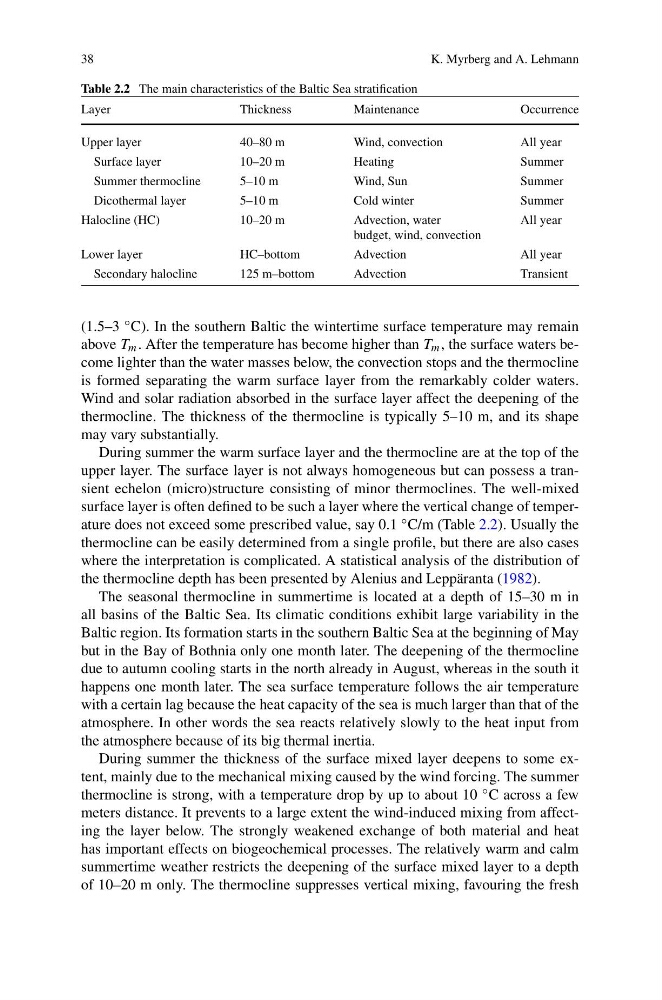
Table 2.2 The main characteristics of the Baltic Sea stratification
Layer
Thickness
Maintenance
Occurrence
Upper layer
40–80 m
Wind, convection
All year
Surface layer
10–20 m
Heating
Summer
Summer thermocline
5–10 m
Wind, Sun
Summer
Dicothermal layer
5–10 m
Cold winter
Summer
Halocline (HC)
10–20 m
Advection, water
budget, wind, convection
All year
Lower layer
HC–bottom
Advection
All year
Secondary halocline
125 m–bottom
Advection
Transient
(1.5–3 ◦ C). In the southern Baltic the wintertime surface temperature may remain
above T m . After the temperature has become higher than T m , the surface waters become lighter than the water masses below, the convection stops and the thermocline
is formed separating the warm surface layer from the remarkably colder waters.
Wind and solar radiation absorbed in the surface layer affect the deepening of the
thermocline. The thickness of the thermocline is typically 5–10 m, and its shape
may vary substantially.
During summer the warm surface layer and the thermocline are at the top of the
upper layer. The surface layer is not always homogeneous but can possess a transient echelon (micro)structure consisting of minor thermoclines. The well-mixed
surface layer is often defined to be such a layer where the vertical change of temperature does not exceed some prescribed value, say 0.1 ◦ C/m (Table 2.2). Usually the
thermocline can be easily determined from a single profile, but there are also cases
where the interpretation is complicated. A statistical analysis of the distribution of
the thermocline depth has been presented by Alenius and Leppäranta (1982).
The seasonal thermocline in summertime is located at a depth of 15–30 m in
all basins of the Baltic Sea. Its climatic conditions exhibit large variability in the
Baltic region. Its formation starts in the southern Baltic Sea at the beginning of May
but in the Bay of Bothnia only one month later. The deepening of the thermocline
due to autumn cooling starts in the north already in August, whereas in the south it
happens one month later. The sea surface temperature follows the air temperature
with a certain lag because the heat capacity of the sea is much larger than that of the
atmosphere. In other words the sea reacts relatively slowly to the heat input from
the atmosphere because of its big thermal inertia.
During summer the thickness of the surface mixed layer deepens to some extent, mainly due to the mechanical mixing caused by the wind forcing. The summer
thermocline is strong, with a temperature drop by up to about 10 ◦ C across a few
meters distance. It prevents to a large extent the wind-induced mixing from affecting the layer below. The strongly weakened exchange of both material and heat
has important effects on biogeochemical processes. The relatively warm and calm
summertime weather restricts the deepening of the surface mixed layer to a depth
of 10–20 m only. The thermocline suppresses vertical mixing, favouring the fresh
K. Myrberg and A. Lehmann
Table 2.2 The main characteristics of the Baltic Sea stratification
Layer
Thickness
Maintenance
Occurrence
Upper layer
40–80 m
Wind, convection
All year
Surface layer
10–20 m
Heating
Summer
Summer thermocline
5–10 m
Wind, Sun
Summer
Dicothermal layer
5–10 m
Cold winter
Summer
Halocline (HC)
10–20 m
Advection, water
budget, wind, convection
All year
Lower layer
HC–bottom
Advection
All year
Secondary halocline
125 m–bottom
Advection
Transient
(1.5–3 ◦ C). In the southern Baltic the wintertime surface temperature may remain
above T m . After the temperature has become higher than T m , the surface waters become lighter than the water masses below, the convection stops and the thermocline
is formed separating the warm surface layer from the remarkably colder waters.
Wind and solar radiation absorbed in the surface layer affect the deepening of the
thermocline. The thickness of the thermocline is typically 5–10 m, and its shape
may vary substantially.
During summer the warm surface layer and the thermocline are at the top of the
upper layer. The surface layer is not always homogeneous but can possess a transient echelon (micro)structure consisting of minor thermoclines. The well-mixed
surface layer is often defined to be such a layer where the vertical change of temperature does not exceed some prescribed value, say 0.1 ◦ C/m (Table 2.2). Usually the
thermocline can be easily determined from a single profile, but there are also cases
where the interpretation is complicated. A statistical analysis of the distribution of
the thermocline depth has been presented by Alenius and Leppäranta (1982).
The seasonal thermocline in summertime is located at a depth of 15–30 m in
all basins of the Baltic Sea. Its climatic conditions exhibit large variability in the
Baltic region. Its formation starts in the southern Baltic Sea at the beginning of May
but in the Bay of Bothnia only one month later. The deepening of the thermocline
due to autumn cooling starts in the north already in August, whereas in the south it
happens one month later. The sea surface temperature follows the air temperature
with a certain lag because the heat capacity of the sea is much larger than that of the
atmosphere. In other words the sea reacts relatively slowly to the heat input from
the atmosphere because of its big thermal inertia.
During summer the thickness of the surface mixed layer deepens to some extent, mainly due to the mechanical mixing caused by the wind forcing. The summer
thermocline is strong, with a temperature drop by up to about 10 ◦ C across a few
meters distance. It prevents to a large extent the wind-induced mixing from affecting the layer below. The strongly weakened exchange of both material and heat
has important effects on biogeochemical processes. The relatively warm and calm
summertime weather restricts the deepening of the surface mixed layer to a depth
of 10–20 m only. The thermocline suppresses vertical mixing, favouring the fresh