

j. van der Weide· L. de Vrees
cators are monitored and the results are evaluated by means of the system shown in
the upper box. Both natural and socio-economic aspects should be considered, indicating that the above indicators are of a "green" nature.
Unfortunately, natural and socio-economic indicators are expressed in different
units, conversion of these units into monetary units is difficult if at all possible. Reference is made to the publication "Coastal Zone Resources Assessment Guidelines". LOICZ
et al. 1995, for a detailed review of available and methods. It appears to be difficult to
define one performance indicator which includes both economic and environmental
values. It is common, therefore, to use a multi-criteria approach and to define indicators related to the natural system and indicators related to the socio-economic system.
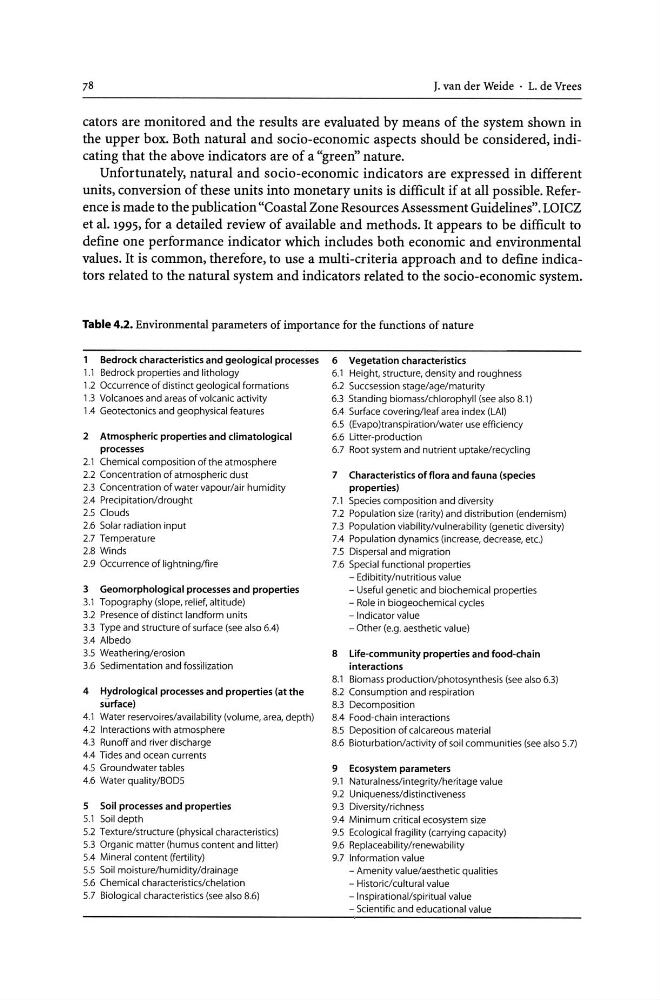
Table 4.2. Environmental parameters of importance for the functions of nature
Bedrock characteristics and geological processes
1.1 Bedrock properties and lithology
1.2 Occurrence of distinct geological formations
1.3 Volcanoes and areas of volcanic activity
1.4 Geotectonics and geophysical features
2 Atmospheric properties and climatological
processes
2.1 Chemical composition ofthe atmosphere
2.2 Concentration of atmospheric dust
2.3 Concentration of water vapour/air humidity
2.4 Precipitation/drought
2.5 Clouds
2.6 Solar radiation input
2.7 Temperature
2.8 Winds
2.9 Occurrence of lightning/fire
3 Geomorphological processes and properties
3.1 Topography (slope, relief, altitude)
3.2 Presence of distinct landform units
3.3 Type and structure of surface (see also 6.4)
3.4 Albedo
3.5 Weathering/erosion
3.6 Sedimentation and fossilization
4 Hydrological processes and properties (at the
surface)
4.1 Water reservoires/availability (volume, area, depth)
4.2 Interactions with atmosphere
4.3 Runoff and river discharge
4.4 Tides and ocean currents
4.5 Groundwater tables
4.6 Water quality/BODS
5 Soil processes and properties
5.1 Soil depth
5.2 Texture/structure (physical characteristics)
5.3 Organic matter (humus content and litter)
5.4 Mineral content (fertility)
5.5 Soil moisture/humidity/drainage
5.6 Chemical characteristics/chelation
5.7 Biological characteristics (see also 8.6)
6 Vegetation characteristics
6.1 Height, structure, density and roughness
6.2 5uccsession stage/age/maturity
6.3 Standing biomass/chlorophyll (see also 8.1)
6.4 Surface covering/leaf area index (LAI)
6.5 (Evapo)transpiration/water use efficiency
6.6 Litter-production
6.7 Root system and nutrient uptake/recycling
7 Characteristics of flora and fauna (species
properties)
7.1 Species composition and diversity
7.2 Population size (rarity) and distribution (endemism)
7.3 Population viability/vulnerability (genetic diversity)
7.4 Population dynamics (increase, decrease, etc.)
7.5 Dispersal and migration
7.6 Special functional properties
- Edibitity/nutritious value
- Useful genetic and biochemical properties
- Role in biogeochemical cycles
- Indicator value
- Other (e.g. aesthetic value)
8 Life-community properties and food-chain
interactions
8.1 Biomass production/photosynthesis (see also 6.3)
8.2 Consumption and respiration
8.3 Decomposition
8.4 Food-chain interactions
8.5 Deposition of calcareous material
8.6 Bioturbation/activity of soil communities (see also 5.7)
9 Ecosystem parameters
9.1 Naturalness/integrity/heritage value
9.2 Uniqueness/distinctiveness
9.3 Diversity/richness
9.4 Minimum critical ecosystem size
9.5 Ecological fragility (carrying capacity)
9.6 Replaceability/renewability
9.7 Information value
- Amenity value/aesthetic qualities
- Historic/cultural value
- Inspirational/spiritual value
- Scientific and educational value
cators are monitored and the results are evaluated by means of the system shown in
the upper box. Both natural and socio-economic aspects should be considered, indicating that the above indicators are of a "green" nature.
Unfortunately, natural and socio-economic indicators are expressed in different
units, conversion of these units into monetary units is difficult if at all possible. Reference is made to the publication "Coastal Zone Resources Assessment Guidelines". LOICZ
et al. 1995, for a detailed review of available and methods. It appears to be difficult to
define one performance indicator which includes both economic and environmental
values. It is common, therefore, to use a multi-criteria approach and to define indicators related to the natural system and indicators related to the socio-economic system.
Table 4.2. Environmental parameters of importance for the functions of nature
Bedrock characteristics and geological processes
1.1 Bedrock properties and lithology
1.2 Occurrence of distinct geological formations
1.3 Volcanoes and areas of volcanic activity
1.4 Geotectonics and geophysical features
2 Atmospheric properties and climatological
processes
2.1 Chemical composition ofthe atmosphere
2.2 Concentration of atmospheric dust
2.3 Concentration of water vapour/air humidity
2.4 Precipitation/drought
2.5 Clouds
2.6 Solar radiation input
2.7 Temperature
2.8 Winds
2.9 Occurrence of lightning/fire
3 Geomorphological processes and properties
3.1 Topography (slope, relief, altitude)
3.2 Presence of distinct landform units
3.3 Type and structure of surface (see also 6.4)
3.4 Albedo
3.5 Weathering/erosion
3.6 Sedimentation and fossilization
4 Hydrological processes and properties (at the
surface)
4.1 Water reservoires/availability (volume, area, depth)
4.2 Interactions with atmosphere
4.3 Runoff and river discharge
4.4 Tides and ocean currents
4.5 Groundwater tables
4.6 Water quality/BODS
5 Soil processes and properties
5.1 Soil depth
5.2 Texture/structure (physical characteristics)
5.3 Organic matter (humus content and litter)
5.4 Mineral content (fertility)
5.5 Soil moisture/humidity/drainage
5.6 Chemical characteristics/chelation
5.7 Biological characteristics (see also 8.6)
6 Vegetation characteristics
6.1 Height, structure, density and roughness
6.2 5uccsession stage/age/maturity
6.3 Standing biomass/chlorophyll (see also 8.1)
6.4 Surface covering/leaf area index (LAI)
6.5 (Evapo)transpiration/water use efficiency
6.6 Litter-production
6.7 Root system and nutrient uptake/recycling
7 Characteristics of flora and fauna (species
properties)
7.1 Species composition and diversity
7.2 Population size (rarity) and distribution (endemism)
7.3 Population viability/vulnerability (genetic diversity)
7.4 Population dynamics (increase, decrease, etc.)
7.5 Dispersal and migration
7.6 Special functional properties
- Edibitity/nutritious value
- Useful genetic and biochemical properties
- Role in biogeochemical cycles
- Indicator value
- Other (e.g. aesthetic value)
8 Life-community properties and food-chain
interactions
8.1 Biomass production/photosynthesis (see also 6.3)
8.2 Consumption and respiration
8.3 Decomposition
8.4 Food-chain interactions
8.5 Deposition of calcareous material
8.6 Bioturbation/activity of soil communities (see also 5.7)
9 Ecosystem parameters
9.1 Naturalness/integrity/heritage value
9.2 Uniqueness/distinctiveness
9.3 Diversity/richness
9.4 Minimum critical ecosystem size
9.5 Ecological fragility (carrying capacity)
9.6 Replaceability/renewability
9.7 Information value
- Amenity value/aesthetic qualities
- Historic/cultural value
- Inspirational/spiritual value
- Scientific and educational value