

320
P. Khanna . P. Ram Babu . S.K. Gadkari
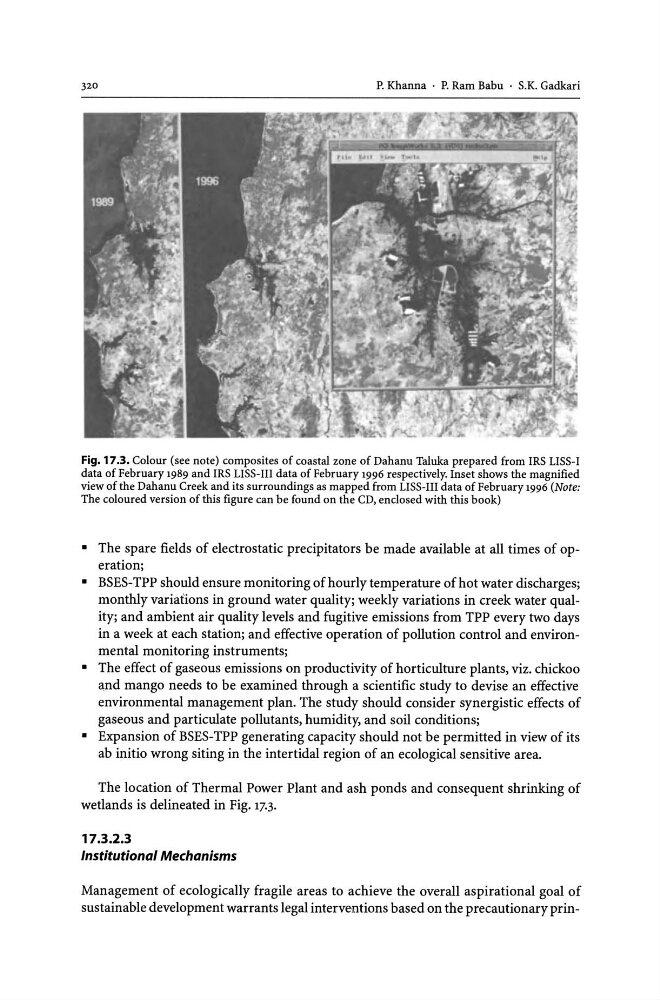
Fig. 17.3. Colour (see note) composites of coastal zone of Dahanu Taluka prepared from IRS LISS-I
data of February 1989 and IRS LISS-III data of February 1996 respectively. Inset shows the magnified
view of the Dahanu Creek and its surroundings as mapped from LISS-III data of February 1996 (Note:
The coloured version of this figure can be found on the CD, enclosed with this book)
• The spare fields of electrostatic precipitators be made available at all times of operation;
• BSES-TPP should ensure monitoring of hourly temperature of hot water discharges;
monthly variations in ground water quality; weekly variations in creek water quality; and ambient air quality levels and fugitive emissions from TPP every two days
in a week at each station; and effective operation of pollution control and environmental monitorin.g instruments;
• The effect of gaseous emissions on productivity of horticulture plants, viz. chickoo
and mango needs to be examined through a scientific study to devise an effective
environmental management plan. The study should consider synergistic effects of
gaseous and particulate pollutants, humidity, and soil conditions;
• Expansion of BSES-TPP generating capacity should not be permitted in view of its
ab initio wrong siting in the intertidal region of an ecological sensitive area.
The location of Thermal Power Plant and ash ponds and consequent shrinking of
wetlands is delineated in Fig. 17.3.
17.3.2.3
Institutional Mechanisms
Management of ecologically fragile areas to achieve the overall aspirational goal of
sustainable development warrants legal interventions based on the precautionary prin-
P. Khanna . P. Ram Babu . S.K. Gadkari
Fig. 17.3. Colour (see note) composites of coastal zone of Dahanu Taluka prepared from IRS LISS-I
data of February 1989 and IRS LISS-III data of February 1996 respectively. Inset shows the magnified
view of the Dahanu Creek and its surroundings as mapped from LISS-III data of February 1996 (Note:
The coloured version of this figure can be found on the CD, enclosed with this book)
• The spare fields of electrostatic precipitators be made available at all times of operation;
• BSES-TPP should ensure monitoring of hourly temperature of hot water discharges;
monthly variations in ground water quality; weekly variations in creek water quality; and ambient air quality levels and fugitive emissions from TPP every two days
in a week at each station; and effective operation of pollution control and environmental monitorin.g instruments;
• The effect of gaseous emissions on productivity of horticulture plants, viz. chickoo
and mango needs to be examined through a scientific study to devise an effective
environmental management plan. The study should consider synergistic effects of
gaseous and particulate pollutants, humidity, and soil conditions;
• Expansion of BSES-TPP generating capacity should not be permitted in view of its
ab initio wrong siting in the intertidal region of an ecological sensitive area.
The location of Thermal Power Plant and ash ponds and consequent shrinking of
wetlands is delineated in Fig. 17.3.
17.3.2.3
Institutional Mechanisms
Management of ecologically fragile areas to achieve the overall aspirational goal of
sustainable development warrants legal interventions based on the precautionary prin-