

262
I
Waste management
Water management
and treatment
Ministry of EnYUPGment
Fisheries
Frequentation
Beach management
Mtmstry of AqriCUItUflI & Ftsheries
SpaOlsh Ministry of PublIC Vrbrks
Coastat
construction
R. Sarda . M. Fluvia
Residentiat
developments
Recreational ports
Ordination plans
Ministry of TernIori81 Policv & Pubhc Worl
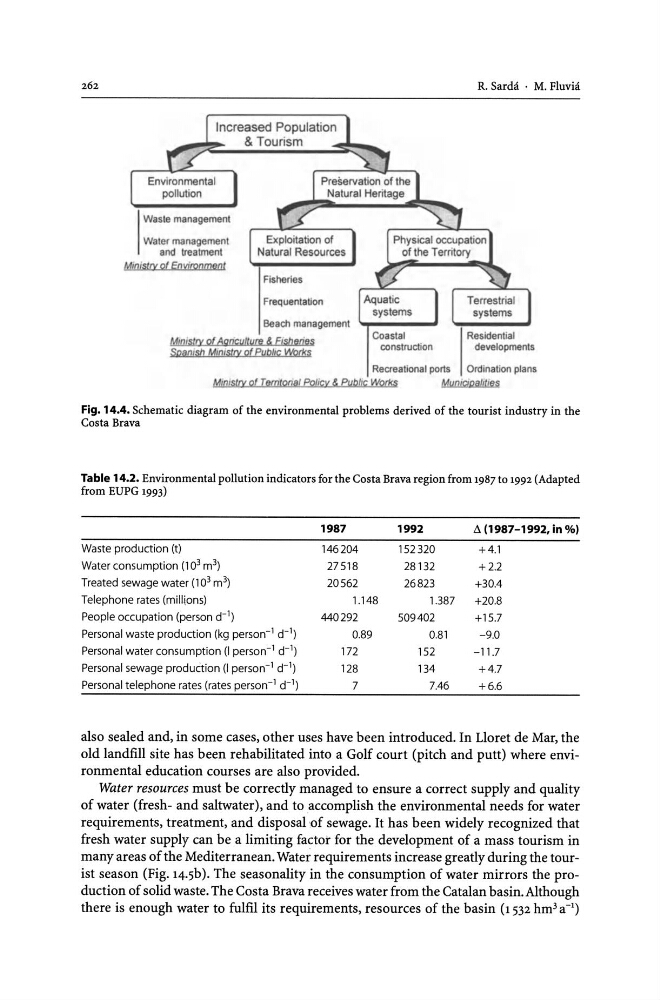
Fig. 14.4. Schematic diagram of the environmental problems derived of the tourist industry in the
Costa Brava
Table 14.2. Environmental pollution indicators for the Costa Brava region from 1987 to 1992 (Adapted
from EUPG 1993)
1987
1992
t. (1987-1992, in %)
Waste production (t)
146204
152320
+4.1
Water consumption (10 3 m 3 )
27518
28132
+2.2
Treated sewage water (10 3 m 3 )
20562
26823
+30.4
Telephone rates (millions)
1.148
1.387
+20.8
People occupation (person d- 1 )
440292
509402
+15.7
Personal waste production (kg person- 1 d- 1 )
0.89
0.81
-9.0
Personal water consumption (I person- 1 d- 1 )
172
152
-11.7
Personal sewage production (I person- 1 d- 1 )
128
134
+4.7
Personal telephone rates (rates person- 1 d- 1 )
7
7.46
+6.6
also sealed and, in some cases, other uses have been introduced. In Lloret de Mar, the
old landfill site has been rehabilitated into a Golf court (pitch and putt) where environmental education courses are also provided.
Water resources must be correctly managed to ensure a correct supply and quality
of water (fresh- and saltwater), and to accomplish the environmental needs for water
requirements, treatment, and disposal : of sewage. It has been widely recognized that
fresh water supply can be a limiting factor for the development of a mass tourism in
many areas of the Mediterranean. Wate~ requirements increase greatly during the tourist season (Fig. 14.5b). The seasonality in the consumption of water mirrors the production of solid waste. The Costa Brava receives water from the Catalan basin. Although
there is enough water to fulfil its requirements, resources of the basin (1532 hm 3 a-I)
I
Waste management
Water management
and treatment
Ministry of EnYUPGment
Fisheries
Frequentation
Beach management
Mtmstry of AqriCUItUflI & Ftsheries
SpaOlsh Ministry of PublIC Vrbrks
Coastat
construction
R. Sarda . M. Fluvia
Residentiat
developments
Recreational ports
Ordination plans
Ministry of TernIori81 Policv & Pubhc Worl
Fig. 14.4. Schematic diagram of the environmental problems derived of the tourist industry in the
Costa Brava
Table 14.2. Environmental pollution indicators for the Costa Brava region from 1987 to 1992 (Adapted
from EUPG 1993)
1987
1992
t. (1987-1992, in %)
Waste production (t)
146204
152320
+4.1
Water consumption (10 3 m 3 )
27518
28132
+2.2
Treated sewage water (10 3 m 3 )
20562
26823
+30.4
Telephone rates (millions)
1.148
1.387
+20.8
People occupation (person d- 1 )
440292
509402
+15.7
Personal waste production (kg person- 1 d- 1 )
0.89
0.81
-9.0
Personal water consumption (I person- 1 d- 1 )
172
152
-11.7
Personal sewage production (I person- 1 d- 1 )
128
134
+4.7
Personal telephone rates (rates person- 1 d- 1 )
7
7.46
+6.6
also sealed and, in some cases, other uses have been introduced. In Lloret de Mar, the
old landfill site has been rehabilitated into a Golf court (pitch and putt) where environmental education courses are also provided.
Water resources must be correctly managed to ensure a correct supply and quality
of water (fresh- and saltwater), and to accomplish the environmental needs for water
requirements, treatment, and disposal : of sewage. It has been widely recognized that
fresh water supply can be a limiting factor for the development of a mass tourism in
many areas of the Mediterranean. Wate~ requirements increase greatly during the tourist season (Fig. 14.5b). The seasonality in the consumption of water mirrors the production of solid waste. The Costa Brava receives water from the Catalan basin. Although
there is enough water to fulfil its requirements, resources of the basin (1532 hm 3 a-I)