

240
R. Ramesh . S. Ramachandran
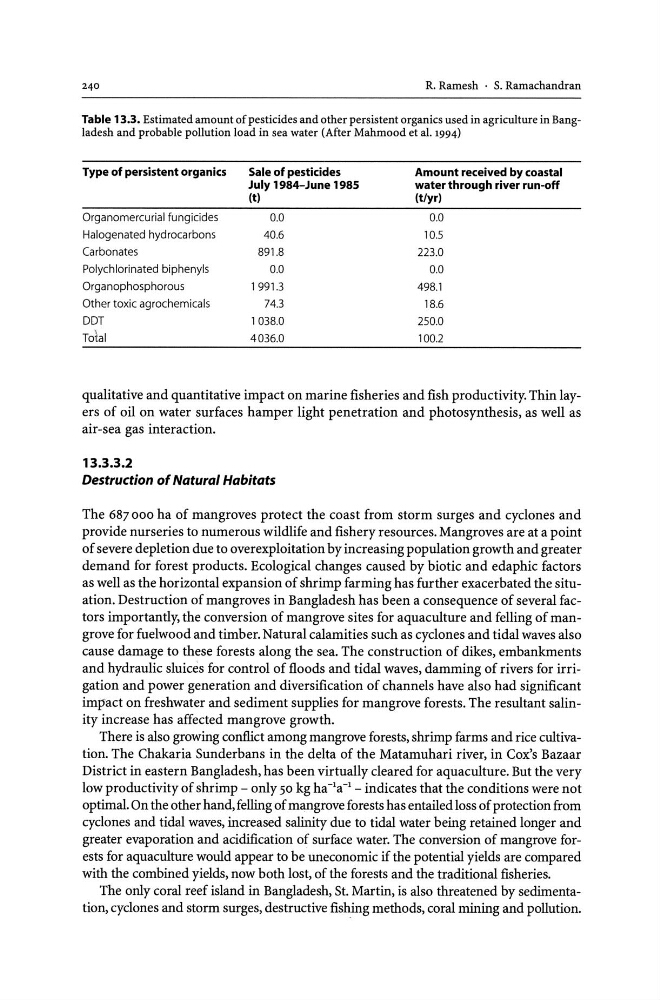
Table 13.3. Estimated amount of pesticides and other persistent organics used in agriculture in Bangladesh and probable pollution load in sea water (After Mahmood et aI. 1994)
Type of persistent organics
Sale of pesticides
Amount received by coastal
July 1984-June 1985
water through river run-off
(t)
(t/yr)
Organomercurial fungicides
0.0
0.0
Halogenated hydrocarbons
40.6
10.5
Carbonates
891.8
223.0
Polychlorinated biphenyls
0.0
0.0
Organophosphorous
1 991.3
498.1
Other toxic agrochemicals
74.3
18.6
DDT
1038.0
250.0
Total
4036.0
100.2
qualitative and quantitative impact on marine fisheries and fish productivity. Thin layers of oil on water surfaces hamper light penetration and photosynthesis, as well as
air-sea gas interaction.
13.3.3.2
Destruction of Natural Habitats
The 687000 ha of mangroves protect the coast from storm surges and cyclones and
provide nurseries to numerous wildlife and fishery resources. Mangroves are at a point
of severe depletion due to overexploitation by increasing population growth and greater
demand for forest products. Ecological changes caused by biotic and edaphic factors
as well as the horizontal expansion of shrimp farming has further exacerbated the situation. Destruction of mangroves in Bangladesh has been a consequence of several factors importantly, the conversion of mangrove sites for aquaculture and felling of mangrove for fuelwood and timber. Natural calamities such as cyclones and tidal waves also
cause damage to these forests along the sea. The construction of dikes, embankments
and hydraulic sluices for control of floods and tidal waves, damming of rivers for irrigation and power generation and diversification of channels have also had significant
impact on freshwater and sediment supplies for mangrove forests. The resultant salinity increase has affected mangrove growth.
There is also growing conflict among mangrove forests, shrimp farms and rice cultivation. The Chakaria Sunderbans in the delta of the Matamuhari river, in Cox's Bazaar
District in eastern Bangladesh, has been virtually cleared for aquaculture. But the very
low productivity of shrimp - only 50 kg ha-1a- 1 - indicates that the conditions were not
optimal. On the other hand, felling of mangrove forests has entailed loss of protection from
cyclones and tidal waves, increased salinity due to tidal water being retained longer and
greater evaporation and acidification of surface water. The conversion of mangrove forests for aquaculture would appear to be uneconomic if the potential yields are compared
with the combined yields, now both lost, of the forests and the traditional fisheries.
The only coral reef island in Bangladesh, S1. Martin, is also threatened by sedimentation, cyclones and storm surges, destructive fishing methods, coral mining and pollution.
R. Ramesh . S. Ramachandran
Table 13.3. Estimated amount of pesticides and other persistent organics used in agriculture in Bangladesh and probable pollution load in sea water (After Mahmood et aI. 1994)
Type of persistent organics
Sale of pesticides
Amount received by coastal
July 1984-June 1985
water through river run-off
(t)
(t/yr)
Organomercurial fungicides
0.0
0.0
Halogenated hydrocarbons
40.6
10.5
Carbonates
891.8
223.0
Polychlorinated biphenyls
0.0
0.0
Organophosphorous
1 991.3
498.1
Other toxic agrochemicals
74.3
18.6
DDT
1038.0
250.0
Total
4036.0
100.2
qualitative and quantitative impact on marine fisheries and fish productivity. Thin layers of oil on water surfaces hamper light penetration and photosynthesis, as well as
air-sea gas interaction.
13.3.3.2
Destruction of Natural Habitats
The 687000 ha of mangroves protect the coast from storm surges and cyclones and
provide nurseries to numerous wildlife and fishery resources. Mangroves are at a point
of severe depletion due to overexploitation by increasing population growth and greater
demand for forest products. Ecological changes caused by biotic and edaphic factors
as well as the horizontal expansion of shrimp farming has further exacerbated the situation. Destruction of mangroves in Bangladesh has been a consequence of several factors importantly, the conversion of mangrove sites for aquaculture and felling of mangrove for fuelwood and timber. Natural calamities such as cyclones and tidal waves also
cause damage to these forests along the sea. The construction of dikes, embankments
and hydraulic sluices for control of floods and tidal waves, damming of rivers for irrigation and power generation and diversification of channels have also had significant
impact on freshwater and sediment supplies for mangrove forests. The resultant salinity increase has affected mangrove growth.
There is also growing conflict among mangrove forests, shrimp farms and rice cultivation. The Chakaria Sunderbans in the delta of the Matamuhari river, in Cox's Bazaar
District in eastern Bangladesh, has been virtually cleared for aquaculture. But the very
low productivity of shrimp - only 50 kg ha-1a- 1 - indicates that the conditions were not
optimal. On the other hand, felling of mangrove forests has entailed loss of protection from
cyclones and tidal waves, increased salinity due to tidal water being retained longer and
greater evaporation and acidification of surface water. The conversion of mangrove forests for aquaculture would appear to be uneconomic if the potential yields are compared
with the combined yields, now both lost, of the forests and the traditional fisheries.
The only coral reef island in Bangladesh, S1. Martin, is also threatened by sedimentation, cyclones and storm surges, destructive fishing methods, coral mining and pollution.