

2
SOCIO-ECONOMIC DRIVERS:
Urbanisation and transportJtrade.
Agricultural intensificationllanduse change.
Touri m and recreation demand.
Fisheries and aquaculture.
IndUltJial development.
ENVIRO MENTAL
PRESSURES
land conversions and reclamation.
dredging. aggregates and oil and gas
extraction.
waste disposal in coastal waters.
water abstraction.
drainage network and estuarine and
coastline engineering works. dams.
barriers and barrages.
congestion .
............ , ..................... ~
'.
r
....
•••....
. .
STAKEHOLDERS:
".
.
IMPACTS
The changes in processes and
functions of eco ystems leads
to consequential impacts on
human welfare via prodoctivity.
health. amenity and existence
value changes
R.K. Turner . W. Salomons
. .............. -.
CLIMATE CHANGE
A D
COASTAL PROCESSES
VARIABILITY
ENVIRO ME TAL
'STATE' CHANGES:
changes in nutrient, sediment
waters fluxes across COastal
zones. loss of habitats and
biological diversity. visual
intrusion, groundwater
change/salt water intrusion •
eutrophicalionlwaterpollulion.
coastal erosion.
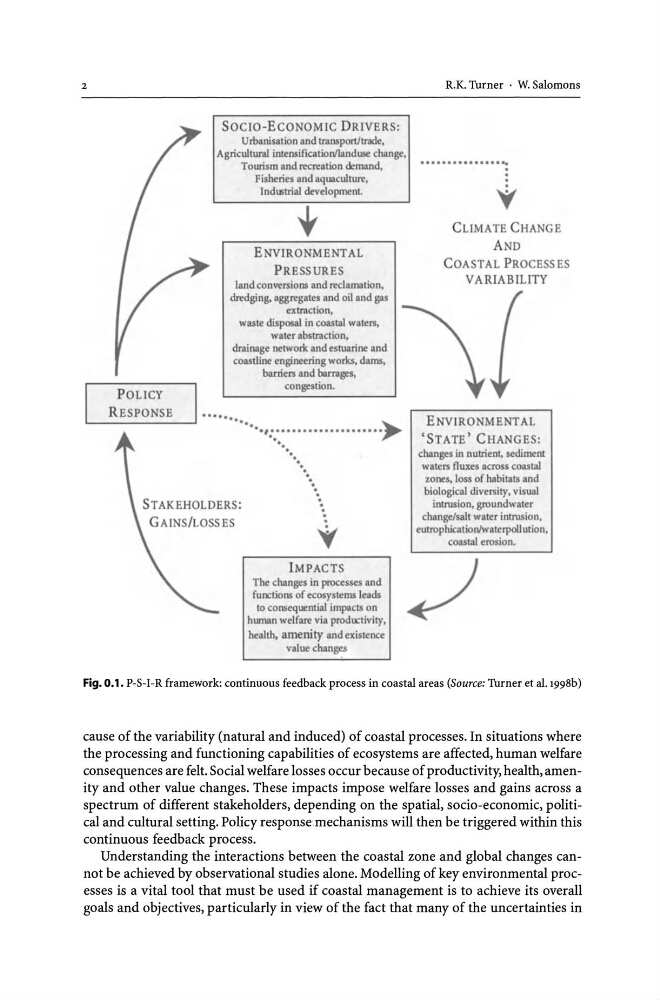
Fig. 0.1. P-S-I -R framework: continuous feedback process in coastal areas (Source: Turner et al. 1998b)
cause of the variability (natural and induced) of coastal processes. In situations where
the processing and functioning capabilities of ecosystems are affected, human welfare
consequences are felt. Social welfare losses occur because of productivity, health, amenity and other value changes. These impacts impose welfare losses and gains across a
spectrum of different stakeholders, depending on the spatial, socio-economic, political and cultural setting. Policy response:mechanisms will then be triggered within this
continuous feedback process.
Understanding the interactions between the coastal zone and global changes cannot be achieved by observational studies alone. Modelling of key environmental processes is a vital tool that must be used if coastal management is to achieve its overall
goals and objectives, particularly in view of the fact that many of the uncertainties in
SOCIO-ECONOMIC DRIVERS:
Urbanisation and transportJtrade.
Agricultural intensificationllanduse change.
Touri m and recreation demand.
Fisheries and aquaculture.
IndUltJial development.
ENVIRO MENTAL
PRESSURES
land conversions and reclamation.
dredging. aggregates and oil and gas
extraction.
waste disposal in coastal waters.
water abstraction.
drainage network and estuarine and
coastline engineering works. dams.
barriers and barrages.
congestion .
............ , ..................... ~
'.
r
....
•••....
. .
STAKEHOLDERS:
".
.
IMPACTS
The changes in processes and
functions of eco ystems leads
to consequential impacts on
human welfare via prodoctivity.
health. amenity and existence
value changes
R.K. Turner . W. Salomons
. .............. -.
CLIMATE CHANGE
A D
COASTAL PROCESSES
VARIABILITY
ENVIRO ME TAL
'STATE' CHANGES:
changes in nutrient, sediment
waters fluxes across COastal
zones. loss of habitats and
biological diversity. visual
intrusion, groundwater
change/salt water intrusion •
eutrophicalionlwaterpollulion.
coastal erosion.
Fig. 0.1. P-S-I -R framework: continuous feedback process in coastal areas (Source: Turner et al. 1998b)
cause of the variability (natural and induced) of coastal processes. In situations where
the processing and functioning capabilities of ecosystems are affected, human welfare
consequences are felt. Social welfare losses occur because of productivity, health, amenity and other value changes. These impacts impose welfare losses and gains across a
spectrum of different stakeholders, depending on the spatial, socio-economic, political and cultural setting. Policy response:mechanisms will then be triggered within this
continuous feedback process.
Understanding the interactions between the coastal zone and global changes cannot be achieved by observational studies alone. Modelling of key environmental processes is a vital tool that must be used if coastal management is to achieve its overall
goals and objectives, particularly in view of the fact that many of the uncertainties in