

1. GlussVoe
2. Voxter Voe
3. Orkney
4. Ythan
5. Montrose
6. Lucky Beacon
7. Musselburgh
8. Berwick
9. Holy Island
10. Coquet Estuary
11. Cresswell
12. 81yth
13. Trow Point
14. Teesmouth
15. Whitby
16. Filey Brigg
17. Humber Bull Fort
1 B. Oeethorpes
19. Dowsing
20. Dudgeon
21. GatSand
22. Hunstanton
23. Neworp
24. Smiths Knoll
25. Walberswick
26. Shipwash
27. Crabknowe Spit
2a. Sunk
29. Creeksea
30. Southend
31 . Swale
32. Falls
33. East Goodwin
34. Sandettie
35. South Goodwin
36. Whitstable
37. Plymouth
3a. Whitsand
A.R.D. Stebbing . R.I. Willows
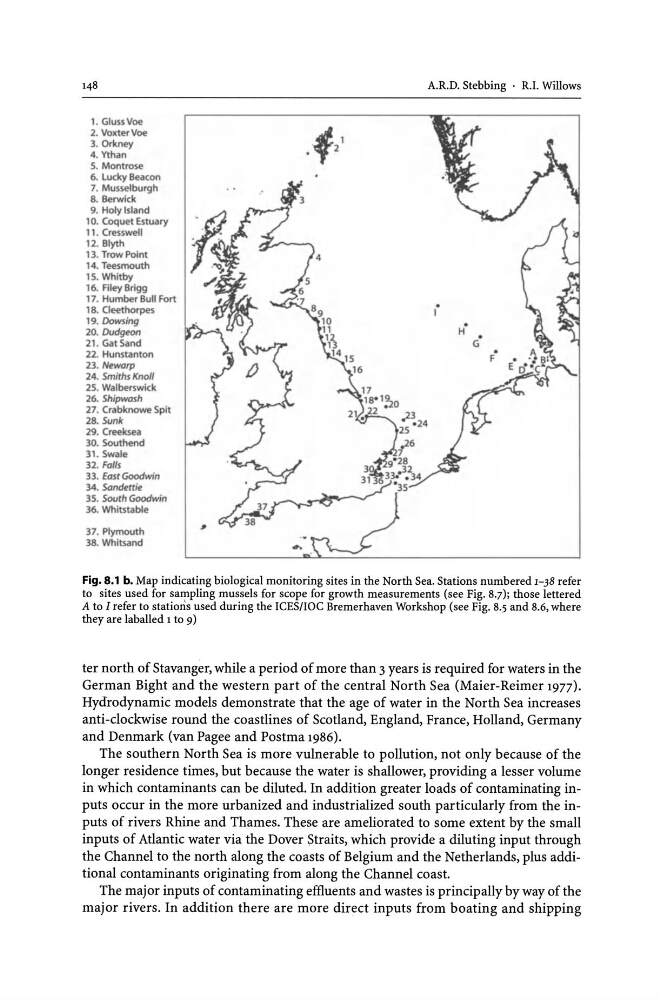
Fig. 8.1 b. Map indicating biological monitoring sites in the North Sea. Stations numbered 1-38 refer
to sites used for sampling mussels for scope for growth measurements (see Fig. 8.7); those lettered
A to I refer to stations used during the ICES/lOC Bremerhaven Workshop (see Fig. 8.5 and 8.6, where
they are laballed 1 to 9)
ter north of Stavanger, while a period of more than 3 years is required for waters in the
German Bight and the western part of the central North Sea (Maier-Reimer 1977).
Hydrodynamic models demonstrate that the age of water in the North Sea increases
anti-clockwise round the coastlines of Scotland, England, France, Holland, Germany
and Denmark (van Pagee and Postma 1986).
The southern North Sea is more vulnerable to pollution, not only because of the
longer residence times, but because the water is shallower, providing a lesser volume
in which contaminants can be diluted. In addition greater loads of contaminating inputs occur in the more urbanized and industrialized south particularly from the inputs of rivers Rhine and Thames. These are ameliorated to some extent by the small
inputs of Atlantic water via the Dover Straits, which provide a diluting input through
the Channel to the north along the coasts of Belgium and the Netherlands, plus additional contaminants originating from along the Channel coast.
The major inputs of contaminating effluents and wastes is principally by way of the
major rivers. In addition there are more direct inputs from boating and shipping
2. Voxter Voe
3. Orkney
4. Ythan
5. Montrose
6. Lucky Beacon
7. Musselburgh
8. Berwick
9. Holy Island
10. Coquet Estuary
11. Cresswell
12. 81yth
13. Trow Point
14. Teesmouth
15. Whitby
16. Filey Brigg
17. Humber Bull Fort
1 B. Oeethorpes
19. Dowsing
20. Dudgeon
21. GatSand
22. Hunstanton
23. Neworp
24. Smiths Knoll
25. Walberswick
26. Shipwash
27. Crabknowe Spit
2a. Sunk
29. Creeksea
30. Southend
31 . Swale
32. Falls
33. East Goodwin
34. Sandettie
35. South Goodwin
36. Whitstable
37. Plymouth
3a. Whitsand
A.R.D. Stebbing . R.I. Willows
Fig. 8.1 b. Map indicating biological monitoring sites in the North Sea. Stations numbered 1-38 refer
to sites used for sampling mussels for scope for growth measurements (see Fig. 8.7); those lettered
A to I refer to stations used during the ICES/lOC Bremerhaven Workshop (see Fig. 8.5 and 8.6, where
they are laballed 1 to 9)
ter north of Stavanger, while a period of more than 3 years is required for waters in the
German Bight and the western part of the central North Sea (Maier-Reimer 1977).
Hydrodynamic models demonstrate that the age of water in the North Sea increases
anti-clockwise round the coastlines of Scotland, England, France, Holland, Germany
and Denmark (van Pagee and Postma 1986).
The southern North Sea is more vulnerable to pollution, not only because of the
longer residence times, but because the water is shallower, providing a lesser volume
in which contaminants can be diluted. In addition greater loads of contaminating inputs occur in the more urbanized and industrialized south particularly from the inputs of rivers Rhine and Thames. These are ameliorated to some extent by the small
inputs of Atlantic water via the Dover Straits, which provide a diluting input through
the Channel to the north along the coasts of Belgium and the Netherlands, plus additional contaminants originating from along the Channel coast.
The major inputs of contaminating effluents and wastes is principally by way of the
major rivers. In addition there are more direct inputs from boating and shipping