

114
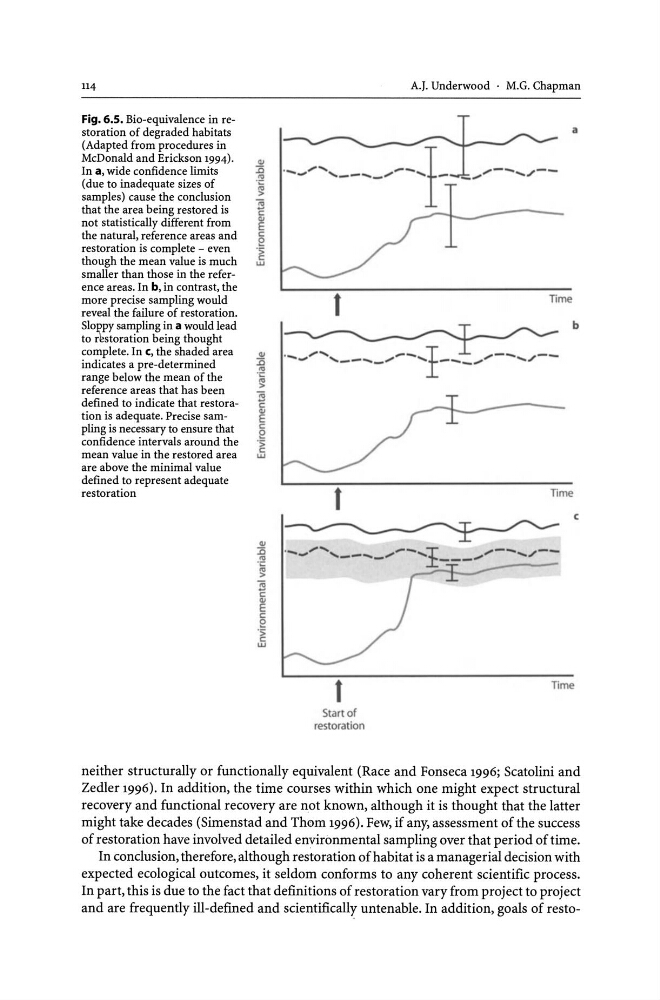
Fig. 6.5. Bio-equivalence in restoration of degraded habitats
(Adapted from procedures in
McDonald and Erickson 1994).
In a, wide confidence limits
(due to inadequate sizes of
samples) cause the conclusion
that the area being restored is
not statistically different from
the natural, reference areas and
restoration is complete - even
though the mean value is much
smaller than those in the reference areas. In b, in contrast, the
more precise sampling would
reveal the failure of restoration.
Sloppy sampling in a would lead
to restoration being thought
complete. In c, the shaded area
indicates a pre-determined
range below the mean of the
reference areas that has been
defined to indicate that restoration is adequate. Precise sampling is necessary to ensure that
confidence intervals around the
mean value in the restored area
are above the minimal value
defined to represent adequate
restoration
~
c:
c:
e
'> c:
w
~
c:
E c:
e
'> c:
w
A.J. Underwood . M.G. Chapman
a
. - ,; . . . . . . ~ ---. . . 1
- - ~----- rTIme
b
..... ..."",'.....
.-.,---. . . . . 1
",-. . . . . . . . . . . /----. . . . . . _-- r-. . . . . --'
Start of
restoration
Time
c
neither structurally or functionally equivalent (Race and Fonseca 1996; Scatolini and
Zedler 1996). In addition, the time courses within which one might expect structural
recovery and functional recovery are not known, although it is thought that the latter
might take decades (Simenstad and Thorn 1996). Few, if any, assessment of the success
of restoration have involved detailed environmental sampling over that period of time.
In conclusion, therefore, although restoration of habitat is a managerial decision with
expected ecological outcomes, it seldom conforms to any coherent scientific process.
In part, this is due to the fact that definitions of restoration vary from project to project
and are frequently ill-defined and scientifically untenable. In addition, goals of resto-
Fig. 6.5. Bio-equivalence in restoration of degraded habitats
(Adapted from procedures in
McDonald and Erickson 1994).
In a, wide confidence limits
(due to inadequate sizes of
samples) cause the conclusion
that the area being restored is
not statistically different from
the natural, reference areas and
restoration is complete - even
though the mean value is much
smaller than those in the reference areas. In b, in contrast, the
more precise sampling would
reveal the failure of restoration.
Sloppy sampling in a would lead
to restoration being thought
complete. In c, the shaded area
indicates a pre-determined
range below the mean of the
reference areas that has been
defined to indicate that restoration is adequate. Precise sampling is necessary to ensure that
confidence intervals around the
mean value in the restored area
are above the minimal value
defined to represent adequate
restoration
~
c:
c:
e
'> c:
w
~
c:
E c:
e
'> c:
w
A.J. Underwood . M.G. Chapman
a
. - ,; . . . . . . ~ ---. . . 1
- - ~----- rTIme
b
..... ..."",'.....
.-.,---. . . . . 1
",-. . . . . . . . . . . /----. . . . . . _-- r-. . . . . --'
Start of
restoration
Time
c
neither structurally or functionally equivalent (Race and Fonseca 1996; Scatolini and
Zedler 1996). In addition, the time courses within which one might expect structural
recovery and functional recovery are not known, although it is thought that the latter
might take decades (Simenstad and Thorn 1996). Few, if any, assessment of the success
of restoration have involved detailed environmental sampling over that period of time.
In conclusion, therefore, although restoration of habitat is a managerial decision with
expected ecological outcomes, it seldom conforms to any coherent scientific process.
In part, this is due to the fact that definitions of restoration vary from project to project
and are frequently ill-defined and scientifically untenable. In addition, goals of resto-