

CHAPTER 6 . Coastal Environmental Management in Southeast Australia: The Roles of Ecology 107
15
Before
a
10
~
r
.~
5
'0
!!:
0
N
M
p
B
2S
After
b
20
~ 15
1 '0 10
?:
S
0
N
M
p
B
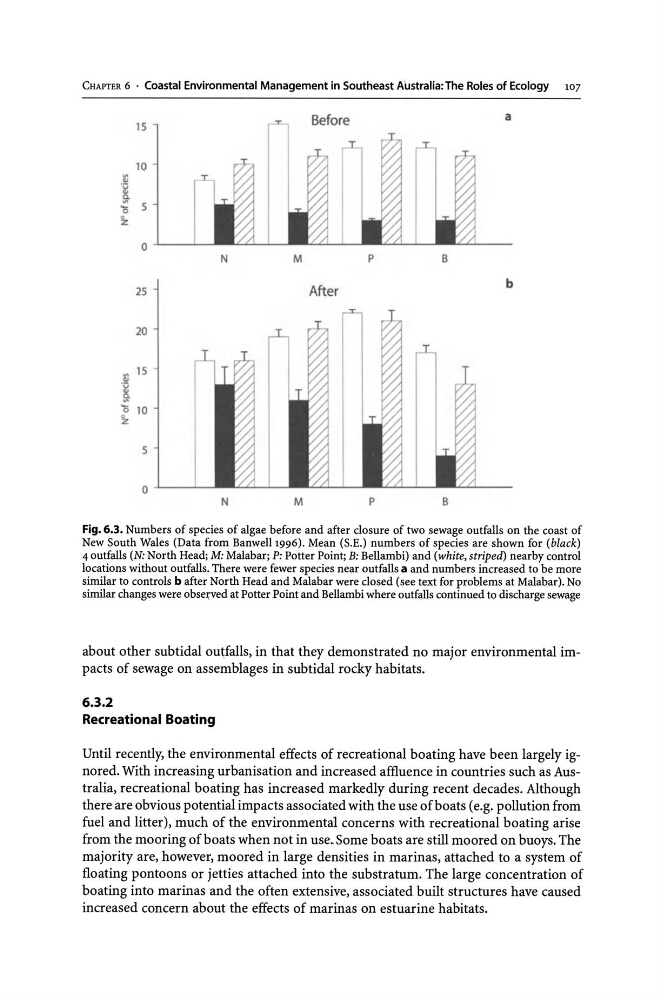
Fig. 6.3. Numbers of species of algae before and after closure of two sewage outfalls on the coast of
New South Wales (Data from BanwellI996). Mean (S.E.) numbers of species are shown for (black)
4 outfalls (N: North Head; M: Malabar; P: Potter Point; B: Bellambi) and (white, striped) nearby control
locations without outfalls. There were fewer species near outfalls a and numbers increased to be more
similar to controls b after North Head and Malabar were closed (see text for problems at Malabar). No
similar changes were obseJ;"Ved at Potter Point and Bellambi where outfalls continued to discharge sewage
about other subtidal ou~falls, in that they demonstrated no major environmental impacts of sewage on assemblages in subtidal rocky habitats.
6.3.2
Recreational Boating
Until recently, the environmental effects of recreational boating have been largely ignored. With increasing urbanisation and increased affluence in countries such as Australia, recreational boating has increased markedly during recent decades. Although
there are obvious potential impacts associated with the use of boats (e.g. pollution from
fuel and litter), much of the environmental concerns with recreational boating arise
from the mooring of boats when not in use .. Some boats are still moored on buoys. The
majority are, however, moored in large densities in marinas, attached to a system of
floating pontoons or jetties attached into the substratum. The large concentration of
boating into marinas and the often extensive, associated built structures have caused
increased concern about the effects of marinas on estuarine habitats.
15
Before
a
10
~
r
.~
5
'0
!!:
0
N
M
p
B
2S
After
b
20
~ 15
1 '0 10
?:
S
0
N
M
p
B
Fig. 6.3. Numbers of species of algae before and after closure of two sewage outfalls on the coast of
New South Wales (Data from BanwellI996). Mean (S.E.) numbers of species are shown for (black)
4 outfalls (N: North Head; M: Malabar; P: Potter Point; B: Bellambi) and (white, striped) nearby control
locations without outfalls. There were fewer species near outfalls a and numbers increased to be more
similar to controls b after North Head and Malabar were closed (see text for problems at Malabar). No
similar changes were obseJ;"Ved at Potter Point and Bellambi where outfalls continued to discharge sewage
about other subtidal ou~falls, in that they demonstrated no major environmental impacts of sewage on assemblages in subtidal rocky habitats.
6.3.2
Recreational Boating
Until recently, the environmental effects of recreational boating have been largely ignored. With increasing urbanisation and increased affluence in countries such as Australia, recreational boating has increased markedly during recent decades. Although
there are obvious potential impacts associated with the use of boats (e.g. pollution from
fuel and litter), much of the environmental concerns with recreational boating arise
from the mooring of boats when not in use .. Some boats are still moored on buoys. The
majority are, however, moored in large densities in marinas, attached to a system of
floating pontoons or jetties attached into the substratum. The large concentration of
boating into marinas and the often extensive, associated built structures have caused
increased concern about the effects of marinas on estuarine habitats.