

CHAPTER 5 • Chances for Nature - A Matter of Substitution
95
Table 5.1. Criteria for basic views on nature
Criteria
Conservation 1
Functionality 2
Coevolution 3
l. Trade off ecologyPriority on ecology
Priority on economy
Balanced interaction
economy
economy-ecology
2. Substitution between Not allowed
Allowed
Not allowed
capital stocks
3. Substitution within
Not allowed
Allowed
Allowed if equal values
natural stock
4. Required value of
Ecological values
Financial values
Economic values and
nature
ecological values
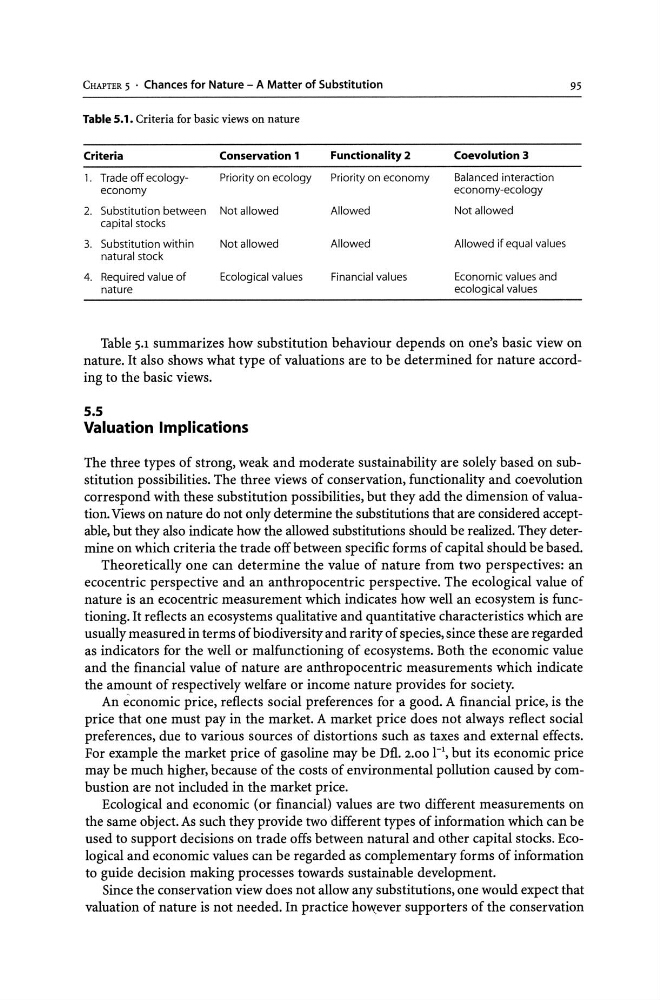
Table 5-I summarizes how substitution behaviour depends on one's basic view on
nature. It also shows what type of valuations are to be determined for nature according to the basic views.
5.5
Valuation Implications
The three types of strong, weak and moderate sustainability are solely based on substitution possibilities. The three views of conservation, functionality and coevolution
correspond with these substitution possibilities, but they add the dimension ofvaluation. Views on nature do not only determine the substitutions that are considered acceptable, but they also indicate how the allowed substitutions should be realized. They determine on which criteria the trade off between specific forms of capital should be based.
Theoretically one can determine the value of nature from two perspectives: an
ecocentric perspective and an anthropocentric perspective. The ecological value of
nature is an ecocentric measurement which indicates how well an ecosystem is functioning. It reflects an ecosystems qualitative and quantitative characteristics which are
usually measured in terms of biodiversity and rarity of species, since these are regarded
as indicators for the w«:;ll or malfunctioning of ecosystems. Both the economic value
and the financial value of nature are anthropocentric measurements which indicate
the amount of respectively welfare or income nature provides for society.
An economic price, reflects social preferences for a good. A financial price, is the
price that one must pay in the market. A market price does not always reflect social
preferences, due to various sources of distortions such as taxes and external effects.
For example the market price of gasoline may be Dfl. 2.00 1-\ but its economic price
may be much higher, because of the costs of environmental pollution caused by combustion are not included in the market price.
Ecological and economic (or financial) values are two different measurements on
the same object. As such they provide two different types of information which can be
used to support decisions on trade offs between natural and other capital stocks. Ecological and economic values can be regarded as complementary forms of information
to guide decision making processes towards sustainable development.
Since the conservation view does not allow any substitutions, one would expect that
valuation of nature is not needed. In practice how:ever supporters of the conservation
95
Table 5.1. Criteria for basic views on nature
Criteria
Conservation 1
Functionality 2
Coevolution 3
l. Trade off ecologyPriority on ecology
Priority on economy
Balanced interaction
economy
economy-ecology
2. Substitution between Not allowed
Allowed
Not allowed
capital stocks
3. Substitution within
Not allowed
Allowed
Allowed if equal values
natural stock
4. Required value of
Ecological values
Financial values
Economic values and
nature
ecological values
Table 5-I summarizes how substitution behaviour depends on one's basic view on
nature. It also shows what type of valuations are to be determined for nature according to the basic views.
5.5
Valuation Implications
The three types of strong, weak and moderate sustainability are solely based on substitution possibilities. The three views of conservation, functionality and coevolution
correspond with these substitution possibilities, but they add the dimension ofvaluation. Views on nature do not only determine the substitutions that are considered acceptable, but they also indicate how the allowed substitutions should be realized. They determine on which criteria the trade off between specific forms of capital should be based.
Theoretically one can determine the value of nature from two perspectives: an
ecocentric perspective and an anthropocentric perspective. The ecological value of
nature is an ecocentric measurement which indicates how well an ecosystem is functioning. It reflects an ecosystems qualitative and quantitative characteristics which are
usually measured in terms of biodiversity and rarity of species, since these are regarded
as indicators for the w«:;ll or malfunctioning of ecosystems. Both the economic value
and the financial value of nature are anthropocentric measurements which indicate
the amount of respectively welfare or income nature provides for society.
An economic price, reflects social preferences for a good. A financial price, is the
price that one must pay in the market. A market price does not always reflect social
preferences, due to various sources of distortions such as taxes and external effects.
For example the market price of gasoline may be Dfl. 2.00 1-\ but its economic price
may be much higher, because of the costs of environmental pollution caused by combustion are not included in the market price.
Ecological and economic (or financial) values are two different measurements on
the same object. As such they provide two different types of information which can be
used to support decisions on trade offs between natural and other capital stocks. Ecological and economic values can be regarded as complementary forms of information
to guide decision making processes towards sustainable development.
Since the conservation view does not allow any substitutions, one would expect that
valuation of nature is not needed. In practice how:ever supporters of the conservation