

climatic events (i.e., floods, hurricanes, and storms). The loss of these protection
services is particularly important in view of growing human and economic losses
derived from the impact of storms and hurricanes. These losses have led to a
re-evaluation of the biological and socioeconomic importance of these ecosystems,
and have highlighted the need to restore the natural capital they represent. This
capital can only be recovered through programs of restoration (Ley-Vega et al.
2007) and by considering the local and regional scales of the processes acting on
coastal ecosystem dynamics (Gallego-Fernández et al. 2011).
Sometimes, however, the state of degradation is so severe and extensive that
restoration is no longer possible, and rehabilitation efforts become the most viable
alternative. When it comes to restoring coastal dunes and sandy beaches, therefore,
a choice between restoration and rehabilitation presents itself. In this study, the
following definitions are adopted for these terms: Restoration is the set of actions
taken for the re-establishment of the processes and features that allow the system
to function naturally without subsequent human intervention (SER 2004).
Rehabilitation, on the other hand, refers to the action taken to recover certain
processes or features, since complete restoration is impossible. In this case, the
system functions and is maintained with the help of human actions.
Where should these actions be implemented? What criteria should be taken into
account when making such decisions? This chapter aims to establish the variables
needed to identify sandy beaches with dunes where restoration actions are required
and, furthermore, where such actions may be performed with a high probability of
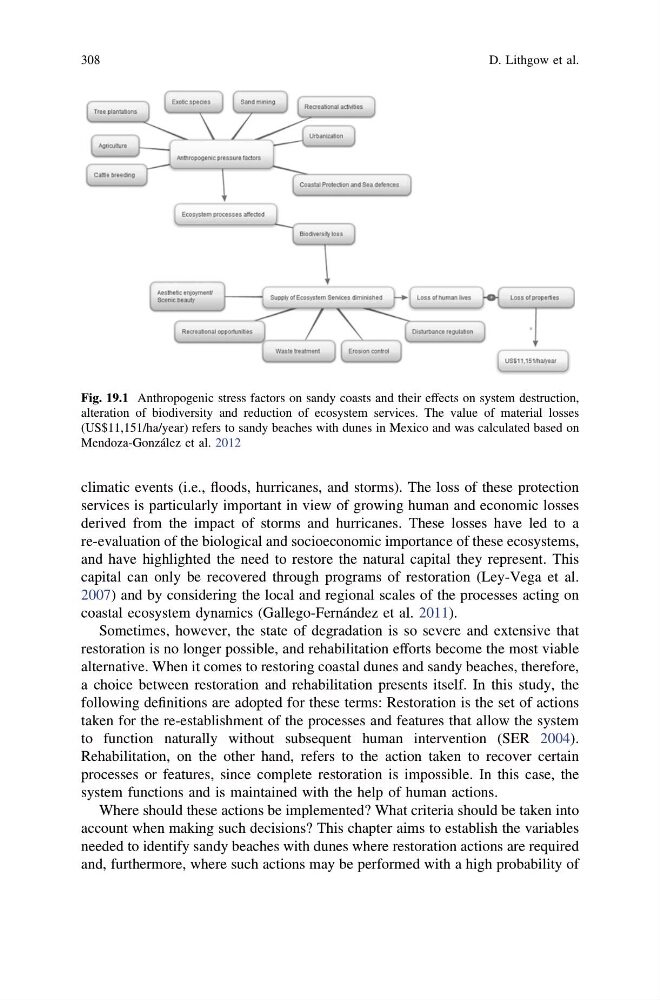
Fig. 19.1 Anthropogenic stress factors on sandy coasts and their effects on system destruction,
alteration of biodiversity and reduction of ecosystem services. The value of material losses
(US$11,151/ha/year) refers to sandy beaches with dunes in Mexico and was calculated based on
Mendoza-González et al. 2012
308
D. Lithgow et al.
services is particularly important in view of growing human and economic losses
derived from the impact of storms and hurricanes. These losses have led to a
re-evaluation of the biological and socioeconomic importance of these ecosystems,
and have highlighted the need to restore the natural capital they represent. This
capital can only be recovered through programs of restoration (Ley-Vega et al.
2007) and by considering the local and regional scales of the processes acting on
coastal ecosystem dynamics (Gallego-Fernández et al. 2011).
Sometimes, however, the state of degradation is so severe and extensive that
restoration is no longer possible, and rehabilitation efforts become the most viable
alternative. When it comes to restoring coastal dunes and sandy beaches, therefore,
a choice between restoration and rehabilitation presents itself. In this study, the
following definitions are adopted for these terms: Restoration is the set of actions
taken for the re-establishment of the processes and features that allow the system
to function naturally without subsequent human intervention (SER 2004).
Rehabilitation, on the other hand, refers to the action taken to recover certain
processes or features, since complete restoration is impossible. In this case, the
system functions and is maintained with the help of human actions.
Where should these actions be implemented? What criteria should be taken into
account when making such decisions? This chapter aims to establish the variables
needed to identify sandy beaches with dunes where restoration actions are required
and, furthermore, where such actions may be performed with a high probability of
Fig. 19.1 Anthropogenic stress factors on sandy coasts and their effects on system destruction,
alteration of biodiversity and reduction of ecosystem services. The value of material losses
(US$11,151/ha/year) refers to sandy beaches with dunes in Mexico and was calculated based on
Mendoza-González et al. 2012
308
D. Lithgow et al.