

was used as a pasture for several years and abandoned 20 years ago; therefore, there
was a significant increase in grass cover, height, and biomass. Before the introduction
of the grass, the original physiognomy of this dune slack was herbaceous vegetation
dominated by Typha domingensis and Sagittaria lancifolia (Novelo 1978). With the
invasion of E. pyramidalis, the wetland vegetation was transformed and the grass
became dominant. The original wetland plant species S. lancifolia, Laportea mexicana, and T. domingensis (López Rosas et al. 2005) remained in small patches. López
Rosas (2007) performed experimental treatments to eradicate the grass and showed
that human intervention would be needed to recuperate the original vegetation
structure and composition of the dune slack.
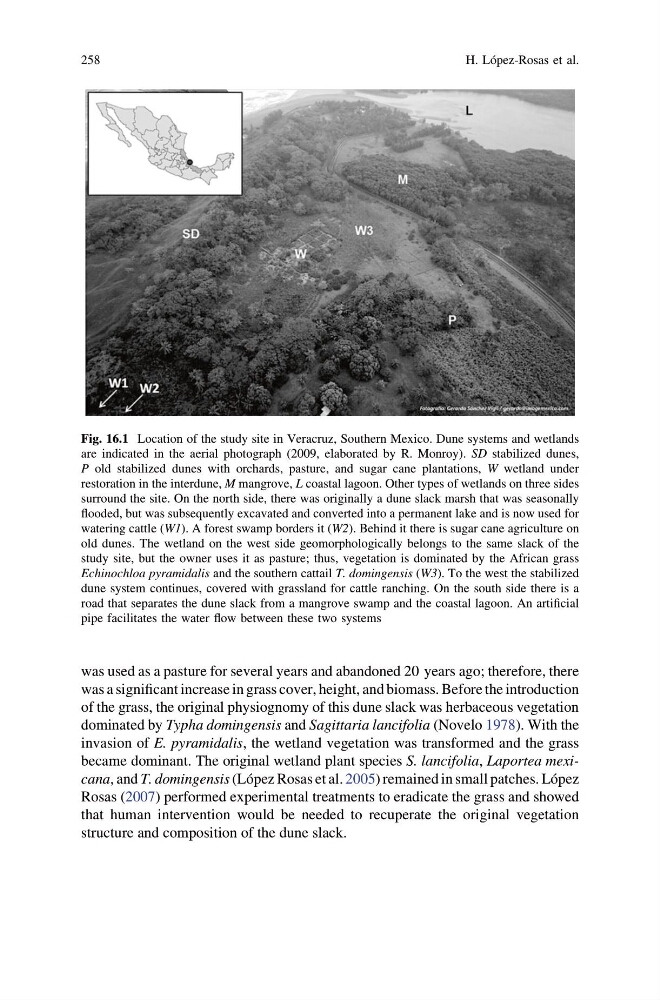
Fig. 16.1 Location of the study site in Veracruz, Southern Mexico. Dune systems and wetlands
are indicated in the aerial photograph (2009, elaborated by R. Monroy). SD stabilized dunes,
P old stabilized dunes with orchards, pasture, and sugar cane plantations, W wetland under
restoration in the interdune, M mangrove, L coastal lagoon. Other types of wetlands on three sides
surround the site. On the north side, there was originally a dune slack marsh that was seasonally
flooded, but was subsequently excavated and converted into a permanent lake and is now used for
watering cattle (W1). A forest swamp borders it (W2). Behind it there is sugar cane agriculture on
old dunes. The wetland on the west side geomorphologically belongs to the same slack of the
study site, but the owner uses it as pasture; thus, vegetation is dominated by the African grass
Echinochloa pyramidalis and the southern cattail T. domingensis (W3). To the west the stabilized
dune system continues, covered with grassland for cattle ranching. On the south side there is a
road that separates the dune slack from a mangrove swamp and the coastal lagoon. An artificial
pipe facilitates the water flow between these two systems
258
H. López-Rosas et al.
was a significant increase in grass cover, height, and biomass. Before the introduction
of the grass, the original physiognomy of this dune slack was herbaceous vegetation
dominated by Typha domingensis and Sagittaria lancifolia (Novelo 1978). With the
invasion of E. pyramidalis, the wetland vegetation was transformed and the grass
became dominant. The original wetland plant species S. lancifolia, Laportea mexicana, and T. domingensis (López Rosas et al. 2005) remained in small patches. López
Rosas (2007) performed experimental treatments to eradicate the grass and showed
that human intervention would be needed to recuperate the original vegetation
structure and composition of the dune slack.
Fig. 16.1 Location of the study site in Veracruz, Southern Mexico. Dune systems and wetlands
are indicated in the aerial photograph (2009, elaborated by R. Monroy). SD stabilized dunes,
P old stabilized dunes with orchards, pasture, and sugar cane plantations, W wetland under
restoration in the interdune, M mangrove, L coastal lagoon. Other types of wetlands on three sides
surround the site. On the north side, there was originally a dune slack marsh that was seasonally
flooded, but was subsequently excavated and converted into a permanent lake and is now used for
watering cattle (W1). A forest swamp borders it (W2). Behind it there is sugar cane agriculture on
old dunes. The wetland on the west side geomorphologically belongs to the same slack of the
study site, but the owner uses it as pasture; thus, vegetation is dominated by the African grass
Echinochloa pyramidalis and the southern cattail T. domingensis (W3). To the west the stabilized
dune system continues, covered with grassland for cattle ranching. On the south side there is a
road that separates the dune slack from a mangrove swamp and the coastal lagoon. An artificial
pipe facilitates the water flow between these two systems
258
H. López-Rosas et al.