

Salman 1996). Thus, most of the area is heavily developed and under man’s
impact, and only about 17 % of the Israeli coastal dunes are still ecologically
intact, about half of which have protected status (Kutiel 2001). The largest
protected area (2,000 ha) along the Mediterranean coast in Israel is the Nizzanim
LTER (Long Term Ecosystem Research) Nature Reserve.
The Nature and Parks Authority in Israel aims to conserve the biodiversity (species,
habitats, landform and ecosystem service richness) of the coastal sand dunes within
the protected areas, which include the mobile sand dunes ecosystem. Therefore, the
long-term challenge is to prevent the semi-stabilized dunes from becoming completely stabilized, and in the short term to restore some of the stabilized dunes to
mobile dunes in order to expand and encourage the re-establishment of psammophilic
plant and animals (sand-dwelling species). As ecologists we categorize the dune states
(mobile, semi-stabilized, and stabilized) based either on the percentage of sand
covered by vegetation, and also on species assemblages, or on bio-indicators, which
indicate the affinity of species to the mobility rate of the dunes. Throughout 4 years of
observation at Nizzanim LTER Nature Reserve we have collected data for four taxons:
plants, arthropods, reptiles, and small mammals (mainly rodents). The results indicated that the plants and animals on almost bare sand (less than 15 % of perennial
vegetation cover) and mobile dunes differ significantly from those on the other two
dune states, especially from those on the stabilized dunes. The plants and animals on
the mobile dunes are defined as psammophilic species. The psammophilic species
known in our region (Sinai, Israel, and Lebanon) are either found on mobile dunes on
the Northern African and Arab deserts or are endemic species to our region, but were
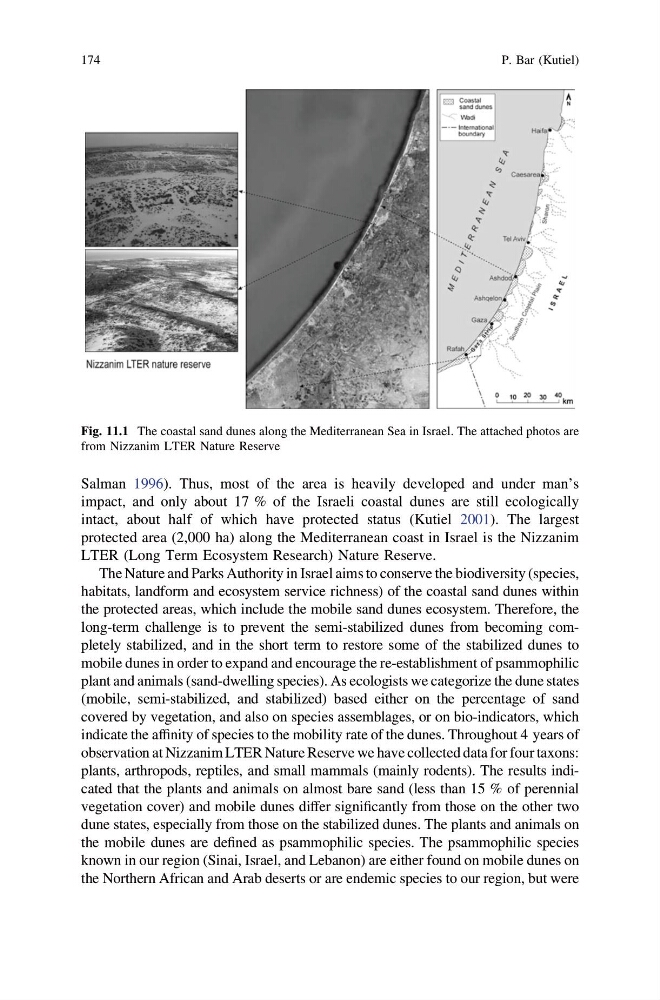
Fig. 11.1 The coastal sand dunes along the Mediterranean Sea in Israel. The attached photos are
from Nizzanim LTER Nature Reserve
174
P. Bar (Kutiel)
impact, and only about 17 % of the Israeli coastal dunes are still ecologically
intact, about half of which have protected status (Kutiel 2001). The largest
protected area (2,000 ha) along the Mediterranean coast in Israel is the Nizzanim
LTER (Long Term Ecosystem Research) Nature Reserve.
The Nature and Parks Authority in Israel aims to conserve the biodiversity (species,
habitats, landform and ecosystem service richness) of the coastal sand dunes within
the protected areas, which include the mobile sand dunes ecosystem. Therefore, the
long-term challenge is to prevent the semi-stabilized dunes from becoming completely stabilized, and in the short term to restore some of the stabilized dunes to
mobile dunes in order to expand and encourage the re-establishment of psammophilic
plant and animals (sand-dwelling species). As ecologists we categorize the dune states
(mobile, semi-stabilized, and stabilized) based either on the percentage of sand
covered by vegetation, and also on species assemblages, or on bio-indicators, which
indicate the affinity of species to the mobility rate of the dunes. Throughout 4 years of
observation at Nizzanim LTER Nature Reserve we have collected data for four taxons:
plants, arthropods, reptiles, and small mammals (mainly rodents). The results indicated that the plants and animals on almost bare sand (less than 15 % of perennial
vegetation cover) and mobile dunes differ significantly from those on the other two
dune states, especially from those on the stabilized dunes. The plants and animals on
the mobile dunes are defined as psammophilic species. The psammophilic species
known in our region (Sinai, Israel, and Lebanon) are either found on mobile dunes on
the Northern African and Arab deserts or are endemic species to our region, but were
Fig. 11.1 The coastal sand dunes along the Mediterranean Sea in Israel. The attached photos are
from Nizzanim LTER Nature Reserve
174
P. Bar (Kutiel)