

but the deflation slack extended by approximately 1 ha. The same happens in the
Bruid van Haarlem. The Oude golf, a former golf course, was destabilized in two
phases, the last in 2002. This is the only area where, after an intervention, the bare
area is extending over time. Probably this is related to the removal of all roots,
leaving a truly bare surface after the intervention.
With respect to the large-scale, landscape-forming processes, some conclusions
can be drawn from these experiments. Dune slacks either stabilize quickly or
remain bare for a longer period, if the surface is eroded by a couple of centimeters
0
7
14
21
28
35
42
0
7
14
21
28
35
42
surface area (ha)
jaar
van Limburg Stirum Area
Sand burial
Bare surface
Nebkha dunes
Partly stabilized
Stabilized
Moist or wet surface (bare)
Active area
Stabilized area
1995
1997
1999
2001
2003
2005
2007
2009
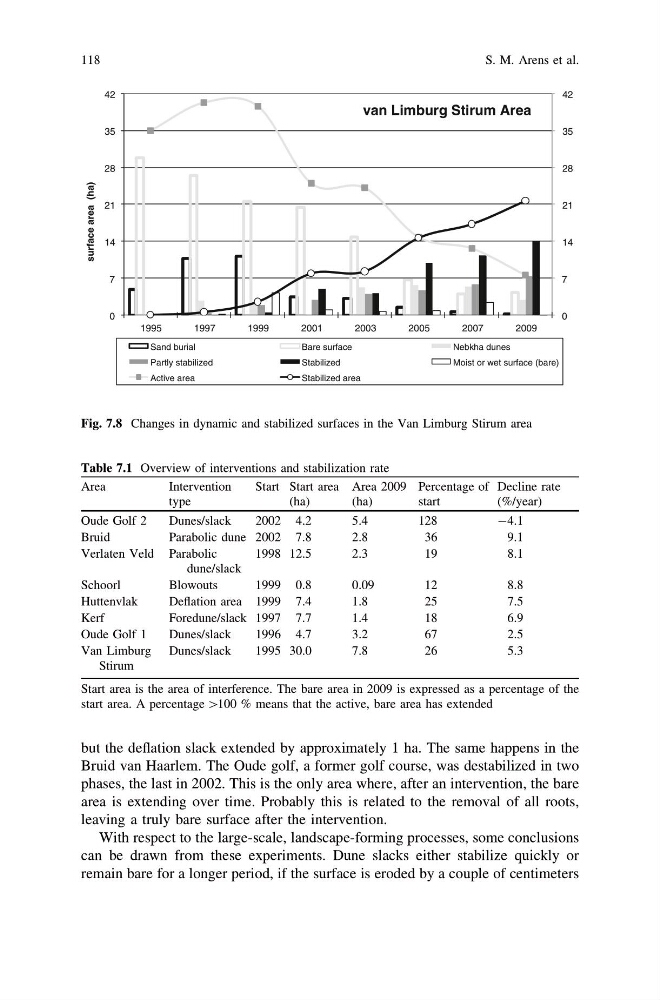
Fig. 7.8 Changes in dynamic and stabilized surfaces in the Van Limburg Stirum area
Table 7.1 Overview of interventions and stabilization rate
Area
Intervention
type
Start Start area
(ha)
Area 2009
(ha)
Percentage of
start
Decline rate
(%/year)
Oude Golf 2
Dunes/slack
2002 4.2
5.4
128
-4.1
Bruid
Parabolic dune 2002 7.8
2.8
36
9.1
Verlaten Veld Parabolic
dune/slack
1998 12.5
2.3
19
8.1
Schoorl
Blowouts
1999 0.8
0.09
12
8.8
Huttenvlak
Deflation area 1999 7.4
1.8
25
7.5
Kerf
Foredune/slack 1997 7.7
1.4
18
6.9
Oude Golf 1
Dunes/slack
1996 4.7
3.2
67
2.5
Van Limburg
Stirum
Dunes/slack
1995 30.0
7.8
26
5.3
Start area is the area of interference. The bare area in 2009 is expressed as a percentage of the
start area. A percentage [100 % means that the active, bare area has extended
118
S. M. Arens et al.
Bruid van Haarlem. The Oude golf, a former golf course, was destabilized in two
phases, the last in 2002. This is the only area where, after an intervention, the bare
area is extending over time. Probably this is related to the removal of all roots,
leaving a truly bare surface after the intervention.
With respect to the large-scale, landscape-forming processes, some conclusions
can be drawn from these experiments. Dune slacks either stabilize quickly or
remain bare for a longer period, if the surface is eroded by a couple of centimeters
0
7
14
21
28
35
42
0
7
14
21
28
35
42
surface area (ha)
jaar
van Limburg Stirum Area
Sand burial
Bare surface
Nebkha dunes
Partly stabilized
Stabilized
Moist or wet surface (bare)
Active area
Stabilized area
1995
1997
1999
2001
2003
2005
2007
2009
Fig. 7.8 Changes in dynamic and stabilized surfaces in the Van Limburg Stirum area
Table 7.1 Overview of interventions and stabilization rate
Area
Intervention
type
Start Start area
(ha)
Area 2009
(ha)
Percentage of
start
Decline rate
(%/year)
Oude Golf 2
Dunes/slack
2002 4.2
5.4
128
-4.1
Bruid
Parabolic dune 2002 7.8
2.8
36
9.1
Verlaten Veld Parabolic
dune/slack
1998 12.5
2.3
19
8.1
Schoorl
Blowouts
1999 0.8
0.09
12
8.8
Huttenvlak
Deflation area 1999 7.4
1.8
25
7.5
Kerf
Foredune/slack 1997 7.7
1.4
18
6.9
Oude Golf 1
Dunes/slack
1996 4.7
3.2
67
2.5
Van Limburg
Stirum
Dunes/slack
1995 30.0
7.8
26
5.3
Start area is the area of interference. The bare area in 2009 is expressed as a percentage of the
start area. A percentage [100 % means that the active, bare area has extended
118
S. M. Arens et al.