

Institute of Research and Development for Aquatic Ecology, Fishing and Aquaculture, from the city of Galați, the Danube Delta National Institute for Research and
Development, from the city of Tulcea, and the Fishery Research Station Nucet, in
the D^ ambovița county. Added to these, there is a National Institute for Marine
Research & Development “Grigore Antipa”, from Constanța and a National Institute for Research and Development in Forestry, in Bucharest, which, apart from
forestry, researches salmonids i.e. a family of ray-finned fish, including salmon,
trout and other freshwater whitefishes.
These institutes avail themselves of specialists, research and micro-production
stations yet, the scientific research being carried out here suffers as a result of
prolonged underfunding – from both the public as well as the private sector – and
inadequate technological transfers. The latter of these negative aspects is the result
of a palpable lack of a sense of direction in adapting such research endeavours
towards the demands of the market. Moreover, there is a chronic lack of an adequate
infrastructure to allow the research results to be turned into applicable innovations.
As regards the technological transfers from research institutes towards commercial production units, there seem to be significant differences between freshwater
and marine water research. Whereas the first of the two types of research trickles
down with varying degrees of commercial success towards dedicated production
units, the latter sees no such transfers whatsoever, with the sole exception of a rather
timid upturn in the commercial farming of sturgeon. And all of this occurs despite
there being plenty of positive micro-production results on species such as oysters
and shrimps, for example.
A far from comprehensive list of publications includes fourteen books and more
than two hundred peer-review papers being released by the Marine Research
Institute. Yet, fishery products, the sought-after seafood delicatessen are still
being imported into Romania.(Bologa 2000; Bologa and Charlier 2011; www.
rmri.com).
0
2001
2431
2002
2116
2003
1612
2004
1831
2005
1940
2006
1390
2007
435 444 331 258
2008 2009 2010
500
1000
1500
2000
2500
TOTAL
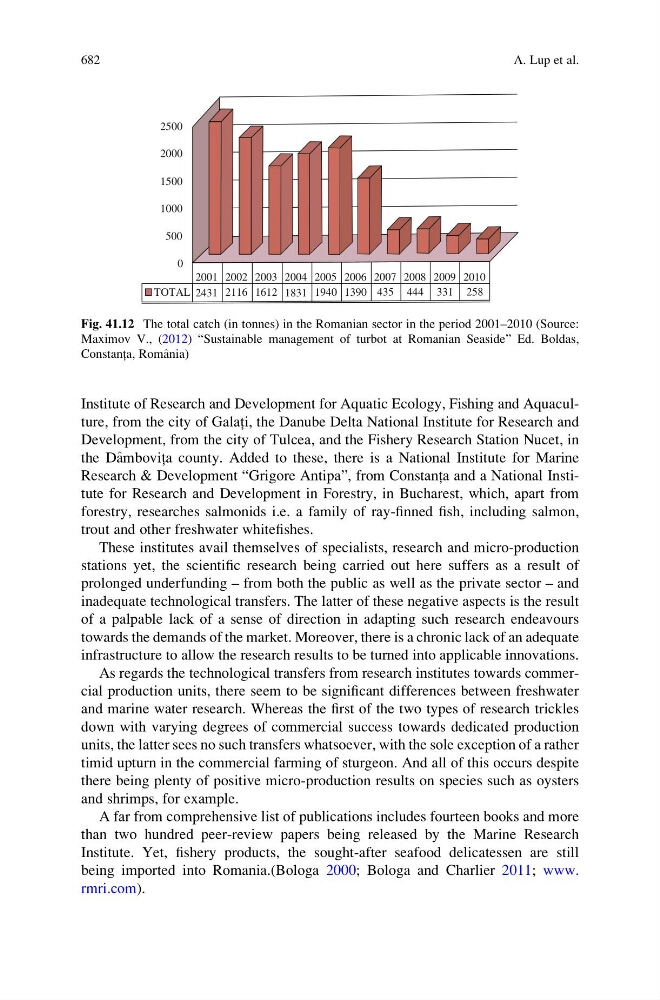
Fig. 41.12 The total catch (in tonnes) in the Romanian sector in the period 2001–2010 (Source:
Maximov V., (2012) “Sustainable management of turbot at Romanian Seaside” Ed. Boldas,
Constanța, Rom^ ania)
682
A. Lup et al.