

particular we must remind the role of Rear- Admiral Emanoil Koslinski in the
implementation of the third program of endowment with warships. In 1907, in
Galati, within this program, they had been launched four monitors and eight river
gunboats, that represented the first Danube Squadron.
In this period, among the great Romanian scientists with international recognition, who had contributed to the development of the marine sciences, we must first
remind of: Emil Racovita, Grigore Antipa and Ioan Borcea. The professor Ioan
Borcea, the pioneer of the Romanian oceanography, had founded in 1926 the Zoomarine Scientific Research Unit in Agigea, subsequently completed in 1937 with a
Chemical laboratory.
A reference scientific personality in the field is Constantin Bra ˘tescu, which was
distinguished oneself by its geographical researches (1922, 1928, 1933) in
Dobrogea, Delta and even marine area. Among other scientists, we remind
Gheorghe Nastase (with his works in the marine morphohydrography field-1935),
R. Cioc^ ardel (respectively, his works about the seawaters movement À1938),
P. Bujor (1900), E.C. Teodorescu (1907) and M. Celan (beginning with 1930),
with his works about the benthic algaology.
During the interwar period, they had been performed researches in the hydrography and marine hydrology fields by the Marine Hydrographic Service of the Navy
– Ports and Waterways General Directorate. In 1933 it was installed the first
registering tide gauge (maregraf) at Constanta.
After the Second World War, the marine researches had been resumed, particularly, in the field of the marine biology, but beginning with 1959, they have been
also performed hydrographical and hydrological surveys in the Romanian territorial
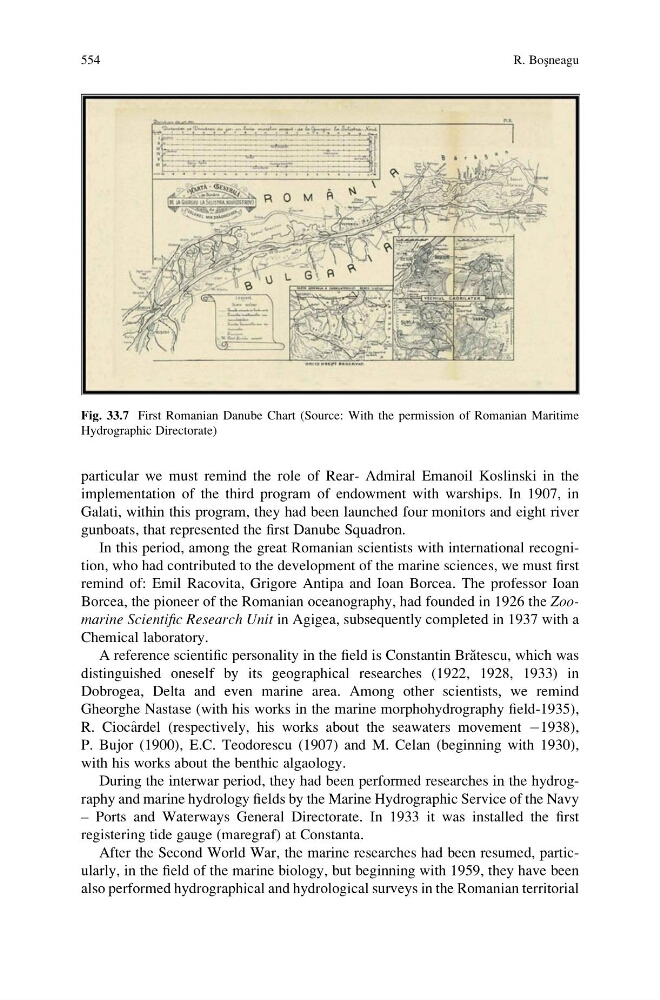
Fig. 33.7 First Romanian Danube Chart (Source: With the permission of Romanian Maritime
Hydrographic Directorate)
554
R. Bos ¸neagu
implementation of the third program of endowment with warships. In 1907, in
Galati, within this program, they had been launched four monitors and eight river
gunboats, that represented the first Danube Squadron.
In this period, among the great Romanian scientists with international recognition, who had contributed to the development of the marine sciences, we must first
remind of: Emil Racovita, Grigore Antipa and Ioan Borcea. The professor Ioan
Borcea, the pioneer of the Romanian oceanography, had founded in 1926 the Zoomarine Scientific Research Unit in Agigea, subsequently completed in 1937 with a
Chemical laboratory.
A reference scientific personality in the field is Constantin Bra ˘tescu, which was
distinguished oneself by its geographical researches (1922, 1928, 1933) in
Dobrogea, Delta and even marine area. Among other scientists, we remind
Gheorghe Nastase (with his works in the marine morphohydrography field-1935),
R. Cioc^ ardel (respectively, his works about the seawaters movement À1938),
P. Bujor (1900), E.C. Teodorescu (1907) and M. Celan (beginning with 1930),
with his works about the benthic algaology.
During the interwar period, they had been performed researches in the hydrography and marine hydrology fields by the Marine Hydrographic Service of the Navy
– Ports and Waterways General Directorate. In 1933 it was installed the first
registering tide gauge (maregraf) at Constanta.
After the Second World War, the marine researches had been resumed, particularly, in the field of the marine biology, but beginning with 1959, they have been
also performed hydrographical and hydrological surveys in the Romanian territorial
Fig. 33.7 First Romanian Danube Chart (Source: With the permission of Romanian Maritime
Hydrographic Directorate)
554
R. Bos ¸neagu