

So, the first documentary attestations of the populations that have settled in the
adjacent areas of the Black Sea and Danube showed their economic, cultural and
military preoccupations related to the sea and the river vicinity. Nowadays, the
fishing, the seaborne or the seamanship are the specific occupations for the
populations in these areas.
Since the early antiquity, The Black Sea basin came to the attention of the
seafarers nations. The name of the aquatic basin that today we call Black Sea has
undergone several metamorphoses in the historical past. It is supposed that the
populations settled around the sea, especially the Getae and Scythians, having more
aptitudes as shepherds and ploughmen than navigators, saw in the immensity of its
waters just a frightening and incomprehensible ghost, the reason being why they
called it Ahsaena, meaning “gloomy” or “black”(V. Trufas ¸ 1969).
Entering in the Black Sea waters, the Greeks took over from the natives the word
Ahsaena, they understood its gloomy sense and changed it into Axeinos, which in
Greek it means “unfriendly”, “inhospitable” (I. Leps ¸i, 1939).
The fruitful trading connections with the local populations have made the Greeks
to settle down on the coast of the Unfriendly Sea (Pontos Axeinos) and to found
many cities that constitute centres of civilization. In this situation, the name of
Pontos Axeinos seemed pointless and even vexatious to them, therefore they
changed it in Pontos Euxeinos (Hospitality Sea). This name lasted 12 centuries,
until the great migrations of the late antiquity have destroyed the civilized centres.
Once with these, it is lost the old name, too and thus it was assumed the old
denomination, i.e. of Pontos – which had definitely imposed – the Black Sea
(B^ ardeanu and Nicolaescu 1979).
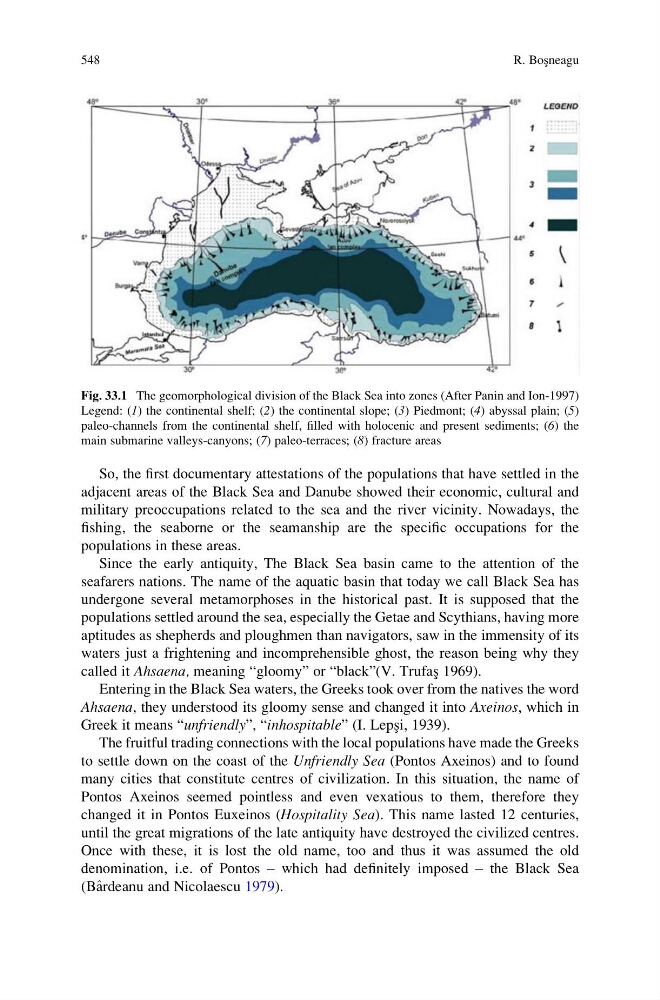
Fig. 33.1 The geomorphological division of the Black Sea into zones (After Panin and Ion-1997)
Legend: (1) the continental shelf; (2) the continental slope; (3) Piedmont; (4) abyssal plain; (5)
paleo-channels from the continental shelf, filled with holocenic and present sediments; (6) the
main submarine valleys-canyons; (7) paleo-terraces; (8) fracture areas
548
R. Bos ¸neagu
adjacent areas of the Black Sea and Danube showed their economic, cultural and
military preoccupations related to the sea and the river vicinity. Nowadays, the
fishing, the seaborne or the seamanship are the specific occupations for the
populations in these areas.
Since the early antiquity, The Black Sea basin came to the attention of the
seafarers nations. The name of the aquatic basin that today we call Black Sea has
undergone several metamorphoses in the historical past. It is supposed that the
populations settled around the sea, especially the Getae and Scythians, having more
aptitudes as shepherds and ploughmen than navigators, saw in the immensity of its
waters just a frightening and incomprehensible ghost, the reason being why they
called it Ahsaena, meaning “gloomy” or “black”(V. Trufas ¸ 1969).
Entering in the Black Sea waters, the Greeks took over from the natives the word
Ahsaena, they understood its gloomy sense and changed it into Axeinos, which in
Greek it means “unfriendly”, “inhospitable” (I. Leps ¸i, 1939).
The fruitful trading connections with the local populations have made the Greeks
to settle down on the coast of the Unfriendly Sea (Pontos Axeinos) and to found
many cities that constitute centres of civilization. In this situation, the name of
Pontos Axeinos seemed pointless and even vexatious to them, therefore they
changed it in Pontos Euxeinos (Hospitality Sea). This name lasted 12 centuries,
until the great migrations of the late antiquity have destroyed the civilized centres.
Once with these, it is lost the old name, too and thus it was assumed the old
denomination, i.e. of Pontos – which had definitely imposed – the Black Sea
(B^ ardeanu and Nicolaescu 1979).
Fig. 33.1 The geomorphological division of the Black Sea into zones (After Panin and Ion-1997)
Legend: (1) the continental shelf; (2) the continental slope; (3) Piedmont; (4) abyssal plain; (5)
paleo-channels from the continental shelf, filled with holocenic and present sediments; (6) the
main submarine valleys-canyons; (7) paleo-terraces; (8) fracture areas
548
R. Bos ¸neagu