

the biocoenosis lives, i.e. the ecosystemic role of populations (Bick 1998; Begon
et al. 1986; Brewer 1994; Chapman and Reiss 1992).
It was ascertained that the biocoenosis is not a simple, random mass of different
organisms, associated by chance, but an integrated system of populations belonging
to different species, which present adaptations allowing them to live together, using
an appropriate environment, and making up with it an ecosystem.
It was pointed out that populations themselves have a certain organisation and
through their intra- and interspecific relationships interact with non-living
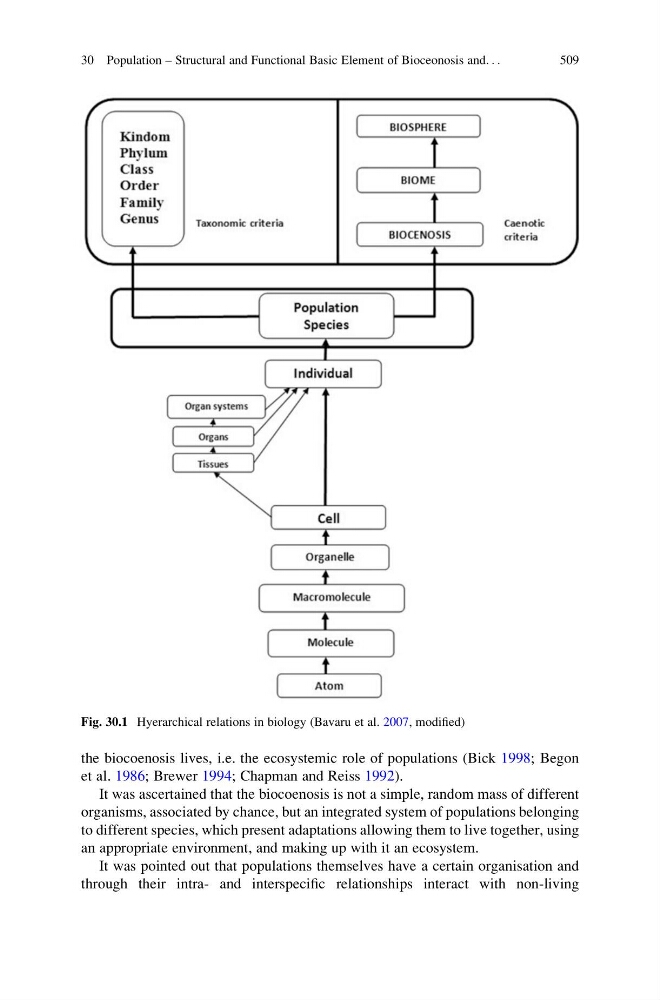
Fig. 30.1 Hyerarchical relations in biology (Bavaru et al. 2007, modified)
30 Population – Structural and Functional Basic Element of Bioceonosis and. . .
509
et al. 1986; Brewer 1994; Chapman and Reiss 1992).
It was ascertained that the biocoenosis is not a simple, random mass of different
organisms, associated by chance, but an integrated system of populations belonging
to different species, which present adaptations allowing them to live together, using
an appropriate environment, and making up with it an ecosystem.
It was pointed out that populations themselves have a certain organisation and
through their intra- and interspecific relationships interact with non-living
Fig. 30.1 Hyerarchical relations in biology (Bavaru et al. 2007, modified)
30 Population – Structural and Functional Basic Element of Bioceonosis and. . .
509