

Topcuoglu et al. (2002), Romero et al. (2005) studied the accumulation of trace
metals by measuring them in the mussel collected in the Black sea. The authors
found that Cd, Cu, Zn, Hg, Fe, Mn concentration changed between 0.96–1.74 μg/g,
6.64–8.05 μg/g, 108–190 μg/g, 26–33 ng/g, 95–106 μg/g and 14.5–24.5 μg/g
mussels, respectively.
Tuzen (2009) measured the trace element concentration in different marine algae
(Antithamnion cruciatum and Phyllophora nervosa) collected from middle and east
Black Sea. They found that the highest trace element concentration was determined
for iron and the lowest for cadmium (Table 18.2). The authors suggested that the
marine algae samples should be analyzed more often in Turkey with respect to toxic
elements. Edible marine algae samples could be used as a food supplement to help
meet the recommended daily intakes of some mineral and trace elements.
Zinc, copper, cadmium, lead and cobalt concentrations in Mediterranean mussel
Mytilus galloprovincialis and sea snail Rapana venosa from the Sinop coasts of the
Black sea have been measured (Turk-Culha et al. 2007). Significant differences
were found in metal concentrations between the species. Similar significant differences observed with regard to different metals. The concentrations of Pb, Cd and
Co were determined under detection limit for the species. The other metal levels in
the Mediterranean mussel and the sea snail were significantly higher than those in
fishes.
ppm
Ulva rigida
Ent. intestinalis
Clad. vagabunda
Clad. coleothrix
Chaetom. gracilis
Bryopsis plumosa
0
2
4
6
8
10
12
14
16
Cu
Pb
Cd
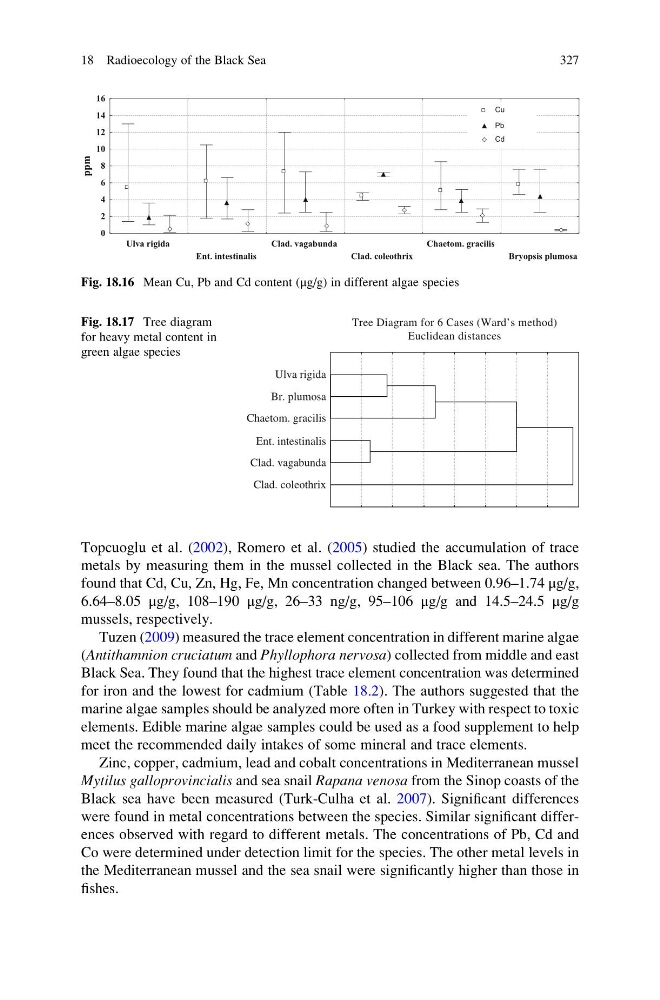
Fig. 18.16 Mean Cu, Pb and Cd content (μg/g) in different algae species
Tree Diagram for 6 Cases (Ward’s method)
Euclidean distances
Ulva rigida
Br. plumosa
Chaetom. gracilis
Ent. intestinalis
Clad. vagabunda
Clad. coleothrix
Fig. 18.17 Tree diagram
for heavy metal content in
green algae species
18 Radioecology of the Black Sea
327
metals by measuring them in the mussel collected in the Black sea. The authors
found that Cd, Cu, Zn, Hg, Fe, Mn concentration changed between 0.96–1.74 μg/g,
6.64–8.05 μg/g, 108–190 μg/g, 26–33 ng/g, 95–106 μg/g and 14.5–24.5 μg/g
mussels, respectively.
Tuzen (2009) measured the trace element concentration in different marine algae
(Antithamnion cruciatum and Phyllophora nervosa) collected from middle and east
Black Sea. They found that the highest trace element concentration was determined
for iron and the lowest for cadmium (Table 18.2). The authors suggested that the
marine algae samples should be analyzed more often in Turkey with respect to toxic
elements. Edible marine algae samples could be used as a food supplement to help
meet the recommended daily intakes of some mineral and trace elements.
Zinc, copper, cadmium, lead and cobalt concentrations in Mediterranean mussel
Mytilus galloprovincialis and sea snail Rapana venosa from the Sinop coasts of the
Black sea have been measured (Turk-Culha et al. 2007). Significant differences
were found in metal concentrations between the species. Similar significant differences observed with regard to different metals. The concentrations of Pb, Cd and
Co were determined under detection limit for the species. The other metal levels in
the Mediterranean mussel and the sea snail were significantly higher than those in
fishes.
ppm
Ulva rigida
Ent. intestinalis
Clad. vagabunda
Clad. coleothrix
Chaetom. gracilis
Bryopsis plumosa
0
2
4
6
8
10
12
14
16
Cu
Pb
Cd
Fig. 18.16 Mean Cu, Pb and Cd content (μg/g) in different algae species
Tree Diagram for 6 Cases (Ward’s method)
Euclidean distances
Ulva rigida
Br. plumosa
Chaetom. gracilis
Ent. intestinalis
Clad. vagabunda
Clad. coleothrix
Fig. 18.17 Tree diagram
for heavy metal content in
green algae species
18 Radioecology of the Black Sea
327