

18.2.4.3 Heavy Metals in Black Sea Sediments
The distribution of the recent bottom sediments in the Black sea shows a variable
pattern. The sediment composition and origin depend on the provenance areas,
hydrodynamic and lithodynamic activity in the contact zone of the sea, and on the
morphology of the bottom topography. Sediment formation is also influenced by
the solid riverine runoff and coastal abrasion, slope-derived supply, and biogenic
and chemogenic matter (Ignatov (2008)).
Heavy metal concentrations in surface sediments can provide historical information on heavy metal inputs at that location. Such surface sediment samples are
also used as environmental indicators to reflect the current quality of marine
systems for many pollutants (F€ orstner and Salamons 1980). Nijenhuis et al.
(1999) reported that the enrichment of trace elements in marine sediments may,
in general, originate from the following sources; super and subjacent sediments,
through diagenesis; suboxic shelf and slope sediments, hydrothermal input; aeolian
input; fluvial runoff; sea water. Heavy metal levels in sediment from the Black Sea
were investigated by many researchers (Ergul et al. 2008; Topcuoglu et al. 2002;
Topcuoglu et al. 2004; Strezov and Nonova 2003) that measured heavy metal
concentrations in sediment samples and found dependence upon seasonal changes
within the water column as well as anthropogenic and geological inputs such as
weathering and run-off from land-based sources. Furthermore, metal concentrations in both surface sediments and sinking particles also suggest that heavy metal
concentration is generally enhanced in the eastern region along the Black sea coast
of Turkey.
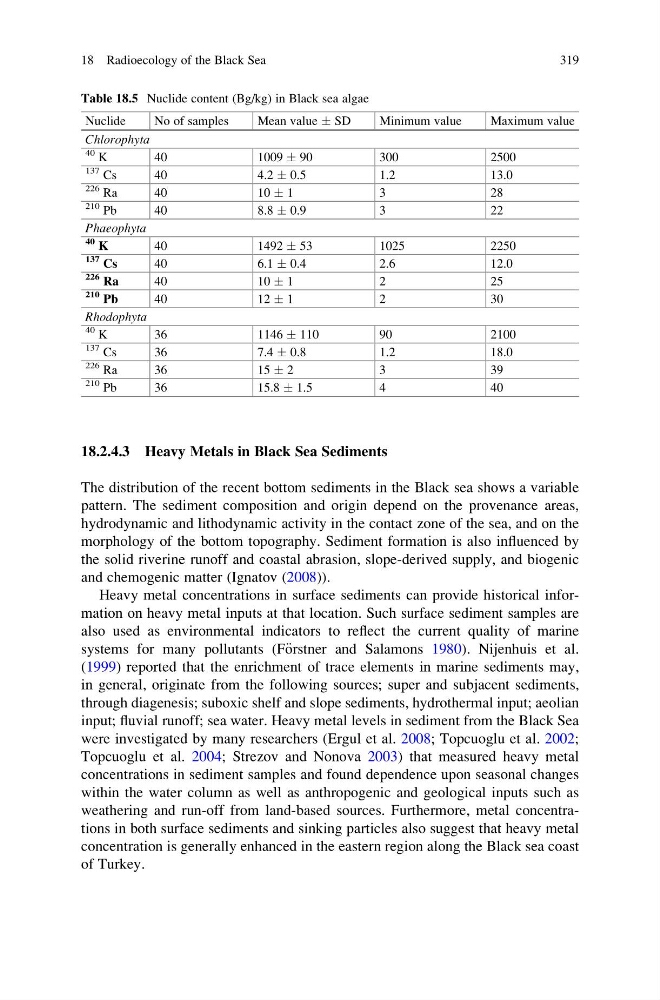
Table 18.5 Nuclide content (Bg/kg) in Black sea algae
Nuclide
No of samples
Mean value Æ SD
Minimum value
Maximum value
Chlorophyta
40 K
40
1009 Æ 90
300
2500
137 Cs
40
4.2 Æ 0.5
1.2
13.0
226 Ra
40
10 Æ 1
3
2 8
210 Pb
40
8.8 Æ 0.9
3
22
Phaeophyta
40 K
40
1492 Æ 53
1025
2250
137 Cs
40
6.1 Æ 0.4
2.6
12.0
226 Ra
40
10 Æ 1
2
2 5
210 Pb
40
12 Æ 1
2
3 0
Rhodophyta
40 K
36
1146 Æ 110
90
2100
137 Cs
36
7.4 Æ 0.8
1.2
18.0
226 Ra
36
15 Æ 2
3
3 9
210 Pb
36
15.8 Æ 1.5
4
40
18 Radioecology of the Black Sea
319
The distribution of the recent bottom sediments in the Black sea shows a variable
pattern. The sediment composition and origin depend on the provenance areas,
hydrodynamic and lithodynamic activity in the contact zone of the sea, and on the
morphology of the bottom topography. Sediment formation is also influenced by
the solid riverine runoff and coastal abrasion, slope-derived supply, and biogenic
and chemogenic matter (Ignatov (2008)).
Heavy metal concentrations in surface sediments can provide historical information on heavy metal inputs at that location. Such surface sediment samples are
also used as environmental indicators to reflect the current quality of marine
systems for many pollutants (F€ orstner and Salamons 1980). Nijenhuis et al.
(1999) reported that the enrichment of trace elements in marine sediments may,
in general, originate from the following sources; super and subjacent sediments,
through diagenesis; suboxic shelf and slope sediments, hydrothermal input; aeolian
input; fluvial runoff; sea water. Heavy metal levels in sediment from the Black Sea
were investigated by many researchers (Ergul et al. 2008; Topcuoglu et al. 2002;
Topcuoglu et al. 2004; Strezov and Nonova 2003) that measured heavy metal
concentrations in sediment samples and found dependence upon seasonal changes
within the water column as well as anthropogenic and geological inputs such as
weathering and run-off from land-based sources. Furthermore, metal concentrations in both surface sediments and sinking particles also suggest that heavy metal
concentration is generally enhanced in the eastern region along the Black sea coast
of Turkey.
Table 18.5 Nuclide content (Bg/kg) in Black sea algae
Nuclide
No of samples
Mean value Æ SD
Minimum value
Maximum value
Chlorophyta
40 K
40
1009 Æ 90
300
2500
137 Cs
40
4.2 Æ 0.5
1.2
13.0
226 Ra
40
10 Æ 1
3
2 8
210 Pb
40
8.8 Æ 0.9
3
22
Phaeophyta
40 K
40
1492 Æ 53
1025
2250
137 Cs
40
6.1 Æ 0.4
2.6
12.0
226 Ra
40
10 Æ 1
2
2 5
210 Pb
40
12 Æ 1
2
3 0
Rhodophyta
40 K
36
1146 Æ 110
90
2100
137 Cs
36
7.4 Æ 0.8
1.2
18.0
226 Ra
36
15 Æ 2
3
3 9
210 Pb
36
15.8 Æ 1.5
4
40
18 Radioecology of the Black Sea
319