

obtained results will facilitate the assessment of sedimentary systems for the
sustainable management and use of the sea shelf.
Transport pathways and impacts of pollutants, key elements and nutrients in the
marine environment will support the implementation and further development
promote the advancement of relevant conventions for the reduction of nutrient
and pollutant loads of the sea. Research activities should address the transport,
cycling, coupling and accumulation of nuclide and heavy metal pollutants. The
impact of pollutants should be addressed, their uptake by organisms, their ecotoxicological effects and the synergistic effects of multiple pollutants upon the marine
ecosystems.
Another important task is the reducing the anthropogenic impact on biodiversity
and the sustainable functioning of marine ecosystems, facilitating the development
of safe, economic and sustainable exploitation technologies requiring safe and
economic (yet sustainable) exploitation of marine resources by improving the
scientific basis of sustainability.
Complex monitoring of Global changes and marine ecosystems for modelling
and adequate management for sustainable environment have to include the foremost requirement to better characterize, observe and monitor the marine
environment.
The objective is to stimulate “clean” technological developments for oceanic
environments, to develop integrated coastal management concepts, including costbenefit assessments, to alleviate pollution, flooding and erosion, in particular of
fragile coastlines, and to ensure sustainable resource utilization. Anticipated deliverables are integrated management tools and concepts for the coastal zone ecosystem; long-term predictions of coastal zone changes; reliable, economic and
environmentally compatible coastal protection measures against flooding and erosion; effective monitoring in coastal, shelf and slope areas.
Emphasis should be put on efficiency, speed, reliability, environmental friendliness and safety. In parallel, attention will be given to the improvement of sample
collection and handling (including samples from sea drilling), the exploitation of
distributed sample collections, and inter-calibration exercises, networking and joint
experiments. Special attention will be given to the problems of coastal inlets (tidal
basins, estuaries, lagoons, arias, brachial zones).
A monitoring program for measuring technogenic and natural radionuclides in
marine environmental samples from the Bulgarian Black sea coast has been utilized
since 1991.
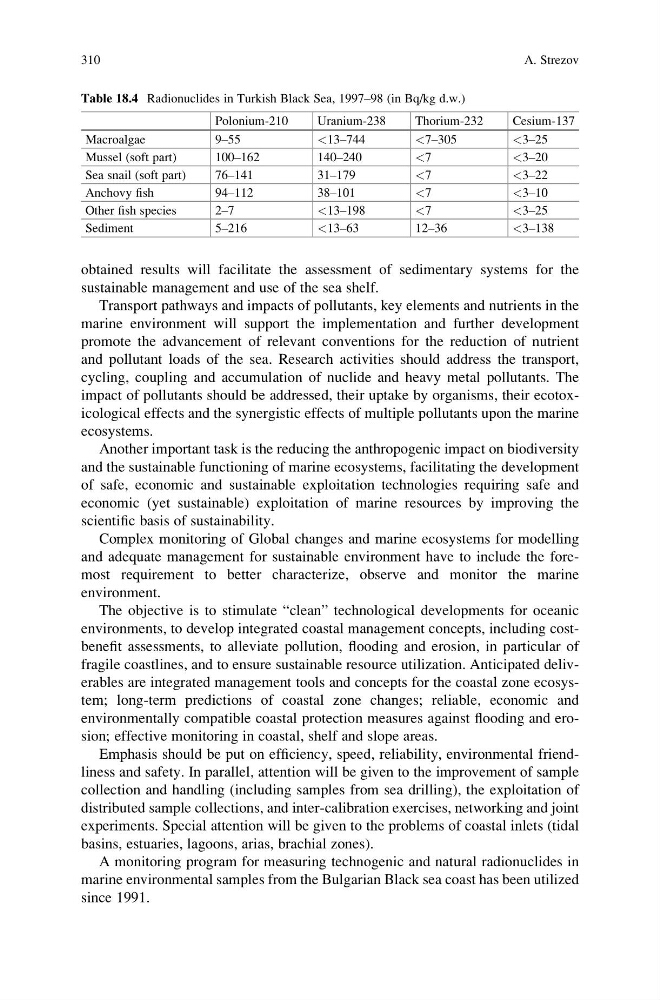
Table 18.4 Radionuclides in Turkish Black Sea, 1997–98 (in Bq/kg d.w.)
Polonium-210
Uranium-238
Thorium-232
Cesium-137
Macroalgae
9–55
<13–744
<7–305
<3–25
Mussel (soft part)
100–162
140–240
<7
<3–20
Sea snail (soft part)
76–141
31–179
<7
<3–22
Anchovy fish
94–112
38–101
<7
<3–10
Other fish species
2–7
<13–198
<7
<3–25
Sediment
5–216
<13–63
12–36
<3–138
310
A. Strezov
sustainable management and use of the sea shelf.
Transport pathways and impacts of pollutants, key elements and nutrients in the
marine environment will support the implementation and further development
promote the advancement of relevant conventions for the reduction of nutrient
and pollutant loads of the sea. Research activities should address the transport,
cycling, coupling and accumulation of nuclide and heavy metal pollutants. The
impact of pollutants should be addressed, their uptake by organisms, their ecotoxicological effects and the synergistic effects of multiple pollutants upon the marine
ecosystems.
Another important task is the reducing the anthropogenic impact on biodiversity
and the sustainable functioning of marine ecosystems, facilitating the development
of safe, economic and sustainable exploitation technologies requiring safe and
economic (yet sustainable) exploitation of marine resources by improving the
scientific basis of sustainability.
Complex monitoring of Global changes and marine ecosystems for modelling
and adequate management for sustainable environment have to include the foremost requirement to better characterize, observe and monitor the marine
environment.
The objective is to stimulate “clean” technological developments for oceanic
environments, to develop integrated coastal management concepts, including costbenefit assessments, to alleviate pollution, flooding and erosion, in particular of
fragile coastlines, and to ensure sustainable resource utilization. Anticipated deliverables are integrated management tools and concepts for the coastal zone ecosystem; long-term predictions of coastal zone changes; reliable, economic and
environmentally compatible coastal protection measures against flooding and erosion; effective monitoring in coastal, shelf and slope areas.
Emphasis should be put on efficiency, speed, reliability, environmental friendliness and safety. In parallel, attention will be given to the improvement of sample
collection and handling (including samples from sea drilling), the exploitation of
distributed sample collections, and inter-calibration exercises, networking and joint
experiments. Special attention will be given to the problems of coastal inlets (tidal
basins, estuaries, lagoons, arias, brachial zones).
A monitoring program for measuring technogenic and natural radionuclides in
marine environmental samples from the Bulgarian Black sea coast has been utilized
since 1991.
Table 18.4 Radionuclides in Turkish Black Sea, 1997–98 (in Bq/kg d.w.)
Polonium-210
Uranium-238
Thorium-232
Cesium-137
Macroalgae
9–55
<13–744
<7–305
<3–25
Mussel (soft part)
100–162
140–240
<7
<3–20
Sea snail (soft part)
76–141
31–179
<7
<3–22
Anchovy fish
94–112
38–101
<7
<3–10
Other fish species
2–7
<13–198
<7
<3–25
Sediment
5–216
<13–63
12–36
<3–138
310
A. Strezov