

suspended matter in the NWBS (Kukushkin 2013b; Voskresenskaya et al. 2004,
2011). In turn, the meteorological conditions and riverine discharge are affected by
the variability of global climatic shifts (North Atlantic Oscillation, NOA, and
Southern Oscillation, SO) during different El Ni~ no–Southern Oscillation (ENSO)
periods or absence thereof. That is why we used anomalies in the Danube River
1
2
3
4
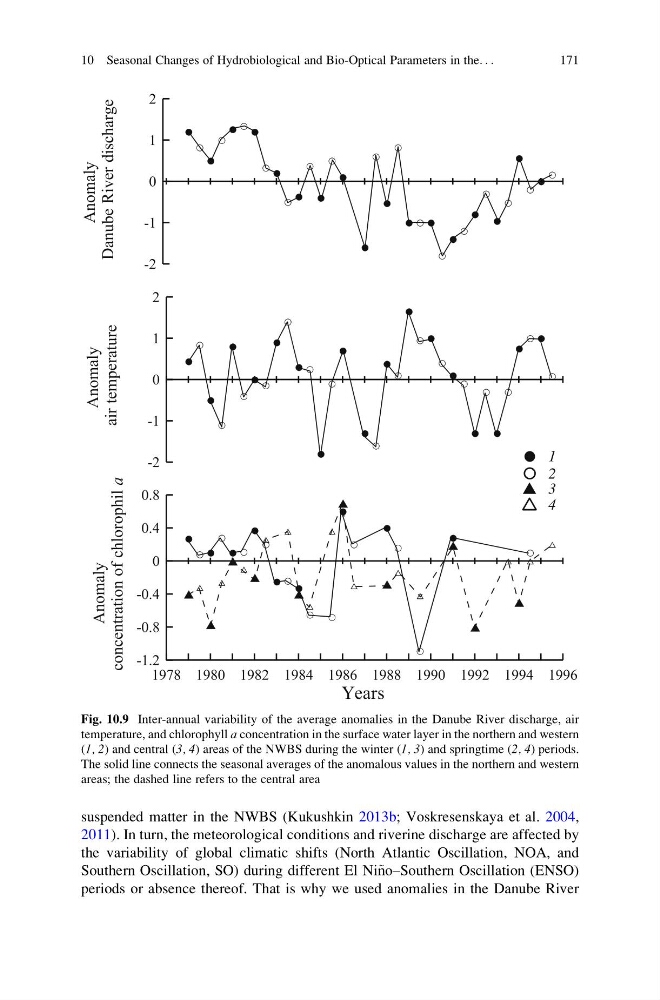
Fig. 10.9 Inter-annual variability of the average anomalies in the Danube River discharge, air
temperature, and chlorophyll a concentration in the surface water layer in the northern and western
(1, 2) and central (3, 4) areas of the NWBS during the winter (1, 3) and springtime (2, 4) periods.
The solid line connects the seasonal averages of the anomalous values in the northern and western
areas; the dashed line refers to the central area
10 Seasonal Changes of Hydrobiological and Bio-Optical Parameters in the. . .
171
2011). In turn, the meteorological conditions and riverine discharge are affected by
the variability of global climatic shifts (North Atlantic Oscillation, NOA, and
Southern Oscillation, SO) during different El Ni~ no–Southern Oscillation (ENSO)
periods or absence thereof. That is why we used anomalies in the Danube River
1
2
3
4
Fig. 10.9 Inter-annual variability of the average anomalies in the Danube River discharge, air
temperature, and chlorophyll a concentration in the surface water layer in the northern and western
(1, 2) and central (3, 4) areas of the NWBS during the winter (1, 3) and springtime (2, 4) periods.
The solid line connects the seasonal averages of the anomalous values in the northern and western
areas; the dashed line refers to the central area
10 Seasonal Changes of Hydrobiological and Bio-Optical Parameters in the. . .
171