

absorption coefficient) were noted in autumn to the north off Varna. A considerable
growth of these values observed in all the seasons took place to the north from
Conztanza. Their maximum values were observed near the Danube estuary region.
To the north from this region the parameters’ values decreased (except for the
chlorophyll a concentration in the summer-autumn period). A slight increase of the
values was observed in the Dniester estuary area. A more noticeable increase of the
parameters under study was in the region of the Odessa Bay (Odessa), where,
besides the urban industrial and domestic waste, the Dnieper-Bug estuary waters
were present.
10.2.2 Inter-Annual Variability of the Hydrobiological
(1978–1995) and Bio-Optical (1997–2015) Parameters
In the last 20 years against the background of global warming certain climate
changes took place in the western and northwestern parts of the Black Sea region
(Matygin et al. 2013; Popov et al. 2009). In course of this period the air temperature
in winter increased, while the number of cold winters noticeably decreased. In
winter in NWBS the surface water average temperature increased by 2
C, and in
the bottom layer – by more than 3
C. During the warm period of a year repeatability of warm and very warm summer months grew, whereas cold months were
absent. Up to the mid 1990s, the winter and summer temperature trends were of an
anti-phase character (cold winter was followed by warm summers and vice versa).
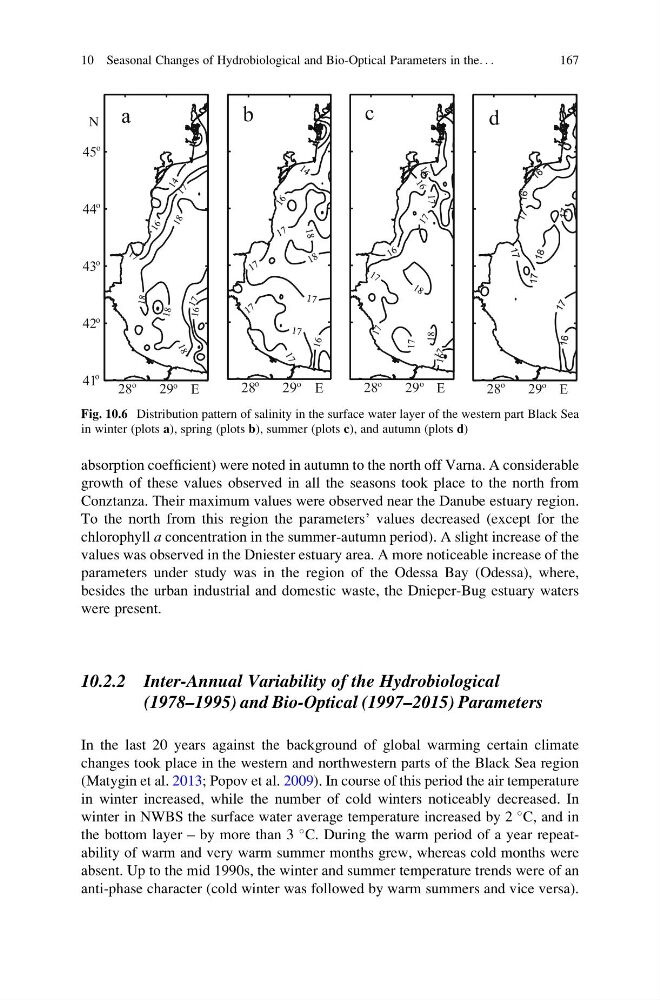
Fig. 10.6 Distribution pattern of salinity in the surface water layer of the western part Black Sea
in winter (plots a), spring (plots b), summer (plots c), and autumn (plots d)
10 Seasonal Changes of Hydrobiological and Bio-Optical Parameters in the. . .
167
growth of these values observed in all the seasons took place to the north from
Conztanza. Their maximum values were observed near the Danube estuary region.
To the north from this region the parameters’ values decreased (except for the
chlorophyll a concentration in the summer-autumn period). A slight increase of the
values was observed in the Dniester estuary area. A more noticeable increase of the
parameters under study was in the region of the Odessa Bay (Odessa), where,
besides the urban industrial and domestic waste, the Dnieper-Bug estuary waters
were present.
10.2.2 Inter-Annual Variability of the Hydrobiological
(1978–1995) and Bio-Optical (1997–2015) Parameters
In the last 20 years against the background of global warming certain climate
changes took place in the western and northwestern parts of the Black Sea region
(Matygin et al. 2013; Popov et al. 2009). In course of this period the air temperature
in winter increased, while the number of cold winters noticeably decreased. In
winter in NWBS the surface water average temperature increased by 2
C, and in
the bottom layer – by more than 3
C. During the warm period of a year repeatability of warm and very warm summer months grew, whereas cold months were
absent. Up to the mid 1990s, the winter and summer temperature trends were of an
anti-phase character (cold winter was followed by warm summers and vice versa).
Fig. 10.6 Distribution pattern of salinity in the surface water layer of the western part Black Sea
in winter (plots a), spring (plots b), summer (plots c), and autumn (plots d)
10 Seasonal Changes of Hydrobiological and Bio-Optical Parameters in the. . .
167