

trouble: New York, Shanghai, New Orleans, the Netherlands with cities like
Rotterdam and Amsterdam. Bangladesh will lose 18% of its territory, a country
which is an important agricultural area. The same will occur in the case of the
Ganges and the Mekong delta, as well as other agricultural areas important for the
cultivation of rice (Bavaru and Bercu 2014; Brown 2011a; M^ as ¸u 2014).
Numerous glaciers on mountain ranges will suffer the same process – will melt –
under the action of high temperatures, with the same serious consequences. The
Glacier Monitoring Service of the Zurich University shows that in the last 18 years
the alpine glaciers have reduced their volume continuously. They are melting twice
as much now than a decade ago. In many regions of the world the phenomenon of
mountain glaciers melting is extremely dangerous because it affects people’s food
security.
There are numerous such extremely eloquent examples in the specialized literature. Thus, in India, the giant Himalayan Gangotri glacier restricts its volume
alarmingly every year and it may disappear by 2035. Its annual melting ensures
70% of the Ganges River flow, a river that is the main source of irrigation and
drinking water for approximatively 400 million people in this river basin (Brown
2011a).
For China things are even worse. One of the most famous Chinese glaciologist,
Yao Tandong, believes that if temperatures continue to rise, the Tibetan glaciers
which feed the two great rivers of China, the Yellow River and the Yangtze, two
thirds of these glaciers will disappear by 2050. And do not forget that these two
great rivers are feeding hundreds of millions of people. Approximately 369 million
Annual measurements in 23 places
Changes in sea level (cm)
3 year average
satellite measurements
Year
1880
1900
1920
1940
1960
1980
2000
-5
0
5
10
15
20
25
30
35
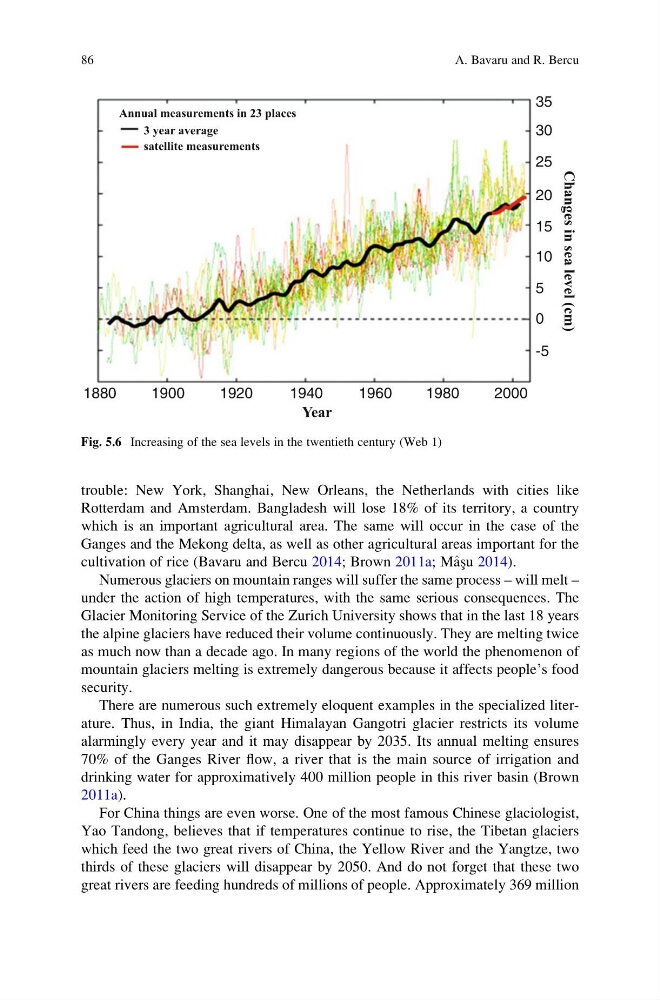
Fig. 5.6 Increasing of the sea levels in the twentieth century (Web 1)
86
A. Bavaru and R. Bercu
Rotterdam and Amsterdam. Bangladesh will lose 18% of its territory, a country
which is an important agricultural area. The same will occur in the case of the
Ganges and the Mekong delta, as well as other agricultural areas important for the
cultivation of rice (Bavaru and Bercu 2014; Brown 2011a; M^ as ¸u 2014).
Numerous glaciers on mountain ranges will suffer the same process – will melt –
under the action of high temperatures, with the same serious consequences. The
Glacier Monitoring Service of the Zurich University shows that in the last 18 years
the alpine glaciers have reduced their volume continuously. They are melting twice
as much now than a decade ago. In many regions of the world the phenomenon of
mountain glaciers melting is extremely dangerous because it affects people’s food
security.
There are numerous such extremely eloquent examples in the specialized literature. Thus, in India, the giant Himalayan Gangotri glacier restricts its volume
alarmingly every year and it may disappear by 2035. Its annual melting ensures
70% of the Ganges River flow, a river that is the main source of irrigation and
drinking water for approximatively 400 million people in this river basin (Brown
2011a).
For China things are even worse. One of the most famous Chinese glaciologist,
Yao Tandong, believes that if temperatures continue to rise, the Tibetan glaciers
which feed the two great rivers of China, the Yellow River and the Yangtze, two
thirds of these glaciers will disappear by 2050. And do not forget that these two
great rivers are feeding hundreds of millions of people. Approximately 369 million
Annual measurements in 23 places
Changes in sea level (cm)
3 year average
satellite measurements
Year
1880
1900
1920
1940
1960
1980
2000
-5
0
5
10
15
20
25
30
35
Fig. 5.6 Increasing of the sea levels in the twentieth century (Web 1)
86
A. Bavaru and R. Bercu