

52
4 Hydrology of (Shallow) Coastal Regions
Fig. 4.3 Tidal oscillation of the
water level in the North Sea at
gauge Leyhörn
In addition to the diurnal tides, storm tides are a key risk for coastal areas. In periods of
strong onshore winds, the high tides can be significantly raised by the wind. If such storms
persist several tides, each high tide accumulates more water, resulting in further elevated
high water levels. Highest storm tides happen if such storms develop during spring tides. In
the North Sea Region, the storm season usually lasts from October to February. Storm tides
can be classified through their return period or accordingly the probability of exceedance;
see, for example, Baumgartner and Liebscher 1996; Gönnert et al. 2001): moderate (less
than 2-year return period), severe (2–20-year return period) and very severe (more than
20-year return period).
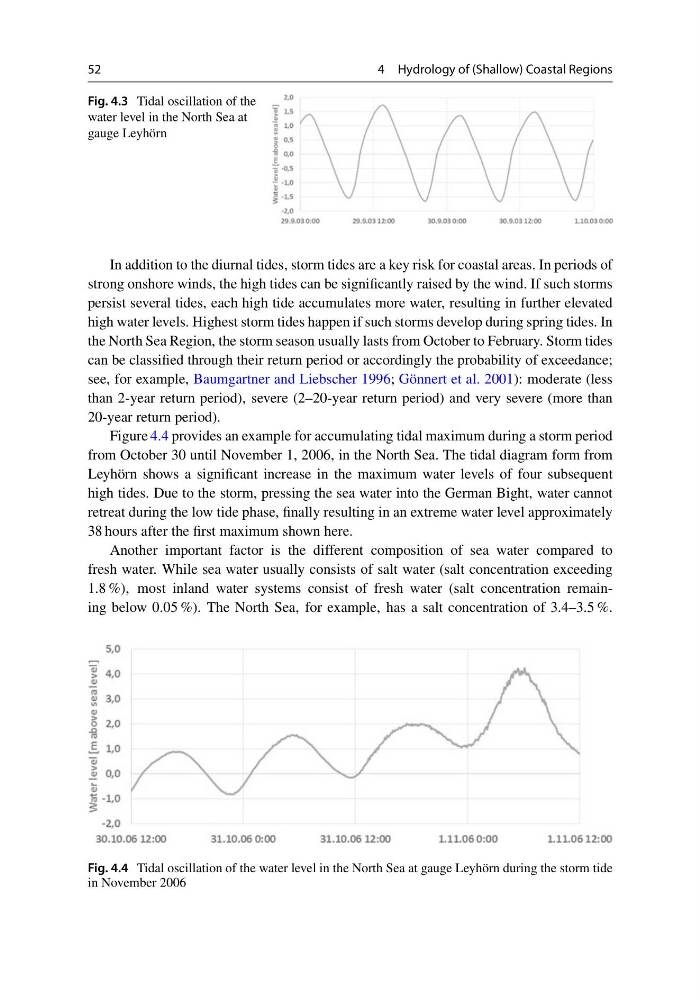
Figure 4.4 provides an example for accumulating tidal maximum during a storm period
from October 30 until November 1, 2006, in the North Sea. The tidal diagram form from
Leyhörn shows a significant increase in the maximum water levels of four subsequent
high tides. Due to the storm, pressing the sea water into the German Bight, water cannot
retreat during the low tide phase, finally resulting in an extreme water level approximately
38 hours after the first maximum shown here.
Another important factor is the different composition of sea water compared to
fresh water. While sea water usually consists of salt water (salt concentration exceeding
1.8 %), most inland water systems consist of fresh water (salt concentration remaining below 0.05 %). The North Sea, for example, has a salt concentration of 3.4–3.5 %.
Fig. 4.4 Tidal oscillation of the water level in the North Sea at gauge Leyhörn during the storm tide
in November 2006
4 Hydrology of (Shallow) Coastal Regions
Fig. 4.3 Tidal oscillation of the
water level in the North Sea at
gauge Leyhörn
In addition to the diurnal tides, storm tides are a key risk for coastal areas. In periods of
strong onshore winds, the high tides can be significantly raised by the wind. If such storms
persist several tides, each high tide accumulates more water, resulting in further elevated
high water levels. Highest storm tides happen if such storms develop during spring tides. In
the North Sea Region, the storm season usually lasts from October to February. Storm tides
can be classified through their return period or accordingly the probability of exceedance;
see, for example, Baumgartner and Liebscher 1996; Gönnert et al. 2001): moderate (less
than 2-year return period), severe (2–20-year return period) and very severe (more than
20-year return period).
Figure 4.4 provides an example for accumulating tidal maximum during a storm period
from October 30 until November 1, 2006, in the North Sea. The tidal diagram form from
Leyhörn shows a significant increase in the maximum water levels of four subsequent
high tides. Due to the storm, pressing the sea water into the German Bight, water cannot
retreat during the low tide phase, finally resulting in an extreme water level approximately
38 hours after the first maximum shown here.
Another important factor is the different composition of sea water compared to
fresh water. While sea water usually consists of salt water (salt concentration exceeding
1.8 %), most inland water systems consist of fresh water (salt concentration remaining below 0.05 %). The North Sea, for example, has a salt concentration of 3.4–3.5 %.
Fig. 4.4 Tidal oscillation of the water level in the North Sea at gauge Leyhörn during the storm tide
in November 2006