

7.4 Participatory Integrated Assessment
177
Design
Implementation
Conclusion & finish
Analysis
De…
General
project
cycle
Assessment
process
Analysis
Scenarios
Assessment
Participatory
process
Analysis
Evaluation
Negotiation &
deliberation
Design
Integrated
participatory
assessment
process
Time
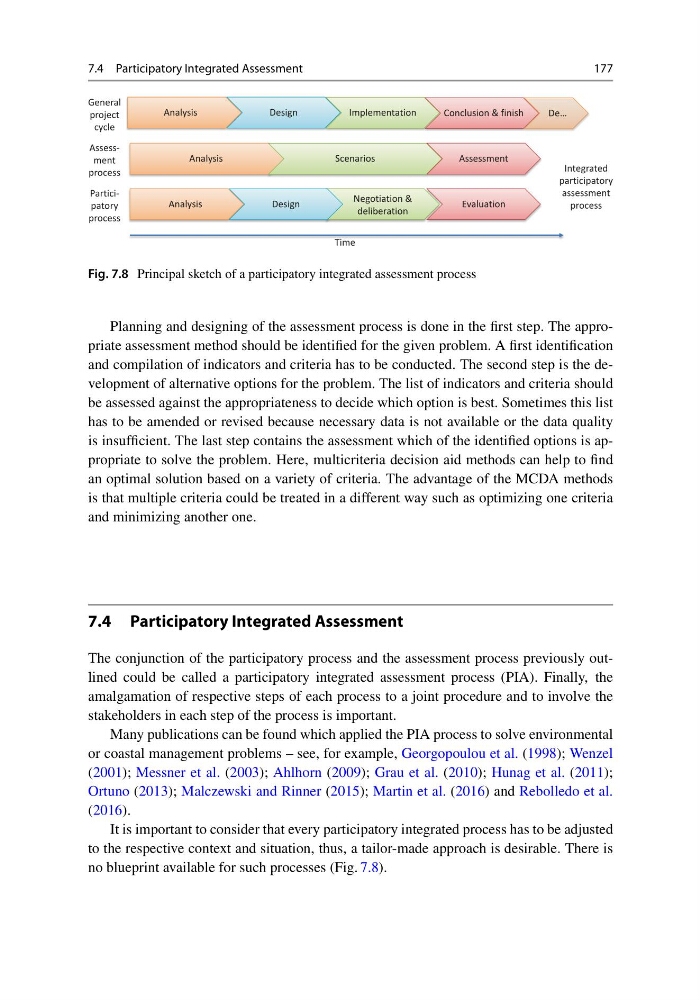
Fig. 7.8 Principal sketch of a participatory integrated assessment process
Planning and designing of the assessment process is done in the first step. The appropriate assessment method should be identified for the given problem. A first identification
and compilation of indicators and criteria has to be conducted. The second step is the development of alternative options for the problem. The list of indicators and criteria should
be assessed against the appropriateness to decide which option is best. Sometimes this list
has to be amended or revised because necessary data is not available or the data quality
is insufficient. The last step contains the assessment which of the identified options is appropriate to solve the problem. Here, multicriteria decision aid methods can help to find
an optimal solution based on a variety of criteria. The advantage of the MCDA methods
is that multiple criteria could be treated in a different way such as optimizing one criteria
and minimizing another one.
7.4 Participatory Integrated Assessment
The conjunction of the participatory process and the assessment process previously outlined could be called a participatory integrated assessment process (PIA). Finally, the
amalgamation of respective steps of each process to a joint procedure and to involve the
stakeholders in each step of the process is important.
Many publications can be found which applied the PIA process to solve environmental
or coastal management problems – see, for example, Georgopoulou et al. (1998); Wenzel
(2001); Messner et al. (2003); Ahlhorn (2009); Grau et al. (2010); Hunag et al. (2011);
Ortuno (2013); Malczewski and Rinner (2015); Martin et al. (2016) and Rebolledo et al.
(2016).
It is important to consider that every participatory integrated process has to be adjusted
to the respective context and situation, thus, a tailor-made approach is desirable. There is
no blueprint available for such processes (Fig. 7.8).
177
Design
Implementation
Conclusion & finish
Analysis
De…
General
project
cycle
Assessment
process
Analysis
Scenarios
Assessment
Participatory
process
Analysis
Evaluation
Negotiation &
deliberation
Design
Integrated
participatory
assessment
process
Time
Fig. 7.8 Principal sketch of a participatory integrated assessment process
Planning and designing of the assessment process is done in the first step. The appropriate assessment method should be identified for the given problem. A first identification
and compilation of indicators and criteria has to be conducted. The second step is the development of alternative options for the problem. The list of indicators and criteria should
be assessed against the appropriateness to decide which option is best. Sometimes this list
has to be amended or revised because necessary data is not available or the data quality
is insufficient. The last step contains the assessment which of the identified options is appropriate to solve the problem. Here, multicriteria decision aid methods can help to find
an optimal solution based on a variety of criteria. The advantage of the MCDA methods
is that multiple criteria could be treated in a different way such as optimizing one criteria
and minimizing another one.
7.4 Participatory Integrated Assessment
The conjunction of the participatory process and the assessment process previously outlined could be called a participatory integrated assessment process (PIA). Finally, the
amalgamation of respective steps of each process to a joint procedure and to involve the
stakeholders in each step of the process is important.
Many publications can be found which applied the PIA process to solve environmental
or coastal management problems – see, for example, Georgopoulou et al. (1998); Wenzel
(2001); Messner et al. (2003); Ahlhorn (2009); Grau et al. (2010); Hunag et al. (2011);
Ortuno (2013); Malczewski and Rinner (2015); Martin et al. (2016) and Rebolledo et al.
(2016).
It is important to consider that every participatory integrated process has to be adjusted
to the respective context and situation, thus, a tailor-made approach is desirable. There is
no blueprint available for such processes (Fig. 7.8).