

6.2 Integrated Estuary Management
157
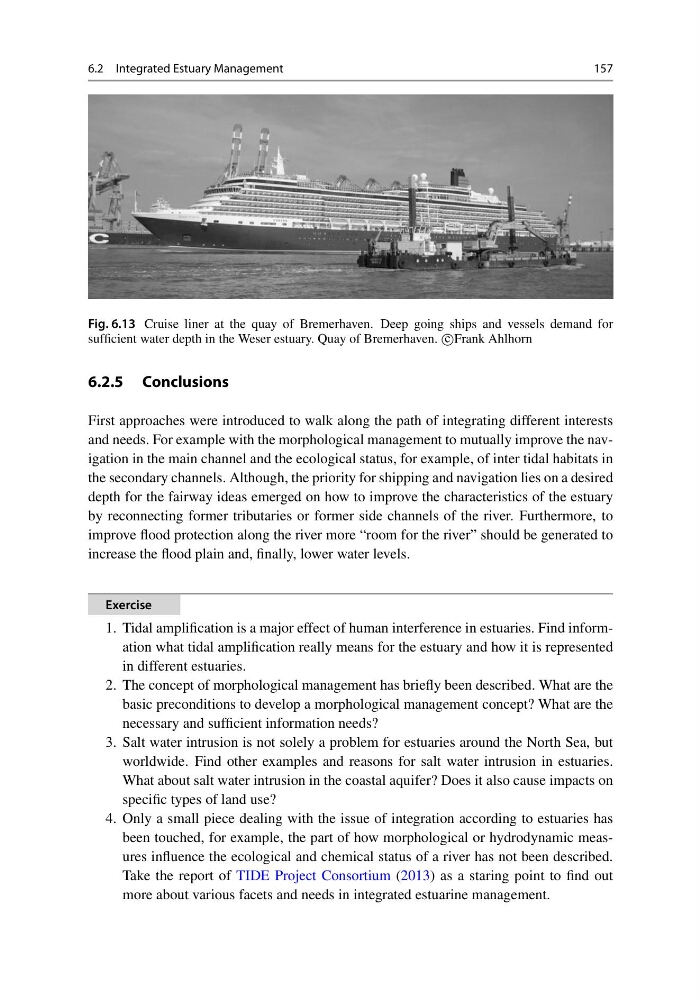
Fig. 6.13 Cruise liner at the quay of Bremerhaven. Deep going ships and vessels demand for
sufficient water depth in the Weser estuary. Quay of Bremerhaven. c
Ahlhorn
6.2.5 Conclusions
First approaches were introduced to walk along the path of integrating different interests
and needs. For example with the morphological management to mutually improve the navigation in the main channel and the ecological status, for example, of inter tidal habitats in
the secondary channels. Although, the priority for shipping and navigation lies on a desired
depth for the fairway ideas emerged on how to improve the characteristics of the estuary
by reconnecting former tributaries or former side channels of the river. Furthermore, to
improve flood protection along the river more “room for the river” should be generated to
increase the flood plain and, finally, lower water levels.
Exercise
1. Tidal amplification is a major effect of human interference in estuaries. Find information what tidal amplification really means for the estuary and how it is represented
in different estuaries.
2. The concept of morphological management has briefly been described. What are the
basic preconditions to develop a morphological management concept? What are the
necessary and sufficient information needs?
3. Salt water intrusion is not solely a problem for estuaries around the North Sea, but
worldwide. Find other examples and reasons for salt water intrusion in estuaries.
What about salt water intrusion in the coastal aquifer? Does it also cause impacts on
specific types of land use?
4. Only a small piece dealing with the issue of integration according to estuaries has
been touched, for example, the part of how morphological or hydrodynamic measures influence the ecological and chemical status of a river has not been described.
Take the report of TIDE Project Consortium (2013) as a staring point to find out
more about various facets and needs in integrated estuarine management.
157
Fig. 6.13 Cruise liner at the quay of Bremerhaven. Deep going ships and vessels demand for
sufficient water depth in the Weser estuary. Quay of Bremerhaven. c
Ahlhorn
6.2.5 Conclusions
First approaches were introduced to walk along the path of integrating different interests
and needs. For example with the morphological management to mutually improve the navigation in the main channel and the ecological status, for example, of inter tidal habitats in
the secondary channels. Although, the priority for shipping and navigation lies on a desired
depth for the fairway ideas emerged on how to improve the characteristics of the estuary
by reconnecting former tributaries or former side channels of the river. Furthermore, to
improve flood protection along the river more “room for the river” should be generated to
increase the flood plain and, finally, lower water levels.
Exercise
1. Tidal amplification is a major effect of human interference in estuaries. Find information what tidal amplification really means for the estuary and how it is represented
in different estuaries.
2. The concept of morphological management has briefly been described. What are the
basic preconditions to develop a morphological management concept? What are the
necessary and sufficient information needs?
3. Salt water intrusion is not solely a problem for estuaries around the North Sea, but
worldwide. Find other examples and reasons for salt water intrusion in estuaries.
What about salt water intrusion in the coastal aquifer? Does it also cause impacts on
specific types of land use?
4. Only a small piece dealing with the issue of integration according to estuaries has
been touched, for example, the part of how morphological or hydrodynamic measures influence the ecological and chemical status of a river has not been described.
Take the report of TIDE Project Consortium (2013) as a staring point to find out
more about various facets and needs in integrated estuarine management.