

148
6 Prospects: Approaches of Integrated Management
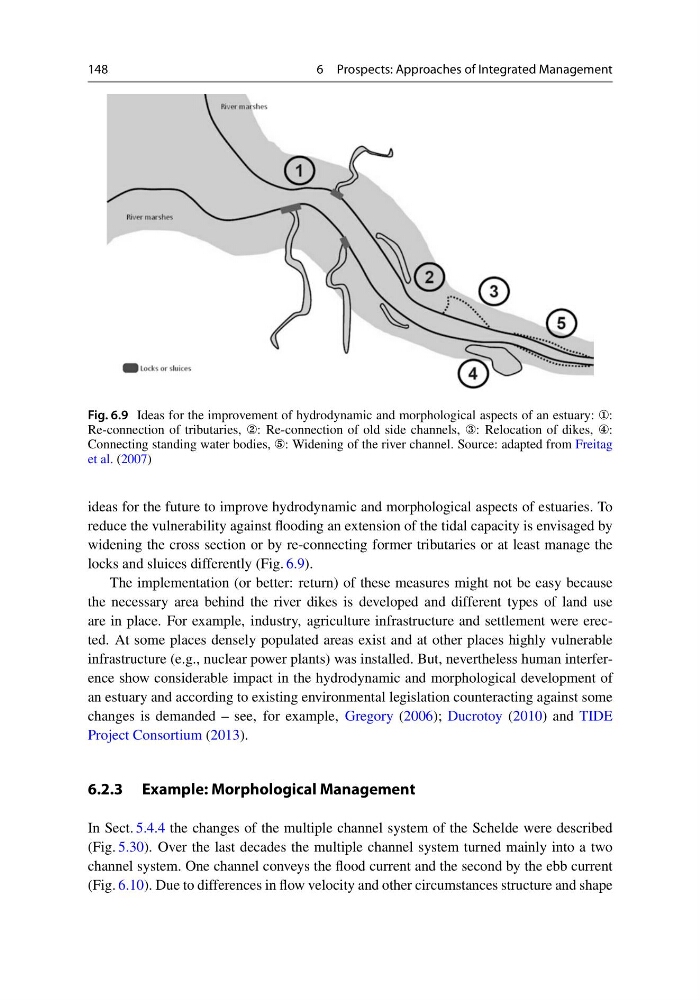
Fig. 6.9 Ideas for the improvement of hydrodynamic and morphological aspects of an estuary: ①:
Re-connection of tributaries, ②: Re-connection of old side channels, ③: Relocation of dikes, ④:
Connecting standing water bodies, ⑤: Widening of the river channel. Source: adapted from Freitag
et al. (2007)
ideas for the future to improve hydrodynamic and morphological aspects of estuaries. To
reduce the vulnerability against flooding an extension of the tidal capacity is envisaged by
widening the cross section or by re-connecting former tributaries or at least manage the
locks and sluices differently (Fig. 6.9).
The implementation (or better: return) of these measures might not be easy because
the necessary area behind the river dikes is developed and different types of land use
are in place. For example, industry, agriculture infrastructure and settlement were erected. At some places densely populated areas exist and at other places highly vulnerable
infrastructure (e.g., nuclear power plants) was installed. But, nevertheless human interference show considerable impact in the hydrodynamic and morphological development of
an estuary and according to existing environmental legislation counteracting against some
changes is demanded – see, for example, Gregory (2006); Ducrotoy (2010) and TIDE
Project Consortium (2013).
6.2.3 Example: Morphological Management
In Sect. 5.4.4 the changes of the multiple channel system of the Schelde were described
(Fig. 5.30). Over the last decades the multiple channel system turned mainly into a two
channel system. One channel conveys the flood current and the second by the ebb current
(Fig. 6.10). Due to differences in flow velocity and other circumstances structure and shape
6 Prospects: Approaches of Integrated Management
Fig. 6.9 Ideas for the improvement of hydrodynamic and morphological aspects of an estuary: ①:
Re-connection of tributaries, ②: Re-connection of old side channels, ③: Relocation of dikes, ④:
Connecting standing water bodies, ⑤: Widening of the river channel. Source: adapted from Freitag
et al. (2007)
ideas for the future to improve hydrodynamic and morphological aspects of estuaries. To
reduce the vulnerability against flooding an extension of the tidal capacity is envisaged by
widening the cross section or by re-connecting former tributaries or at least manage the
locks and sluices differently (Fig. 6.9).
The implementation (or better: return) of these measures might not be easy because
the necessary area behind the river dikes is developed and different types of land use
are in place. For example, industry, agriculture infrastructure and settlement were erected. At some places densely populated areas exist and at other places highly vulnerable
infrastructure (e.g., nuclear power plants) was installed. But, nevertheless human interference show considerable impact in the hydrodynamic and morphological development of
an estuary and according to existing environmental legislation counteracting against some
changes is demanded – see, for example, Gregory (2006); Ducrotoy (2010) and TIDE
Project Consortium (2013).
6.2.3 Example: Morphological Management
In Sect. 5.4.4 the changes of the multiple channel system of the Schelde were described
(Fig. 5.30). Over the last decades the multiple channel system turned mainly into a two
channel system. One channel conveys the flood current and the second by the ebb current
(Fig. 6.10). Due to differences in flow velocity and other circumstances structure and shape