

146
6 Prospects: Approaches of Integrated Management
Coastal Adaptaon Strategies
Adaptaon Opons
Adaptaon Responses
Examples
Protect
Increased robustness
Advance the line
Land reclamaon
Hold the line
Beach nourishment
Accommodate
Increased flexibility
Flood proof buildings,
floang agricultural
systems
Retreat
Enhanced adaptability
Retreat the line
Managed re-alignment
Limited intervenons
Ad-hoc sea wall
No intervenon
Monitoring only
Reversing maladapve trends
Sustainable adaptaon
Wetland restoraon
Improved awareness and
preparedness
Community-focused
adaptaon
Flood hazard mapping,
flood warnings
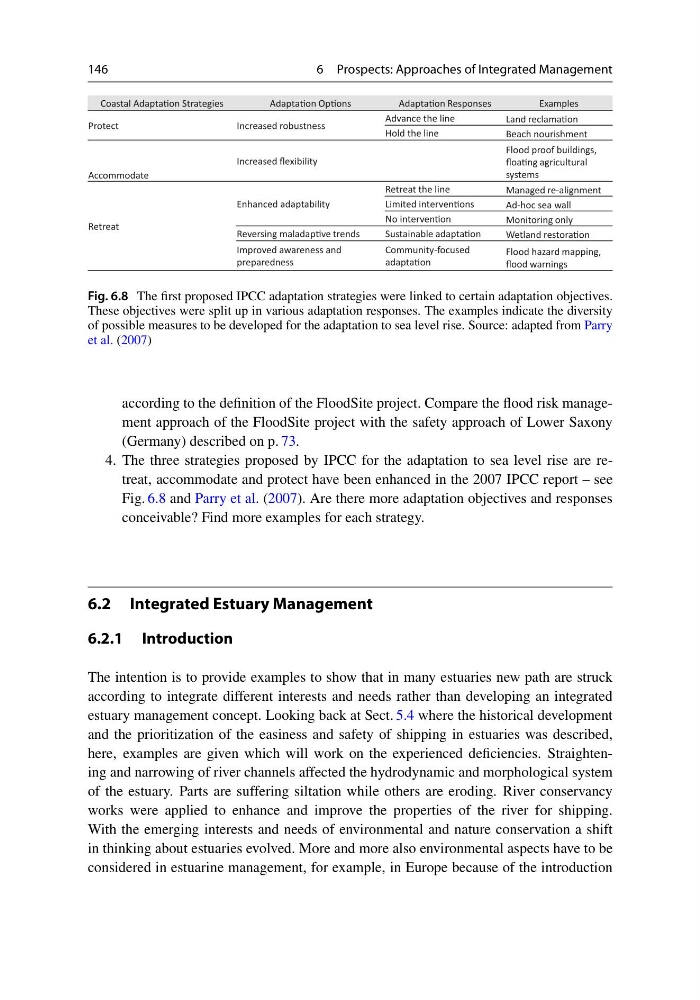
Fig. 6.8 The first proposed IPCC adaptation strategies were linked to certain adaptation objectives.
These objectives were split up in various adaptation responses. The examples indicate the diversity
of possible measures to be developed for the adaptation to sea level rise. Source: adapted from Parry
et al. (2007)
according to the definition of the FloodSite project. Compare the flood risk management approach of the FloodSite project with the safety approach of Lower Saxony
(Germany) described on p. 73.
4. The three strategies proposed by IPCC for the adaptation to sea level rise are retreat, accommodate and protect have been enhanced in the 2007 IPCC report – see
Fig. 6.8 and Parry et al. (2007). Are there more adaptation objectives and responses
conceivable? Find more examples for each strategy.
6.2 Integrated Estuary Management
6.2.1 Introduction
The intention is to provide examples to show that in many estuaries new path are struck
according to integrate different interests and needs rather than developing an integrated
estuary management concept. Looking back at Sect. 5.4 where the historical development
and the prioritization of the easiness and safety of shipping in estuaries was described,
here, examples are given which will work on the experienced deficiencies. Straightening and narrowing of river channels affected the hydrodynamic and morphological system
of the estuary. Parts are suffering siltation while others are eroding. River conservancy
works were applied to enhance and improve the properties of the river for shipping.
With the emerging interests and needs of environmental and nature conservation a shift
in thinking about estuaries evolved. More and more also environmental aspects have to be
considered in estuarine management, for example, in Europe because of the introduction
6 Prospects: Approaches of Integrated Management
Coastal Adaptaon Strategies
Adaptaon Opons
Adaptaon Responses
Examples
Protect
Increased robustness
Advance the line
Land reclamaon
Hold the line
Beach nourishment
Accommodate
Increased flexibility
Flood proof buildings,
floang agricultural
systems
Retreat
Enhanced adaptability
Retreat the line
Managed re-alignment
Limited intervenons
Ad-hoc sea wall
No intervenon
Monitoring only
Reversing maladapve trends
Sustainable adaptaon
Wetland restoraon
Improved awareness and
preparedness
Community-focused
adaptaon
Flood hazard mapping,
flood warnings
Fig. 6.8 The first proposed IPCC adaptation strategies were linked to certain adaptation objectives.
These objectives were split up in various adaptation responses. The examples indicate the diversity
of possible measures to be developed for the adaptation to sea level rise. Source: adapted from Parry
et al. (2007)
according to the definition of the FloodSite project. Compare the flood risk management approach of the FloodSite project with the safety approach of Lower Saxony
(Germany) described on p. 73.
4. The three strategies proposed by IPCC for the adaptation to sea level rise are retreat, accommodate and protect have been enhanced in the 2007 IPCC report – see
Fig. 6.8 and Parry et al. (2007). Are there more adaptation objectives and responses
conceivable? Find more examples for each strategy.
6.2 Integrated Estuary Management
6.2.1 Introduction
The intention is to provide examples to show that in many estuaries new path are struck
according to integrate different interests and needs rather than developing an integrated
estuary management concept. Looking back at Sect. 5.4 where the historical development
and the prioritization of the easiness and safety of shipping in estuaries was described,
here, examples are given which will work on the experienced deficiencies. Straightening and narrowing of river channels affected the hydrodynamic and morphological system
of the estuary. Parts are suffering siltation while others are eroding. River conservancy
works were applied to enhance and improve the properties of the river for shipping.
With the emerging interests and needs of environmental and nature conservation a shift
in thinking about estuaries evolved. More and more also environmental aspects have to be
considered in estuarine management, for example, in Europe because of the introduction