

138
6 Prospects: Approaches of Integrated Management
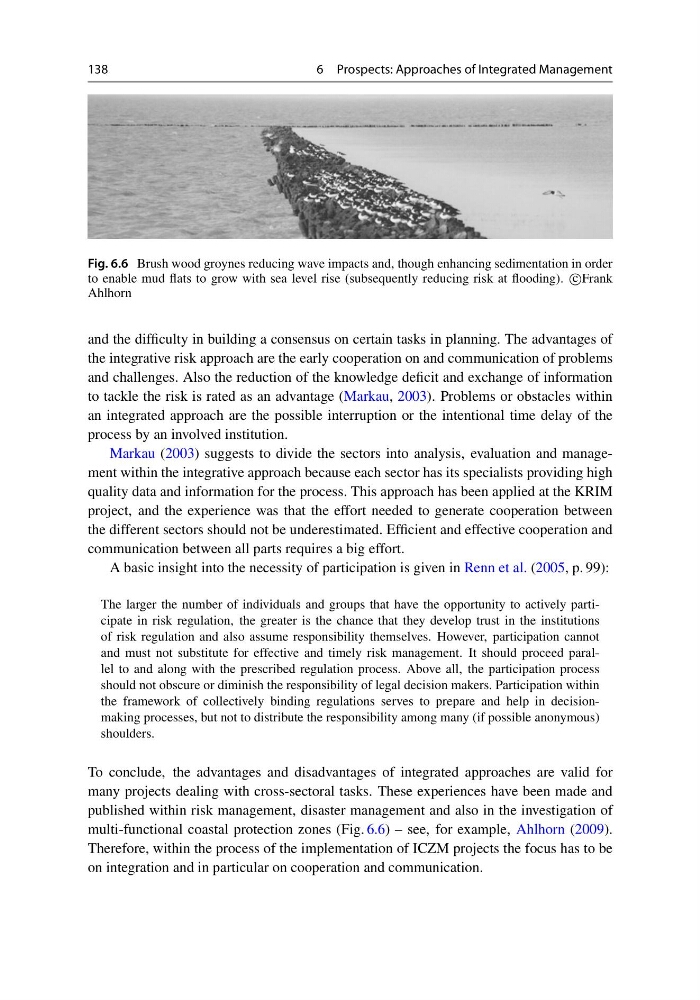
Fig. 6.6 Brush wood groynes reducing wave impacts and, though enhancing sedimentation in order
to enable mud flats to grow with sea level rise (subsequently reducing risk at flooding). c
Frank
Ahlhorn
and the difficulty in building a consensus on certain tasks in planning. The advantages of
the integrative risk approach are the early cooperation on and communication of problems
and challenges. Also the reduction of the knowledge deficit and exchange of information
to tackle the risk is rated as an advantage (Markau, 2003). Problems or obstacles within
an integrated approach are the possible interruption or the intentional time delay of the
process by an involved institution.
Markau (2003) suggests to divide the sectors into analysis, evaluation and management within the integrative approach because each sector has its specialists providing high
quality data and information for the process. This approach has been applied at the KRIM
project, and the experience was that the effort needed to generate cooperation between
the different sectors should not be underestimated. Efficient and effective cooperation and
communication between all parts requires a big effort.
A basic insight into the necessity of participation is given in Renn et al. (2005, p. 99):
The larger the number of individuals and groups that have the opportunity to actively participate in risk regulation, the greater is the chance that they develop trust in the institutions
of risk regulation and also assume responsibility themselves. However, participation cannot
and must not substitute for effective and timely risk management. It should proceed parallel to and along with the prescribed regulation process. Above all, the participation process
should not obscure or diminish the responsibility of legal decision makers. Participation within
the framework of collectively binding regulations serves to prepare and help in decisionmaking processes, but not to distribute the responsibility among many (if possible anonymous)
shoulders.
To conclude, the advantages and disadvantages of integrated approaches are valid for
many projects dealing with cross-sectoral tasks. These experiences have been made and
published within risk management, disaster management and also in the investigation of
multi-functional coastal protection zones (Fig. 6.6) – see, for example, Ahlhorn (2009).
Therefore, within the process of the implementation of ICZM projects the focus has to be
on integration and in particular on cooperation and communication.
6 Prospects: Approaches of Integrated Management
Fig. 6.6 Brush wood groynes reducing wave impacts and, though enhancing sedimentation in order
to enable mud flats to grow with sea level rise (subsequently reducing risk at flooding). c
Frank
Ahlhorn
and the difficulty in building a consensus on certain tasks in planning. The advantages of
the integrative risk approach are the early cooperation on and communication of problems
and challenges. Also the reduction of the knowledge deficit and exchange of information
to tackle the risk is rated as an advantage (Markau, 2003). Problems or obstacles within
an integrated approach are the possible interruption or the intentional time delay of the
process by an involved institution.
Markau (2003) suggests to divide the sectors into analysis, evaluation and management within the integrative approach because each sector has its specialists providing high
quality data and information for the process. This approach has been applied at the KRIM
project, and the experience was that the effort needed to generate cooperation between
the different sectors should not be underestimated. Efficient and effective cooperation and
communication between all parts requires a big effort.
A basic insight into the necessity of participation is given in Renn et al. (2005, p. 99):
The larger the number of individuals and groups that have the opportunity to actively participate in risk regulation, the greater is the chance that they develop trust in the institutions
of risk regulation and also assume responsibility themselves. However, participation cannot
and must not substitute for effective and timely risk management. It should proceed parallel to and along with the prescribed regulation process. Above all, the participation process
should not obscure or diminish the responsibility of legal decision makers. Participation within
the framework of collectively binding regulations serves to prepare and help in decisionmaking processes, but not to distribute the responsibility among many (if possible anonymous)
shoulders.
To conclude, the advantages and disadvantages of integrated approaches are valid for
many projects dealing with cross-sectoral tasks. These experiences have been made and
published within risk management, disaster management and also in the investigation of
multi-functional coastal protection zones (Fig. 6.6) – see, for example, Ahlhorn (2009).
Therefore, within the process of the implementation of ICZM projects the focus has to be
on integration and in particular on cooperation and communication.