

5.4 Estuaries in the Southern North Sea Region
111
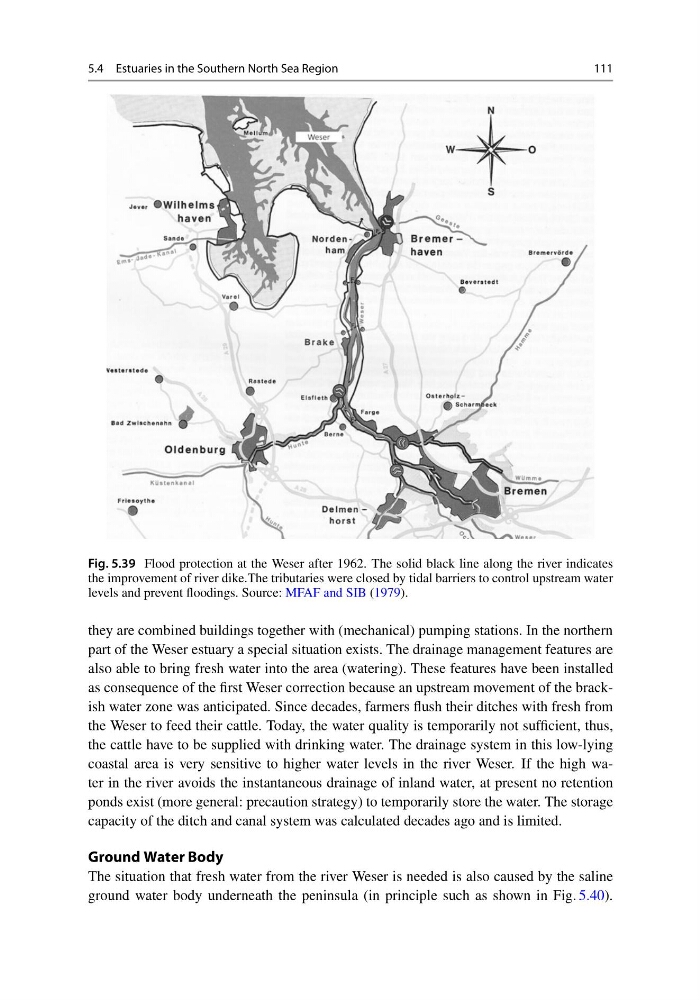
Fig. 5.39 Flood protection at the Weser after 1962. The solid black line along the river indicates
the improvement of river dike.The tributaries were closed by tidal barriers to control upstream water
levels and prevent floodings. Source: MFAF and SIB (1979).
they are combined buildings together with (mechanical) pumping stations. In the northern
part of the Weser estuary a special situation exists. The drainage management features are
also able to bring fresh water into the area (watering). These features have been installed
as consequence of the first Weser correction because an upstream movement of the brackish water zone was anticipated. Since decades, farmers flush their ditches with fresh from
the Weser to feed their cattle. Today, the water quality is temporarily not sufficient, thus,
the cattle have to be supplied with drinking water. The drainage system in this low-lying
coastal area is very sensitive to higher water levels in the river Weser. If the high water in the river avoids the instantaneous drainage of inland water, at present no retention
ponds exist (more general: precaution strategy) to temporarily store the water. The storage
capacity of the ditch and canal system was calculated decades ago and is limited.
Ground Water Body
The situation that fresh water from the river Weser is needed is also caused by the saline
ground water body underneath the peninsula (in principle such as shown in Fig. 5.40).
111
Fig. 5.39 Flood protection at the Weser after 1962. The solid black line along the river indicates
the improvement of river dike.The tributaries were closed by tidal barriers to control upstream water
levels and prevent floodings. Source: MFAF and SIB (1979).
they are combined buildings together with (mechanical) pumping stations. In the northern
part of the Weser estuary a special situation exists. The drainage management features are
also able to bring fresh water into the area (watering). These features have been installed
as consequence of the first Weser correction because an upstream movement of the brackish water zone was anticipated. Since decades, farmers flush their ditches with fresh from
the Weser to feed their cattle. Today, the water quality is temporarily not sufficient, thus,
the cattle have to be supplied with drinking water. The drainage system in this low-lying
coastal area is very sensitive to higher water levels in the river Weser. If the high water in the river avoids the instantaneous drainage of inland water, at present no retention
ponds exist (more general: precaution strategy) to temporarily store the water. The storage
capacity of the ditch and canal system was calculated decades ago and is limited.
Ground Water Body
The situation that fresh water from the river Weser is needed is also caused by the saline
ground water body underneath the peninsula (in principle such as shown in Fig. 5.40).