

380
Appendix 4
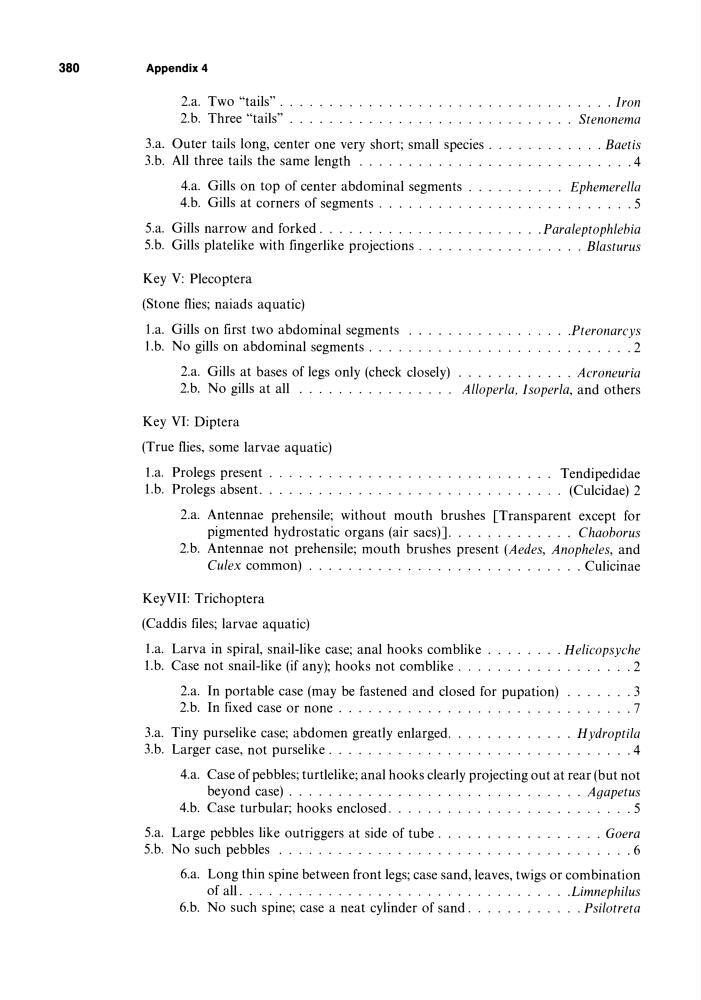
2.a. Two "tails" . . . . . . . . . . . . . . . . . . . . . .
2.b. Three "tails" . . . . . . . . . . . . . . . . . . . . .
3.a. Outer tails long, center one very short; small species.
3.b. All three tails the same length . . . . . . . . . . . .
4.a. Gills on top of center abdominal segments
4.b. Gills at corners of segments . . . . .
5.a. Gills narrow and forked. . . . . . . . . . .
5.b. Gills platelike with fingerlike projections.
Key V: Plecoptera
(Stone flies; naiads aquatic)
1.a. Gills on first two abdominal segments
1.b. No gills on abdominal segments ....
· ... Iron
Stenonema
· .. Baetis
· ..... 4
Ephemerella
· ...... 5
. Paraleptophlebia
. . . . . Blasturus
.Pteronarcys
· ...... 2
2.a. Gills at bases of legs only (check closely)
2.b. No gills at all . . . . . . . . . . . . . . . .
· Acroneuria
Alloperla. /soperla, and others
Key VI: Diptera
(True flies, some larvae aquatic)
1.a. Prolegs present . . . . . . . . . . . . . . . . . . . . . . . . . . . . . Tendipedidae
1.b. Prolegs absent. . . . . . . . . . . . . . . . . . . . . . . . . . . . . . . (Culcidae) 2
2.a. Antennae prehensile; without mouth brushes [Transparent except for
pigmented hydrostatic organs (air sacs)]. . . . . . . . . . . . . Chaoborus
2.b. Antennae not prehensile; mouth brushes present (Aedes, Anopheles, and
Culex common) . . . . . . . . . . . . . . . . . . . . . . . . . . . . Culicinae
KeyVII: Trichoptera
(Caddis files; larvae aquatic)
1.a. Larva in spiral, snail-like case; anal hooks comblike . . . . . . . . Helicopsyche
1.b. Case not snail-like (if any); hooks not comblike. . . . . . . . . . .
.2
2.a. In portable case (may be fastened and closed for pupation) . . . . . . . 3
2.b. In fixed case or none. . . . . . . . . . . .
. . . . . . . 7
3.a. Tiny purselike case; abdomen greatly enlarged . . . . . . . . . . . . . Hydroptila
3.b. Larger case, not purselike . . . . . . . . . . . . . . . . . . . . . . . . . . . . . . . 4
4.a. Case of pebbles; turtlelike; anal hooks clearly projecting out at rear (but not
beyond case) . . . . . . . . . . . . . . . .
. Agapetus
4.b. Case turbular; hooks enclosed. . . . . .
. ... 5
5.a. Large pebbles like outriggers at side of tube.
· .. Goera
5.b. No such pebbles . . . . . . . . . . . . . . . . .
· . . . . . 6
6.a. Long thin spine between front legs; case sand, leaves, twigs or combination
of all. . . . . . . . . . . . . . . . . . . . . . . .
.Limnephilus
6.b. No such spine; case a neat cylinder of sand . . . . . . . . . . . . Psilotreta
Appendix 4
2.a. Two "tails" . . . . . . . . . . . . . . . . . . . . . .
2.b. Three "tails" . . . . . . . . . . . . . . . . . . . . .
3.a. Outer tails long, center one very short; small species.
3.b. All three tails the same length . . . . . . . . . . . .
4.a. Gills on top of center abdominal segments
4.b. Gills at corners of segments . . . . .
5.a. Gills narrow and forked. . . . . . . . . . .
5.b. Gills platelike with fingerlike projections.
Key V: Plecoptera
(Stone flies; naiads aquatic)
1.a. Gills on first two abdominal segments
1.b. No gills on abdominal segments ....
· ... Iron
Stenonema
· .. Baetis
· ..... 4
Ephemerella
· ...... 5
. Paraleptophlebia
. . . . . Blasturus
.Pteronarcys
· ...... 2
2.a. Gills at bases of legs only (check closely)
2.b. No gills at all . . . . . . . . . . . . . . . .
· Acroneuria
Alloperla. /soperla, and others
Key VI: Diptera
(True flies, some larvae aquatic)
1.a. Prolegs present . . . . . . . . . . . . . . . . . . . . . . . . . . . . . Tendipedidae
1.b. Prolegs absent. . . . . . . . . . . . . . . . . . . . . . . . . . . . . . . (Culcidae) 2
2.a. Antennae prehensile; without mouth brushes [Transparent except for
pigmented hydrostatic organs (air sacs)]. . . . . . . . . . . . . Chaoborus
2.b. Antennae not prehensile; mouth brushes present (Aedes, Anopheles, and
Culex common) . . . . . . . . . . . . . . . . . . . . . . . . . . . . Culicinae
KeyVII: Trichoptera
(Caddis files; larvae aquatic)
1.a. Larva in spiral, snail-like case; anal hooks comblike . . . . . . . . Helicopsyche
1.b. Case not snail-like (if any); hooks not comblike. . . . . . . . . . .
.2
2.a. In portable case (may be fastened and closed for pupation) . . . . . . . 3
2.b. In fixed case or none. . . . . . . . . . . .
. . . . . . . 7
3.a. Tiny purselike case; abdomen greatly enlarged . . . . . . . . . . . . . Hydroptila
3.b. Larger case, not purselike . . . . . . . . . . . . . . . . . . . . . . . . . . . . . . . 4
4.a. Case of pebbles; turtlelike; anal hooks clearly projecting out at rear (but not
beyond case) . . . . . . . . . . . . . . . .
. Agapetus
4.b. Case turbular; hooks enclosed. . . . . .
. ... 5
5.a. Large pebbles like outriggers at side of tube.
· .. Goera
5.b. No such pebbles . . . . . . . . . . . . . . . . .
· . . . . . 6
6.a. Long thin spine between front legs; case sand, leaves, twigs or combination
of all. . . . . . . . . . . . . . . . . . . . . . . .
.Limnephilus
6.b. No such spine; case a neat cylinder of sand . . . . . . . . . . . . Psilotreta