

326
Exercise 25
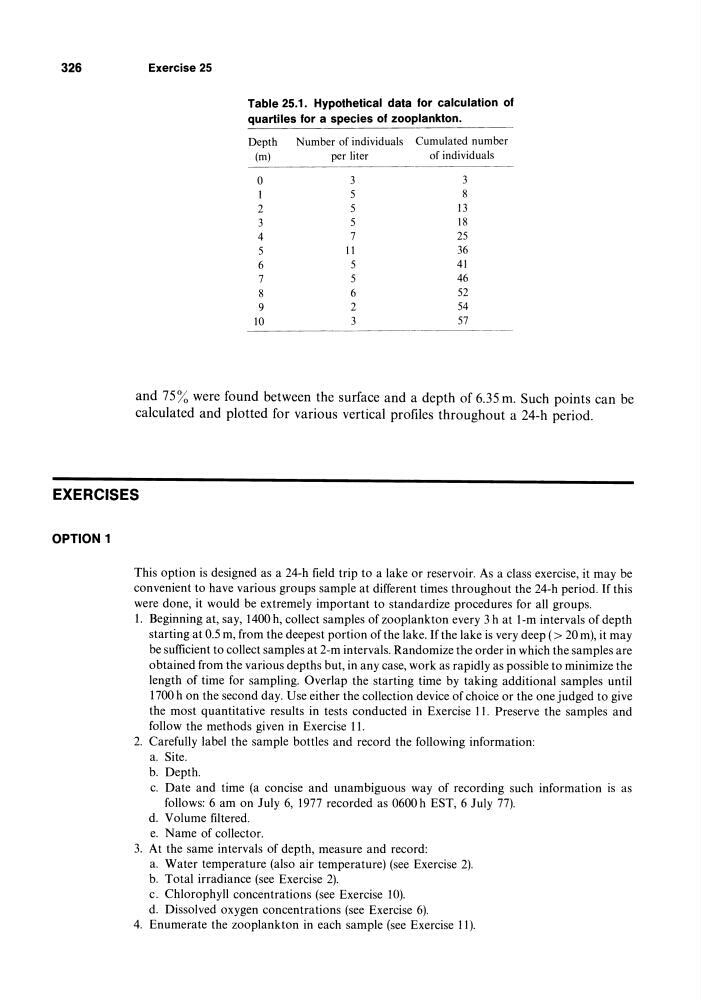
Table 25.1. Hypothetical data for calculation of
quartiles for a species of zooplankton.
Depth
Number of individuals Cumulated number
(m)
per liter
of individuals
0
3
3
5
8
2
5
13
3
5
18
4
7
25
5
11
36
6
5
41
7
5
46
8
6
52
9
2
54
10
3
57
and 75% were found between the surface and a depth of 6.35 m. Such points can be
calculated and plotted for various vertical profiles throughout a 24-h period.
EXERCISES
OPTION 1
This option is designed as a 24-h field trip to a lake or reservoir. As a class exercise, it may be
convenient to have various groups sample at different times throughout the 24-h period. If this
were done, it would be extremely important to standardize procedures for all groups.
1. Beginning at, say, 1400 h, collect samples of zooplankton every 3 hat I-m intervals of depth
starting at 0.5 m, from the deepest portion ofthe lake. If the lake is very deep (> 20 m), it may
be sufficient to collect samples at 2-m intervals. Randomize the order in which the samples are
obtained from the various depths but, in any case, work as rapidly as possible to minimize the
length of time for sampling. Overlap the starting time by taking additional samples until
1700 h on the second day. Use either the collection device of choice or the one judged to give
the most quantitative results in tests conducted in Exercise 11. Preserve the samples and
follow the methods given in Exercise 11.
2. Carefully label the sample bottles and record the following information:
a. Site.
b. Depth.
c. Date and time (a concise and unambiguous way of recording such information is as
follows: 6 am on July 6, 1977 recorded as 0600h EST, 6 July 77).
d. Volume filtered.
e. Name of collector.
3. At the same intervals of depth, measure and record:
a. Water temperature (also air temperature) (see Exercise 2).
b. Total irradiance (see Exercise 2).
c. Chlorophyll concentrations (see Exercise 10).
d. Dissolved oxygen concentrations (see Exercise 6).
4. Enumerate the zooplankton in each sample (see Exercise 11).
Exercise 25
Table 25.1. Hypothetical data for calculation of
quartiles for a species of zooplankton.
Depth
Number of individuals Cumulated number
(m)
per liter
of individuals
0
3
3
5
8
2
5
13
3
5
18
4
7
25
5
11
36
6
5
41
7
5
46
8
6
52
9
2
54
10
3
57
and 75% were found between the surface and a depth of 6.35 m. Such points can be
calculated and plotted for various vertical profiles throughout a 24-h period.
EXERCISES
OPTION 1
This option is designed as a 24-h field trip to a lake or reservoir. As a class exercise, it may be
convenient to have various groups sample at different times throughout the 24-h period. If this
were done, it would be extremely important to standardize procedures for all groups.
1. Beginning at, say, 1400 h, collect samples of zooplankton every 3 hat I-m intervals of depth
starting at 0.5 m, from the deepest portion ofthe lake. If the lake is very deep (> 20 m), it may
be sufficient to collect samples at 2-m intervals. Randomize the order in which the samples are
obtained from the various depths but, in any case, work as rapidly as possible to minimize the
length of time for sampling. Overlap the starting time by taking additional samples until
1700 h on the second day. Use either the collection device of choice or the one judged to give
the most quantitative results in tests conducted in Exercise 11. Preserve the samples and
follow the methods given in Exercise 11.
2. Carefully label the sample bottles and record the following information:
a. Site.
b. Depth.
c. Date and time (a concise and unambiguous way of recording such information is as
follows: 6 am on July 6, 1977 recorded as 0600h EST, 6 July 77).
d. Volume filtered.
e. Name of collector.
3. At the same intervals of depth, measure and record:
a. Water temperature (also air temperature) (see Exercise 2).
b. Total irradiance (see Exercise 2).
c. Chlorophyll concentrations (see Exercise 10).
d. Dissolved oxygen concentrations (see Exercise 6).
4. Enumerate the zooplankton in each sample (see Exercise 11).