

48
J.Jensen
Approximate Longevity of Remote Sensor Data Storage Mcdia
Black & white negative or diapo~iti vc
100
Color ocgati\'e or diapo~itivc
50
Black & while positivI! print
75
Color print
40
Optical disk
100
Years
I ..
o
20
40
60
80
100
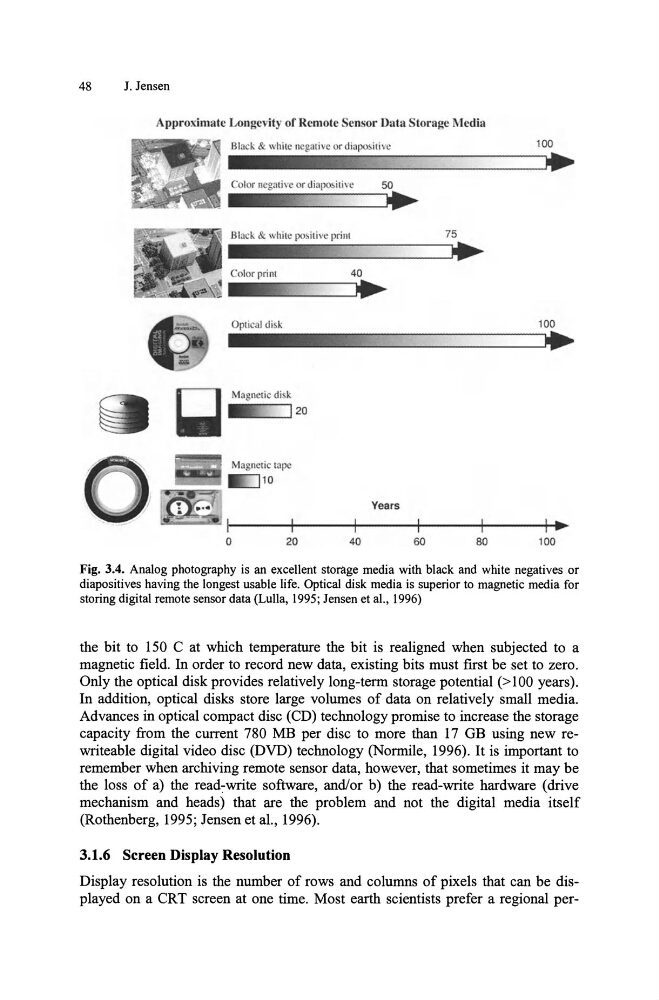
Fig. 3.4. Analog photography is an exce\1ent storage media with black and white negatives or
diapositives having the longest usable life. Optical disk media is superior to magnetic media for
storing digital remote sensor data (Lu\1a, 1995; Jensen et a!., 1996)
the bit to 150 C at which temperature the bit is realigned when subjected to a
magnetic field. In order to record new data, existing bits must first be set to zero.
Only the optical disk provides relatively long-term storage potential (>100 years).
In addition, optical disks store large volumes of data on relatively small media.
Advances in optical compact disc (CD) technology promise to increase the storage
capacity from the current 780 MB per disc to more than 17 GB using new rewriteable digital video disc (DVD) technology (Normile, 1996). It is important to
remember when archiving remote sensor data, however, that sometimes it may be
the loss of a) the read~write software, and/or b) the read-write hardware (drive
mechanism and heads) that are the problem and not the digital media itself
(Rothenberg, 1995; Jensen et aI., 1996).
3.1.6 Screen Display Resolution
Display resolution is the number of rows and columns of pixels that can be displayed on a CRT screen at one time. Most earth scientists prefer a regional per-
J.Jensen
Approximate Longevity of Remote Sensor Data Storage Mcdia
Black & white negative or diapo~iti vc
100
Color ocgati\'e or diapo~itivc
50
Black & while positivI! print
75
Color print
40
Optical disk
100
Years
I ..
o
20
40
60
80
100
Fig. 3.4. Analog photography is an exce\1ent storage media with black and white negatives or
diapositives having the longest usable life. Optical disk media is superior to magnetic media for
storing digital remote sensor data (Lu\1a, 1995; Jensen et a!., 1996)
the bit to 150 C at which temperature the bit is realigned when subjected to a
magnetic field. In order to record new data, existing bits must first be set to zero.
Only the optical disk provides relatively long-term storage potential (>100 years).
In addition, optical disks store large volumes of data on relatively small media.
Advances in optical compact disc (CD) technology promise to increase the storage
capacity from the current 780 MB per disc to more than 17 GB using new rewriteable digital video disc (DVD) technology (Normile, 1996). It is important to
remember when archiving remote sensor data, however, that sometimes it may be
the loss of a) the read~write software, and/or b) the read-write hardware (drive
mechanism and heads) that are the problem and not the digital media itself
(Rothenberg, 1995; Jensen et aI., 1996).
3.1.6 Screen Display Resolution
Display resolution is the number of rows and columns of pixels that can be displayed on a CRT screen at one time. Most earth scientists prefer a regional per-