

Chapter 7: APPLICATIONS
the measurements taken with a free-rising profiler during GasEx-98 leg 2
under different wind speed conditions.
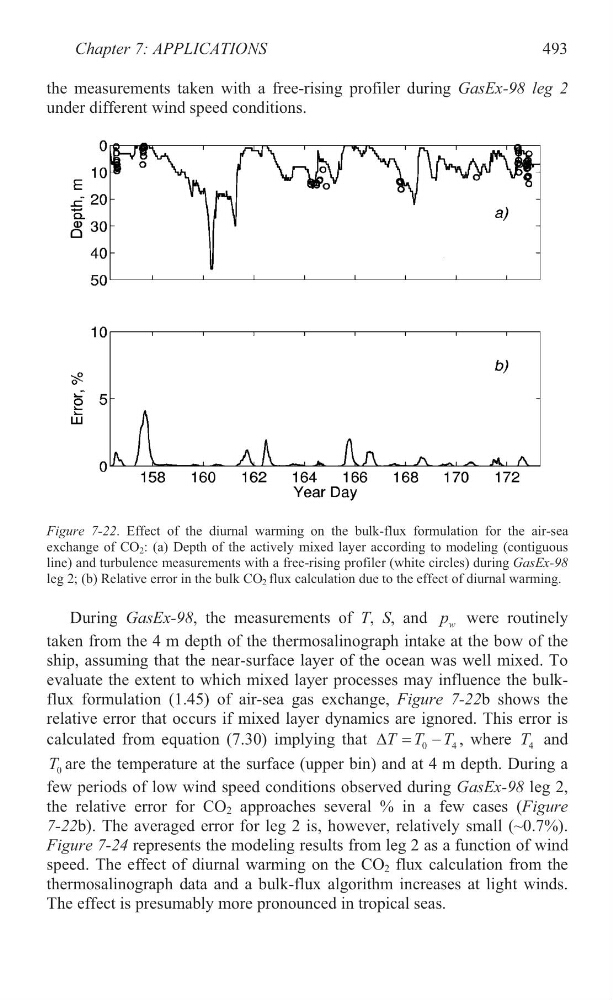
Figure 7-22. Effect of the diurnal warming on the bulk-flux formulation for the air-sea
exchange of CO 2 : (a) Depth of the actively mixed layer according to modeling (contiguous
line) and turbulence measurements with a free-rising profiler (white circles) during GasEx-98
leg 2; (b) Relative error in the bulk CO 2 flux calculation due to the effect of diurnal warming.
During GasEx-98, the measurements of T, S, and w
p were routinely
taken from the 4 m depth of the thermosalinograph intake at the bow of the
ship, assuming that the near-surface layer of the ocean was well mixed. To
evaluate the extent to which mixed layer processes may influence the bulkflux formulation (1.45) of air-sea gas exchange, Figure 7-22b shows the
relative error that occurs if mixed layer dynamics are ignored. This error is
calculated from equation (7.30) implying that
0
4
T T T
'
, where 4
T and
0
T are the temperature at the surface (upper bin) and at 4 m depth. During a
few periods of low wind speed conditions observed during GasEx-98 leg 2,
the relative error for CO 2 approaches several % in a few cases (Figure
7-22b). The averaged error for leg 2 is, however, relatively small (~0.7%).
Figure 7-24 represents the modeling results from leg 2 as a function of wind
speed. The effect of diurnal warming on the CO 2 flux calculation from the
thermosalinograph data and a bulk-flux algorithm increases at light winds.
The effect is presumably more pronounced in tropical seas.
493
the measurements taken with a free-rising profiler during GasEx-98 leg 2
under different wind speed conditions.
Figure 7-22. Effect of the diurnal warming on the bulk-flux formulation for the air-sea
exchange of CO 2 : (a) Depth of the actively mixed layer according to modeling (contiguous
line) and turbulence measurements with a free-rising profiler (white circles) during GasEx-98
leg 2; (b) Relative error in the bulk CO 2 flux calculation due to the effect of diurnal warming.
During GasEx-98, the measurements of T, S, and w
p were routinely
taken from the 4 m depth of the thermosalinograph intake at the bow of the
ship, assuming that the near-surface layer of the ocean was well mixed. To
evaluate the extent to which mixed layer processes may influence the bulkflux formulation (1.45) of air-sea gas exchange, Figure 7-22b shows the
relative error that occurs if mixed layer dynamics are ignored. This error is
calculated from equation (7.30) implying that
0
4
T T T
'
, where 4
T and
0
T are the temperature at the surface (upper bin) and at 4 m depth. During a
few periods of low wind speed conditions observed during GasEx-98 leg 2,
the relative error for CO 2 approaches several % in a few cases (Figure
7-22b). The averaged error for leg 2 is, however, relatively small (~0.7%).
Figure 7-24 represents the modeling results from leg 2 as a function of wind
speed. The effect of diurnal warming on the CO 2 flux calculation from the
thermosalinograph data and a bulk-flux algorithm increases at light winds.
The effect is presumably more pronounced in tropical seas.
493