

THE NEAR-SURFACE LAYER OF THE OCEAN
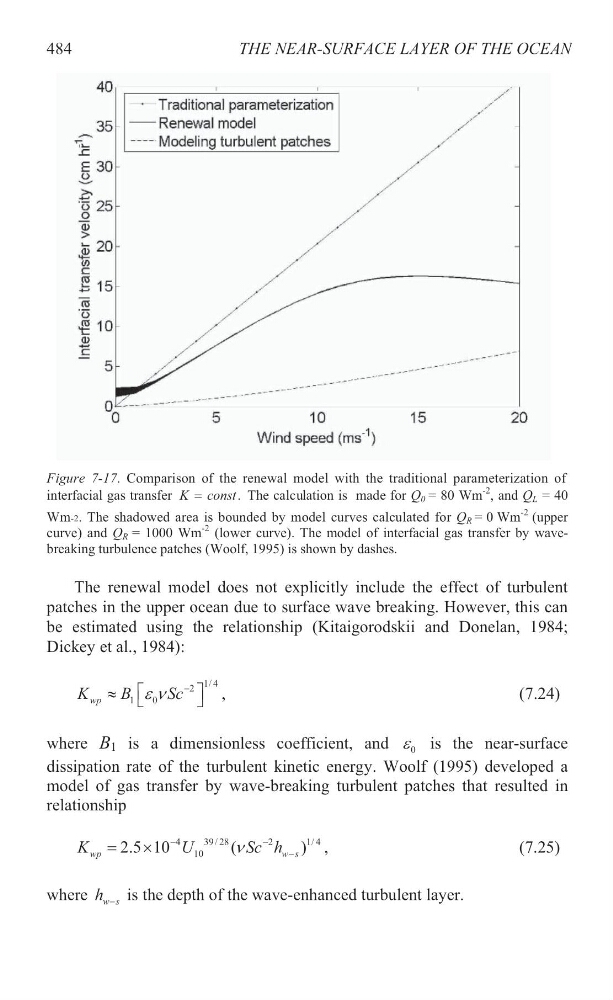
Figure 7-17. Comparison of the renewal model with the traditional parameterization of
interfacial gas transfer K const . The calculation is made for Q 0 = 80 Wm
-2 , and Q L = 40
Wm-2. The shadowed area is bounded by model curves calculated for Q R = 0 Wm
-2 (upper
curve) and Q R = 1000 Wm
-2 (lower curve). The model of interfacial gas transfer by wavebreaking turbulence patches (Woolf, 1995) is shown by dashes.
The renewal model does not explicitly include the effect of turbulent
patches in the upper ocean due to surface wave breaking. However, this can
be estimated using the relationship (Kitaigorodskii and Donelan, 1984;
Dickey et al., 1984):
1/ 4
2
1
0
wp
K
B
Sc
H Q
ª
º
| ¬
¼ ,
(7.24)
where B 1 is a dimensionless coefficient, and 0
H is the near-surface
dissipation rate of the turbulent kinetic energy. Woolf (1995) developed a
model of gas transfer by wave-breaking turbulent patches that resulted in
relationship
4
3 9/2 8
2
1 /4
10
2.5 10
(
)
wp
w s
K
U
S c h
Q
u
,
(7.25)
where w s
h is the depth of the wave-enhanced turbulent layer.
484
Figure 7-17. Comparison of the renewal model with the traditional parameterization of
interfacial gas transfer K const . The calculation is made for Q 0 = 80 Wm
-2 , and Q L = 40
Wm-2. The shadowed area is bounded by model curves calculated for Q R = 0 Wm
-2 (upper
curve) and Q R = 1000 Wm
-2 (lower curve). The model of interfacial gas transfer by wavebreaking turbulence patches (Woolf, 1995) is shown by dashes.
The renewal model does not explicitly include the effect of turbulent
patches in the upper ocean due to surface wave breaking. However, this can
be estimated using the relationship (Kitaigorodskii and Donelan, 1984;
Dickey et al., 1984):
1/ 4
2
1
0
wp
K
B
Sc
H Q
ª
º
| ¬
¼ ,
(7.24)
where B 1 is a dimensionless coefficient, and 0
H is the near-surface
dissipation rate of the turbulent kinetic energy. Woolf (1995) developed a
model of gas transfer by wave-breaking turbulent patches that resulted in
relationship
4
3 9/2 8
2
1 /4
10
2.5 10
(
)
wp
w s
K
U
S c h
Q
u
,
(7.25)
where w s
h is the depth of the wave-enhanced turbulent layer.
484