

presumably formed by splashing or via formation of secondary bubbles of
smaller size that collapse and eject jet drops. According to Leifer et al.
(2000b), in addition to bubble formation through air entrainment by breaking
waves, bursting of initial bubbles can form secondary bubbles. Bubble-burst
bubble production is dispersed and primarily produces bubbles of less than
250 Pm radius. Video or microwave images of whitecaps may not easily
detect these secondary bubbles.
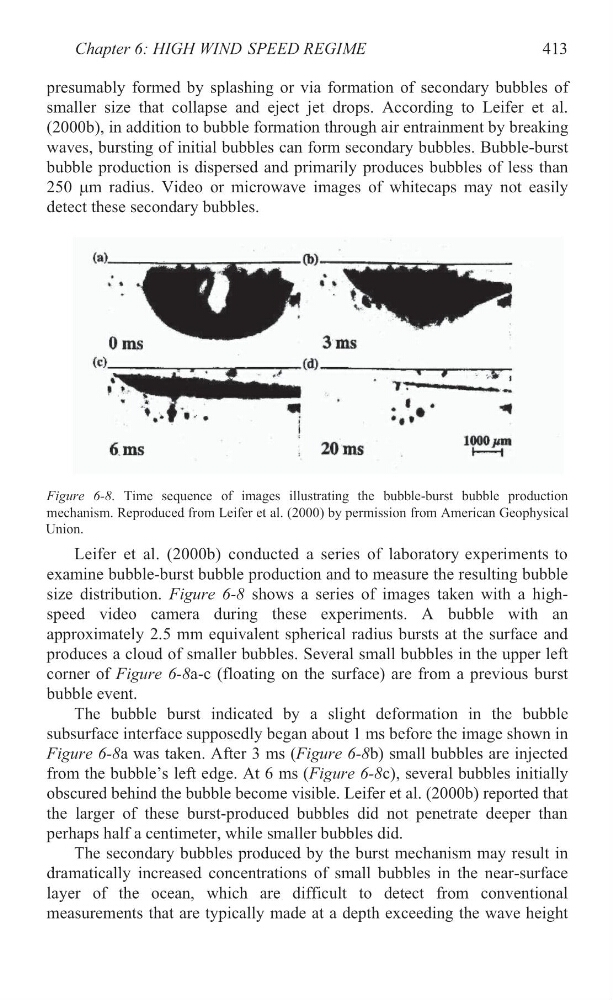
Figure 6-8. Time sequence of images illustrating the bubble-burst bubble production
examine bubble-burst bubble production and to measure the resulting bubble
size distribution. Figure 6-8 shows a series of images taken with a highspeed video camera during these experiments. A bubble with an
approximately 2.5 mm equivalent spherical radius bursts at the surface and
produces a cloud of smaller bubbles. Several small bubbles in the upper left
corner of Figure 6-8a-c (floating on the surface) are from a previous burst
bubble event.
The bubble burst indicated by a slight deformation in the bubble
subsurface interface supposedly began about 1 ms before the image shown in
Figure 6-8a was taken. After 3 ms (Figure 6-8b) small bubbles are injected
from the bubble’s left edge. At 6 ms (Figure 6-8c), several bubbles initially
the larger of these burst-produced bubbles did not penetrate deeper than
perhaps half a centimeter, while smaller bubbles did.
The secondary bubbles produced by the burst mechanism may result in
dramatically increased concentrations of small bubbles in the near-surface
layer of the ocean, which are difficult to detect from conventional
measurements that are typically made at a depth exceeding the wave height
Chapter 6: HIGH WIND SPEED REGIME
413
Leifer et al. (2000b) conducted a series of laboratory experiments to
obscured behind the bubble become visible. Leifer et al. (2000b) reported that
Union.
mechanism. Reproduced from Leifer et al. (2000) by permission from American Geophysical
smaller size that collapse and eject jet drops. According to Leifer et al.
(2000b), in addition to bubble formation through air entrainment by breaking
waves, bursting of initial bubbles can form secondary bubbles. Bubble-burst
bubble production is dispersed and primarily produces bubbles of less than
250 Pm radius. Video or microwave images of whitecaps may not easily
detect these secondary bubbles.
Figure 6-8. Time sequence of images illustrating the bubble-burst bubble production
examine bubble-burst bubble production and to measure the resulting bubble
size distribution. Figure 6-8 shows a series of images taken with a highspeed video camera during these experiments. A bubble with an
approximately 2.5 mm equivalent spherical radius bursts at the surface and
produces a cloud of smaller bubbles. Several small bubbles in the upper left
corner of Figure 6-8a-c (floating on the surface) are from a previous burst
bubble event.
The bubble burst indicated by a slight deformation in the bubble
subsurface interface supposedly began about 1 ms before the image shown in
Figure 6-8a was taken. After 3 ms (Figure 6-8b) small bubbles are injected
from the bubble’s left edge. At 6 ms (Figure 6-8c), several bubbles initially
the larger of these burst-produced bubbles did not penetrate deeper than
perhaps half a centimeter, while smaller bubbles did.
The secondary bubbles produced by the burst mechanism may result in
dramatically increased concentrations of small bubbles in the near-surface
layer of the ocean, which are difficult to detect from conventional
measurements that are typically made at a depth exceeding the wave height
Chapter 6: HIGH WIND SPEED REGIME
413
Leifer et al. (2000b) conducted a series of laboratory experiments to
obscured behind the bubble become visible. Leifer et al. (2000b) reported that
Union.
mechanism. Reproduced from Leifer et al. (2000) by permission from American Geophysical