

Chapter 1: INTRODUCTION
In Figure 1-3, a scatter plot of streamwise covariance stress
measurements is shown together with the COARE bulk-flux algorithm
prediction. Negative values are part of the normal distribution of individual
measurements. Grachev and Fairall (2001) found that at very low winds
there is a tendency for the streamwise component to average to a negative
value; this could be interpreted as the return of momentum to the atmosphere
by waves. Though the COARE 3.0 algorithm incorporates a dependence of
the bulk coefficient on the wave age, the bulk algorithm does not deal with
negative momentum fluxes. This effect represents a difficulty in bulk-flux
parameterizations.
The near-surface temperature gradients due to the cool skin (see Chapter
2) and diurnal warming may have some effect on the bulk-flux
parameterization. The cool skin results in an interface temperature that is
several tenths
o C cooler than the bulk water near the surface. During light
wind and sunny conditions, the upper few meters of the ocean may also
warm by 1-3
o C (see Chapter 4). In order to address these physics, the
COARE algorithm incorporates sub-models that represent the millimeter17
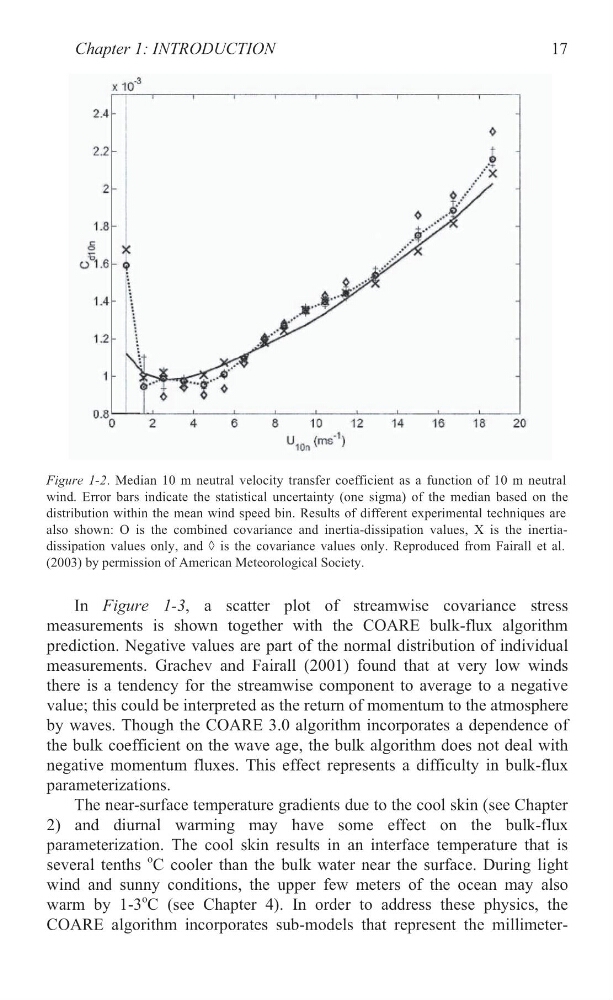
Figure 1-2. Median 10 m neutral velocity transfer coefficient as a function of 10 m neutral
wind. Error bars indicate the statistical uncertainty (one sigma) of the median based on the
distribution within the mean wind speed bin. Results of different experimental techniques are
also shown: O is the combined covariance and inertia-dissipation values, X is the inertiadissipation values only, and ¸ is the covariance values only. Reproduced from Fairall et al.
(2003) by permission of American Meteorological Society.
In Figure 1-3, a scatter plot of streamwise covariance stress
measurements is shown together with the COARE bulk-flux algorithm
prediction. Negative values are part of the normal distribution of individual
measurements. Grachev and Fairall (2001) found that at very low winds
there is a tendency for the streamwise component to average to a negative
value; this could be interpreted as the return of momentum to the atmosphere
by waves. Though the COARE 3.0 algorithm incorporates a dependence of
the bulk coefficient on the wave age, the bulk algorithm does not deal with
negative momentum fluxes. This effect represents a difficulty in bulk-flux
parameterizations.
The near-surface temperature gradients due to the cool skin (see Chapter
2) and diurnal warming may have some effect on the bulk-flux
parameterization. The cool skin results in an interface temperature that is
several tenths
o C cooler than the bulk water near the surface. During light
wind and sunny conditions, the upper few meters of the ocean may also
warm by 1-3
o C (see Chapter 4). In order to address these physics, the
COARE algorithm incorporates sub-models that represent the millimeter17
Figure 1-2. Median 10 m neutral velocity transfer coefficient as a function of 10 m neutral
wind. Error bars indicate the statistical uncertainty (one sigma) of the median based on the
distribution within the mean wind speed bin. Results of different experimental techniques are
also shown: O is the combined covariance and inertia-dissipation values, X is the inertiadissipation values only, and ¸ is the covariance values only. Reproduced from Fairall et al.
(2003) by permission of American Meteorological Society.