

316
DYNAMICAL OCEANOGRAPHY
We can write the streamline as a function φ c (θ) with
φ c (θ)=φ E −
H 2
2 γ 1
α
(1 −
f
f2 ) 2
θ 0 − θ
.
(13.86)
For θ = θ 2 the second term in the right hand side becomes zero and hence
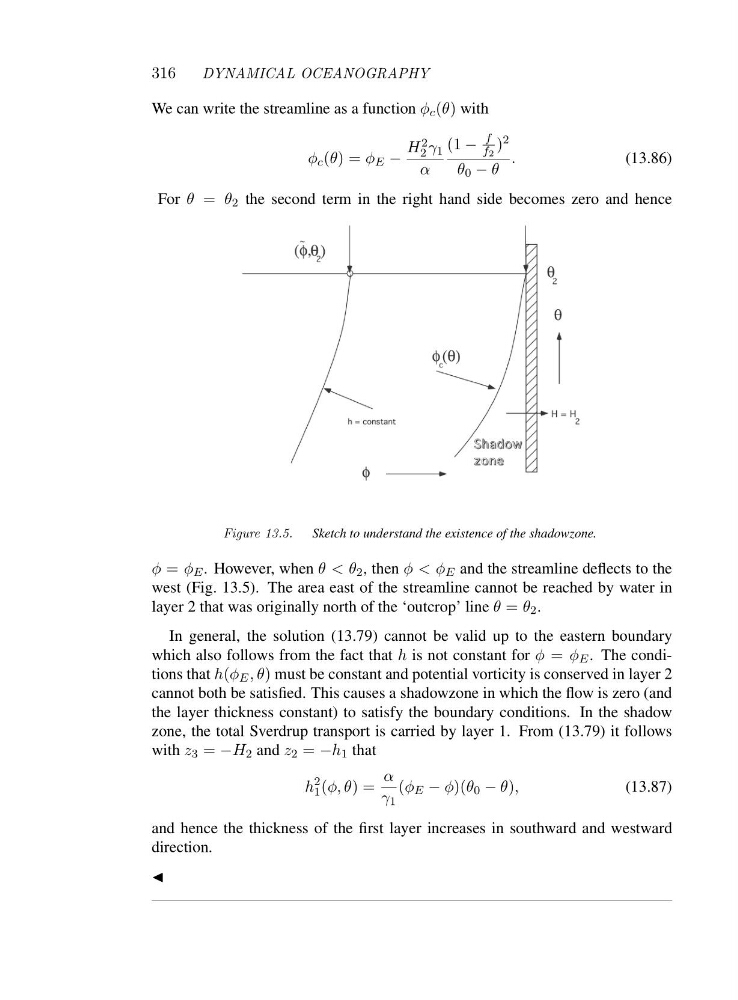
Figure 13.5. Sketch to understand the existence of the shadowzone.
φ = φ E . However, when θ<θ 2 ,thenφ<φ E and the streamline deflects to the
west (Fig. 13.5). The area east of the streamline cannot be reached by water in
layer 2 that was originally north of the ‘outcrop’ line θ = θ 2 .
In general, the solution (13.79) cannot be valid up to the eastern boundary
which also follows from the fact that h is not constant for φ = φ E . The conditions that h(φ E ,θ) must be constant and potential vorticity is conserved in layer 2
cannot both be satisfied. This causes a shadowzone in which the flow is zero (and
the layer thickness constant) to satisfy the boundary conditions. In the shadow
zone, the total Sverdrup transport is carried by layer 1. From (13.79) it follows
with z 3 = −H 2 and z 2 = −h 1 that
h
2
1 (φ, θ)=
α
γ 1
(φ E − φ)(θ 0 − θ),
(13.87)
and hence the thickness of the first layer increases in southward and westward
direction.
◭
DYNAMICAL OCEANOGRAPHY
We can write the streamline as a function φ c (θ) with
φ c (θ)=φ E −
H 2
2 γ 1
α
(1 −
f
f2 ) 2
θ 0 − θ
.
(13.86)
For θ = θ 2 the second term in the right hand side becomes zero and hence
Figure 13.5. Sketch to understand the existence of the shadowzone.
φ = φ E . However, when θ<θ 2 ,thenφ<φ E and the streamline deflects to the
west (Fig. 13.5). The area east of the streamline cannot be reached by water in
layer 2 that was originally north of the ‘outcrop’ line θ = θ 2 .
In general, the solution (13.79) cannot be valid up to the eastern boundary
which also follows from the fact that h is not constant for φ = φ E . The conditions that h(φ E ,θ) must be constant and potential vorticity is conserved in layer 2
cannot both be satisfied. This causes a shadowzone in which the flow is zero (and
the layer thickness constant) to satisfy the boundary conditions. In the shadow
zone, the total Sverdrup transport is carried by layer 1. From (13.79) it follows
with z 3 = −H 2 and z 2 = −h 1 that
h
2
1 (φ, θ)=
α
γ 1
(φ E − φ)(θ 0 − θ),
(13.87)
and hence the thickness of the first layer increases in southward and westward
direction.
◭