

188
DYNAMICAL OCEANOGRAPHY
0
0.1
0.2
0.3
0.4
0.5
0.6
024681 0
- σ σ
σ
σ χ χ
χ
χ / / /
/β β
β
β
1/2
- σ σ
σ
σ χ χ
χ
χ / / /
/β β
β
β
1/2
k χ χ
χ
χ
-1/2
(a)
-1
-0.5
0
0.5
1
1.5
024681 0
k χ χ χ
χ
-1/2
C
gx
C
x
__
(b)
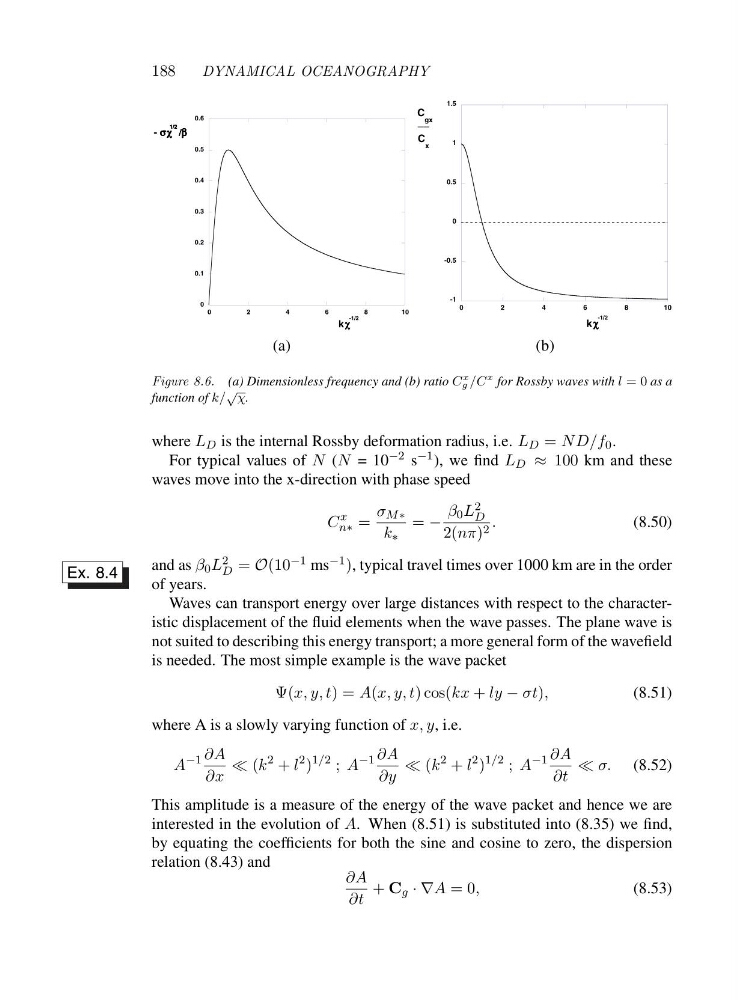
Figure 8.6. (a) Dimensionless frequency and (b) ratio C
x
g /C
x for Rossby waves with l =0as a
function of k/
√ χ.
where L D is the internal Rossby deformation radius, i.e. L D = ND/f 0 .
For typical values of N (N =1 0 −2 s −1 ), we find L D ≈ 100 km and these
waves move into the x-direction with phase speed
C
x
n∗ =
σ M ∗
k ∗
= −
β 0 L 2
D
2(nπ) 2 .
(8.50)
and as β 0 L 2
D = O(10 −1 ms −1 ), typical travel times over 1000 km are in the order
of years.
Ex. 8.4
Waves can transport energy over large distances with respect to the characteristic displacement of the fluid elements when the wave passes. The plane wave is
not suited to describing this energy transport; a more general form of the wavefield
is needed. The most simple example is the wave packet
Ψ(x, y, t)=A(x, y, t) cos(kx + ly − σt),
(8.51)
where A is a slowly varying function of x, y, i.e.
A
−1 ∂A
∂x
≪ (k
2 + l
2 )
1/2 ; A
−1 ∂A
∂y
≪ (k
2 + l
2 )
1/2 ; A
−1 ∂A
∂t
≪ σ. (8.52)
This amplitude is a measure of the energy of the wave packet and hence we are
interested in the evolution of A. When (8.51) is substituted into (8.35) we find,
by equating the coefficients for both the sine and cosine to zero, the dispersion
relation (8.43) and
∂A
∂t
+ C g ·∇A =0,
(8.53)
DYNAMICAL OCEANOGRAPHY
0
0.1
0.2
0.3
0.4
0.5
0.6
024681 0
- σ σ
σ
σ χ χ
χ
χ / / /
/β β
β
β
1/2
- σ σ
σ
σ χ χ
χ
χ / / /
/β β
β
β
1/2
k χ χ
χ
χ
-1/2
(a)
-1
-0.5
0
0.5
1
1.5
024681 0
k χ χ χ
χ
-1/2
C
gx
C
x
__
(b)
Figure 8.6. (a) Dimensionless frequency and (b) ratio C
x
g /C
x for Rossby waves with l =0as a
function of k/
√ χ.
where L D is the internal Rossby deformation radius, i.e. L D = ND/f 0 .
For typical values of N (N =1 0 −2 s −1 ), we find L D ≈ 100 km and these
waves move into the x-direction with phase speed
C
x
n∗ =
σ M ∗
k ∗
= −
β 0 L 2
D
2(nπ) 2 .
(8.50)
and as β 0 L 2
D = O(10 −1 ms −1 ), typical travel times over 1000 km are in the order
of years.
Ex. 8.4
Waves can transport energy over large distances with respect to the characteristic displacement of the fluid elements when the wave passes. The plane wave is
not suited to describing this energy transport; a more general form of the wavefield
is needed. The most simple example is the wave packet
Ψ(x, y, t)=A(x, y, t) cos(kx + ly − σt),
(8.51)
where A is a slowly varying function of x, y, i.e.
A
−1 ∂A
∂x
≪ (k
2 + l
2 )
1/2 ; A
−1 ∂A
∂y
≪ (k
2 + l
2 )
1/2 ; A
−1 ∂A
∂t
≪ σ. (8.52)
This amplitude is a measure of the energy of the wave packet and hence we are
interested in the evolution of A. When (8.51) is substituted into (8.35) we find,
by equating the coefficients for both the sine and cosine to zero, the dispersion
relation (8.43) and
∂A
∂t
+ C g ·∇A =0,
(8.53)