

THE NEAR-SURFACE LAYER OF THE OCEAN
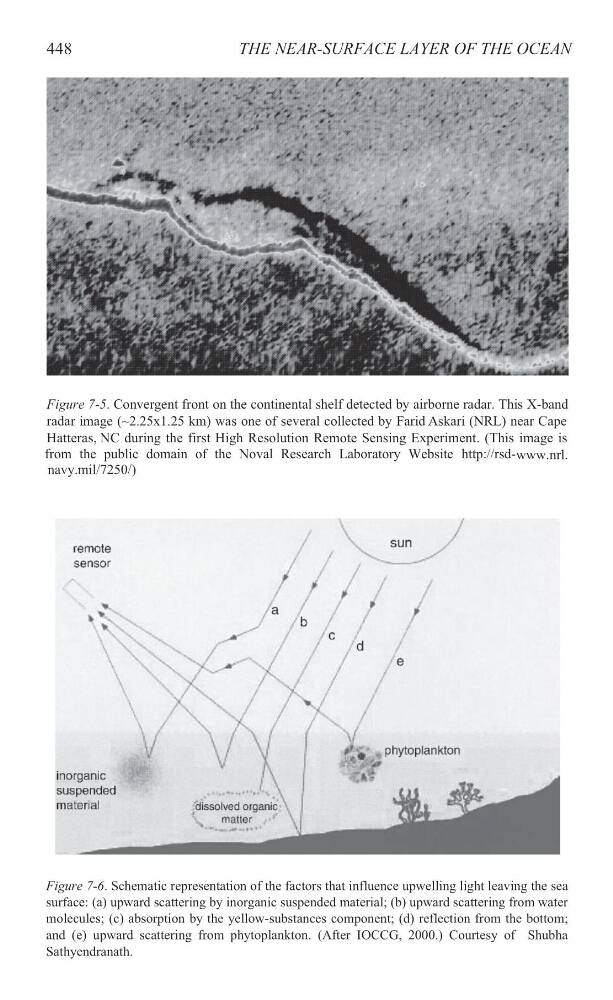
Figure 7-5. Convergent front on the continental shelf detected by airborne radar. This X-band
radar image (~2.25x1.25 km) was one of several collected by Farid Askari (NRL) near Cape
www.nrl.
navy.mil/7250/)
448
Hatteras, NC during the first High Resolution Remote Sensing Experiment. (This image is
from the public domain of the Noval Research Laboratory Website http://rsdFigure 7-6. Schematic representation of the factors that influence upwelling light leaving the sea
surface: (a) upward scattering by inorganic suspended material; (b) upward scattering from water
molecules; (c) absorption by the yellow-substances component; (d) reflection from the bottom;
and (e) upward scattering from phytoplankton. (After IOCCG, 2000.) Courtesy of Shubha
Sathyendranath.
Figure 7-5. Convergent front on the continental shelf detected by airborne radar. This X-band
radar image (~2.25x1.25 km) was one of several collected by Farid Askari (NRL) near Cape
www.nrl.
navy.mil/7250/)
448
Hatteras, NC during the first High Resolution Remote Sensing Experiment. (This image is
from the public domain of the Noval Research Laboratory Website http://rsdFigure 7-6. Schematic representation of the factors that influence upwelling light leaving the sea
surface: (a) upward scattering by inorganic suspended material; (b) upward scattering from water
molecules; (c) absorption by the yellow-substances component; (d) reflection from the bottom;
and (e) upward scattering from phytoplankton. (After IOCCG, 2000.) Courtesy of Shubha
Sathyendranath.