

THE NEAR-SURFACE LAYER OF THE OCEAN
The formation of a periodic Stokes drift pattern, which is basic to the CL
1 theory, requires a given wave pattern to be phase-locked for several wave
periods. Moreover, the formation of a well-developed circulation by the CL1
mechanism seems to require that the Stokes drift pattern remain fixed for
times of the order of hundreds of wave periods. Phase locking for times as
long as this is not expected in a wind-generated sea; it has, however, been
achieved in the laboratory (Faller and Caponi, 1978).
Craik (1977) and Leibovich (1977b) proposed another mechanism for
Langmuir circulations, which does not require the presence of a coherent
surface-wave pattern. It is known in the literature as the CL2 mechanism.
The linear stability of a unidirectional sheared current in the presence of a
parallel, spanwise uniform Stokes drift is the basis of the CL2 mechanism.
378
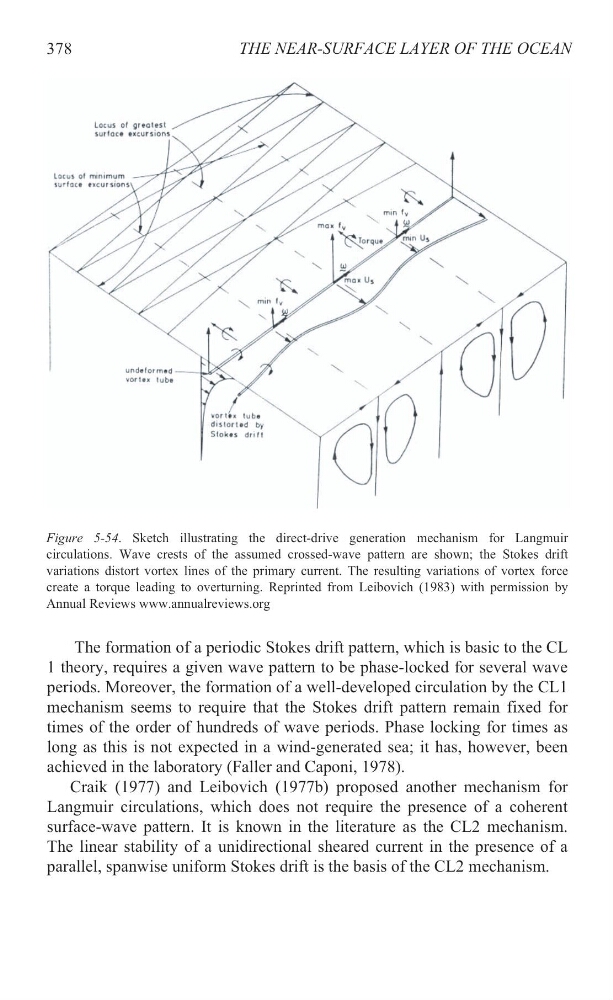
Figure 5-54. Sketch illustrating the direct-drive generation mechanism for Langmuir
circulations. Wave crests of the assumed crossed-wave pattern are shown; the Stokes drift
variations distort vortex lines of the primary current. The resulting variations of vortex force
create a torque leading to overturning. Reprinted from Leibovich (1983) with permission by
Annual Reviews www.annualreviews.org
The formation of a periodic Stokes drift pattern, which is basic to the CL
1 theory, requires a given wave pattern to be phase-locked for several wave
periods. Moreover, the formation of a well-developed circulation by the CL1
mechanism seems to require that the Stokes drift pattern remain fixed for
times of the order of hundreds of wave periods. Phase locking for times as
long as this is not expected in a wind-generated sea; it has, however, been
achieved in the laboratory (Faller and Caponi, 1978).
Craik (1977) and Leibovich (1977b) proposed another mechanism for
Langmuir circulations, which does not require the presence of a coherent
surface-wave pattern. It is known in the literature as the CL2 mechanism.
The linear stability of a unidirectional sheared current in the presence of a
parallel, spanwise uniform Stokes drift is the basis of the CL2 mechanism.
378
Figure 5-54. Sketch illustrating the direct-drive generation mechanism for Langmuir
circulations. Wave crests of the assumed crossed-wave pattern are shown; the Stokes drift
variations distort vortex lines of the primary current. The resulting variations of vortex force
create a torque leading to overturning. Reprinted from Leibovich (1983) with permission by
Annual Reviews www.annualreviews.org