

THE NEAR-SURFACE LAYER OF THE OCEAN
The ability to detect an interface depends on the ratio of the maximum
gradient within the interface to the level of background fluctuations.
Background fluctuations depend strongly on environmental conditions such
328
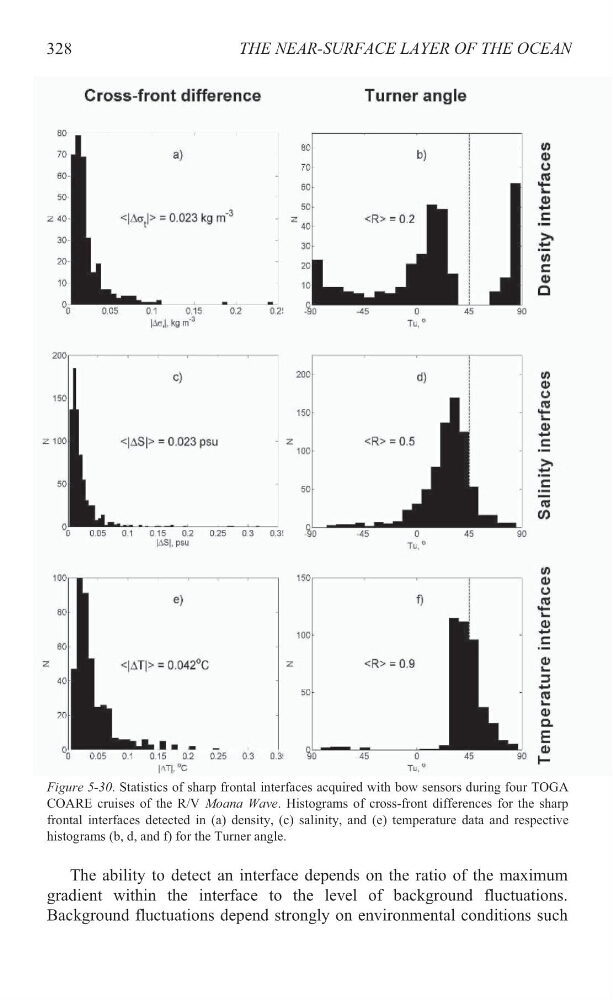
Figure 5-30. Statistics of sharp frontal interfaces acquired with bow sensors during four TOGA
COARE cruises of the R/V Moana Wave. Histograms of cross-front differences for the sharp
frontal interfaces detected in (a) density, (c) salinity, and (e) temperature data and respective
histograms (b, d, and f) for the Turner angle.
The ability to detect an interface depends on the ratio of the maximum
gradient within the interface to the level of background fluctuations.
Background fluctuations depend strongly on environmental conditions such
328
Figure 5-30. Statistics of sharp frontal interfaces acquired with bow sensors during four TOGA
COARE cruises of the R/V Moana Wave. Histograms of cross-front differences for the sharp
frontal interfaces detected in (a) density, (c) salinity, and (e) temperature data and respective
histograms (b, d, and f) for the Turner angle.