

Chapter 1: INTRODUCTION
equations and air-sea interaction processes. The organization of the material
in the rest of Chapter 1 is as follows:
Section 1.2 formulates the equations of fluid dynamics that govern the
ocean-atmosphere boundary layers. Most of the equations for the nearsurface ocean and the calculated results in this book are derived from these
basic equations. Surface heat, momentum, and freshwater fluxes provide
boundary conditions for equations formulated in Section 1.2. These surface
boundary conditions are discussed in Section 1.3.
Section 1.4 considers solar radiation and its absorption in the near-surface
layer of the ocean. The solar energy is the major forcing factor in the oceanatmosphere system. For the upper few meters of the ocean, it should be
treated as a body (volume) source of thermal energy. Formally, this term
does not enter the surface boundary condition for heat flux. The rain
contribution to the surface and volume heat fluxes is considered in Section
1.5.
Surface waves are the most important process distinguishing the nearsurface layer of the ocean from its deeper layers. In Section 1.6, the elements
3
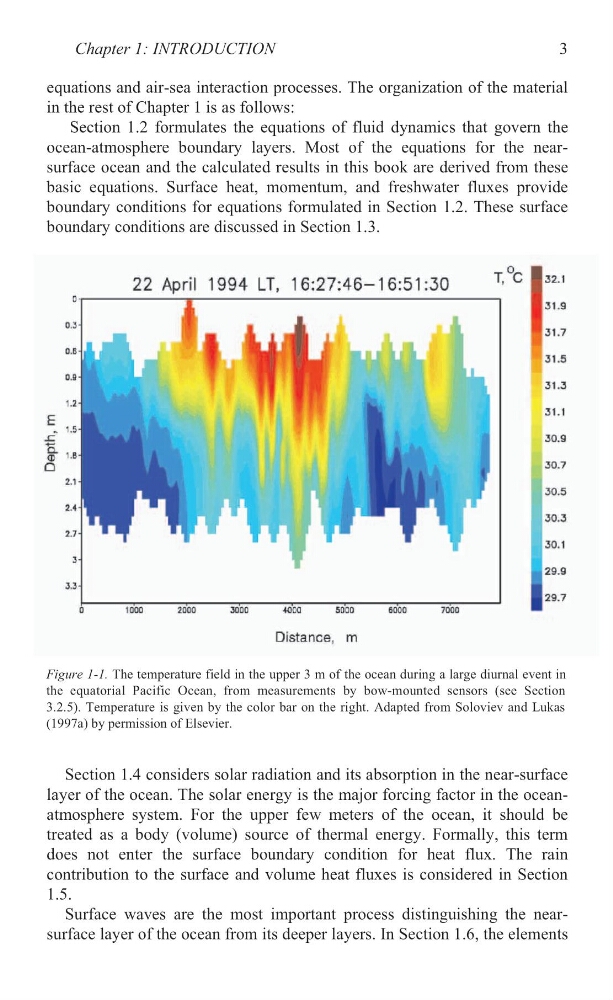
Figure 1-1. The temperature field in the upper 3 m of the ocean during a large diurnal event in
the equatorial Pacific Ocean, from measurements by bow-mounted sensors (see Section
3.2.5). Temperature is given by the color bar on the right. Adapted from Soloviev and Lukas
(1997a) by permission of Elsevier.
equations and air-sea interaction processes. The organization of the material
in the rest of Chapter 1 is as follows:
Section 1.2 formulates the equations of fluid dynamics that govern the
ocean-atmosphere boundary layers. Most of the equations for the nearsurface ocean and the calculated results in this book are derived from these
basic equations. Surface heat, momentum, and freshwater fluxes provide
boundary conditions for equations formulated in Section 1.2. These surface
boundary conditions are discussed in Section 1.3.
Section 1.4 considers solar radiation and its absorption in the near-surface
layer of the ocean. The solar energy is the major forcing factor in the oceanatmosphere system. For the upper few meters of the ocean, it should be
treated as a body (volume) source of thermal energy. Formally, this term
does not enter the surface boundary condition for heat flux. The rain
contribution to the surface and volume heat fluxes is considered in Section
1.5.
Surface waves are the most important process distinguishing the nearsurface layer of the ocean from its deeper layers. In Section 1.6, the elements
3
Figure 1-1. The temperature field in the upper 3 m of the ocean during a large diurnal event in
the equatorial Pacific Ocean, from measurements by bow-mounted sensors (see Section
3.2.5). Temperature is given by the color bar on the right. Adapted from Soloviev and Lukas
(1997a) by permission of Elsevier.