

Chapter 2: SEA SURFACE MICROLAYER
The overall agreement of the cool skin parameterization including rain is
slightly better when compared to the results presented in Figure 2-19. While
the RMS error remains unchanged (0.17
o C), the small bias of 0.03
o C to
0.02
o C found earlier (Table 2-2) has now vanished completely. This is also
true for the night and daytime data considered separately. In view of the skin
measurement errors and the relatively small amount of data (total sample
size of hourly means is 578), the result of this comparison is rather an
indication that the inclusion of the rain parameterization in the surface
renewal model is useful.
Paulson and Lagerloef (1993) performed a pilot study of the near-surface
salinity under rainy conditions in the tropical Pacific Ocean near 156
o E and
between 2
o S and 5
o N. From the R/V Wecoma during COARE leg 2, they
collected surface water from the upper 2 to 3 cm of the ocean with a scoop
and hose. The temperature and salinity of the water was measured with a
thermosalinograph. The salinity measurements were accompanied by
detailed measurements of surface meteorological parameters including
139
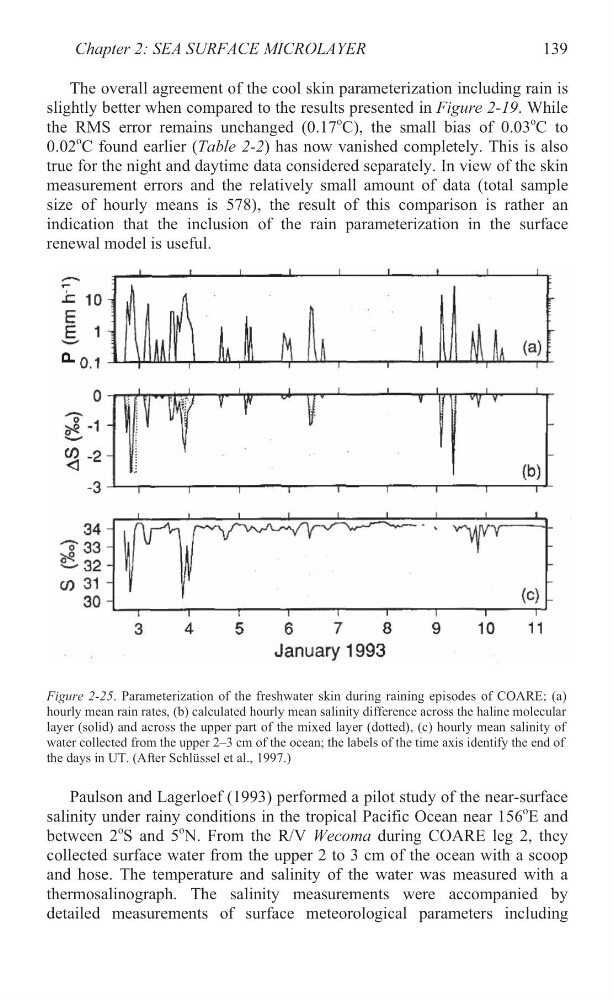
Figure 2-25. Parameterization of the freshwater skin during raining episodes of COARE; (a)
hourly mean rain rates, (b) calculated hourly mean salinity difference across the haline molecular
layer (solid) and across the upper part of the mixed layer (dotted), (c) hourly mean salinity of
water collected from the upper 2–3 cm of the ocean; the labels of the time axis identify the end of
the days in UT. (After Schl ssel et al., 1997.)
ü
P
The overall agreement of the cool skin parameterization including rain is
slightly better when compared to the results presented in Figure 2-19. While
the RMS error remains unchanged (0.17
o C), the small bias of 0.03
o C to
0.02
o C found earlier (Table 2-2) has now vanished completely. This is also
true for the night and daytime data considered separately. In view of the skin
measurement errors and the relatively small amount of data (total sample
size of hourly means is 578), the result of this comparison is rather an
indication that the inclusion of the rain parameterization in the surface
renewal model is useful.
Paulson and Lagerloef (1993) performed a pilot study of the near-surface
salinity under rainy conditions in the tropical Pacific Ocean near 156
o E and
between 2
o S and 5
o N. From the R/V Wecoma during COARE leg 2, they
collected surface water from the upper 2 to 3 cm of the ocean with a scoop
and hose. The temperature and salinity of the water was measured with a
thermosalinograph. The salinity measurements were accompanied by
detailed measurements of surface meteorological parameters including
139
Figure 2-25. Parameterization of the freshwater skin during raining episodes of COARE; (a)
hourly mean rain rates, (b) calculated hourly mean salinity difference across the haline molecular
layer (solid) and across the upper part of the mixed layer (dotted), (c) hourly mean salinity of
water collected from the upper 2–3 cm of the ocean; the labels of the time axis identify the end of
the days in UT. (After Schl ssel et al., 1997.)
ü
P