

414 John Woods
EulerianD
Parameten
tuned toD
Lagrangian
V.P.E.
Parametrization
Adjust Eulerian
Biological Parameters
to minimize differences
Optimization
Eulerian simulation
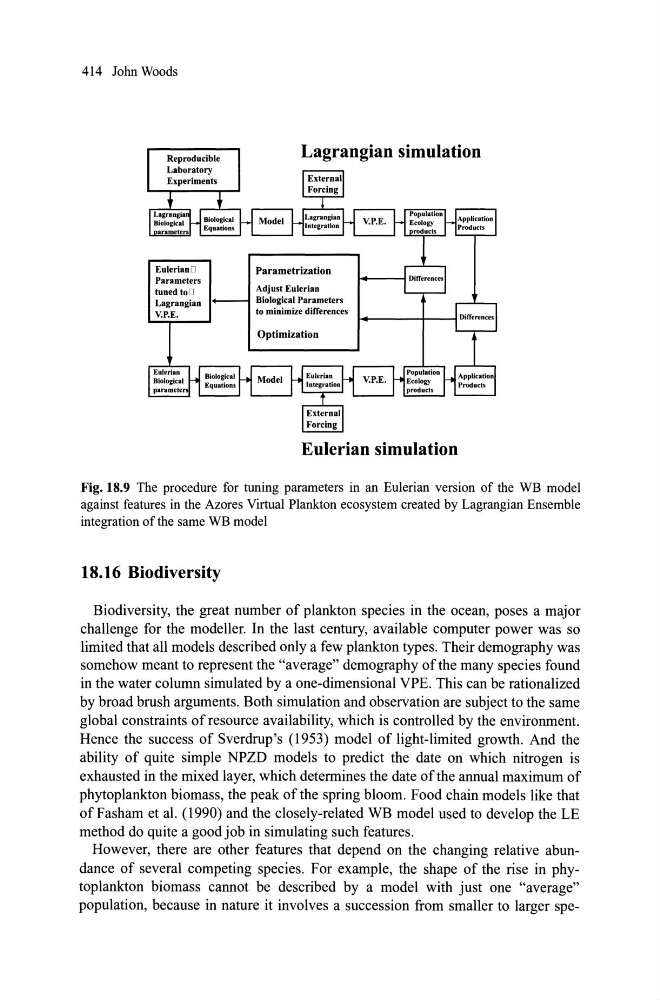
Fig. 18.9 The procedure for tuning parameters in an Eulerian version of the WB model
against features in the Azores Virtual Plankton ecosystem created by Lagrangian Ensemble
integration of the same WB model
18.16 Biodiversity
Biodiversity, the great number of plankton species in the ocean, poses a major
challenge for the modelIer. In the last century, available computer power was so
limited that alI models described only a few plankton types. Their demography was
somehow meant to represent the "average" demography of the many species found
in the water column simulated by a one-dimensional VPE. This can be rationalized
by broad brush arguments. Both simulation and observation are subject to the same
global constraints of resource availability, which is controlled by the environment.
Hence the success of Sverdrup's (1953) model of light-limited growth. And the
ability of quite simple NPZD models to predict the date on which nitrogen is
exhausted in the mixed layer, which determines the date of the annual maximum of
phytoplankton biomass, the peak ofthe spring bloom. Food chain models like that
of Fasham et al. (1990) and the closely-related WB model used to develop the LE
method do quite a good job in simulating such features.
However, there are other features that depend on the changing relative abundance of several competing species. For example, the shape of the rise in phytoplankton biomass cannot be described by a model with just one "average"
population, because in nature it involves a succession from smaller to larger spe-
EulerianD
Parameten
tuned toD
Lagrangian
V.P.E.
Parametrization
Adjust Eulerian
Biological Parameters
to minimize differences
Optimization
Eulerian simulation
Fig. 18.9 The procedure for tuning parameters in an Eulerian version of the WB model
against features in the Azores Virtual Plankton ecosystem created by Lagrangian Ensemble
integration of the same WB model
18.16 Biodiversity
Biodiversity, the great number of plankton species in the ocean, poses a major
challenge for the modelIer. In the last century, available computer power was so
limited that alI models described only a few plankton types. Their demography was
somehow meant to represent the "average" demography of the many species found
in the water column simulated by a one-dimensional VPE. This can be rationalized
by broad brush arguments. Both simulation and observation are subject to the same
global constraints of resource availability, which is controlled by the environment.
Hence the success of Sverdrup's (1953) model of light-limited growth. And the
ability of quite simple NPZD models to predict the date on which nitrogen is
exhausted in the mixed layer, which determines the date of the annual maximum of
phytoplankton biomass, the peak ofthe spring bloom. Food chain models like that
of Fasham et al. (1990) and the closely-related WB model used to develop the LE
method do quite a good job in simulating such features.
However, there are other features that depend on the changing relative abundance of several competing species. For example, the shape of the rise in phytoplankton biomass cannot be described by a model with just one "average"
population, because in nature it involves a succession from smaller to larger spe-