

348 Nadia Pinardi et al.
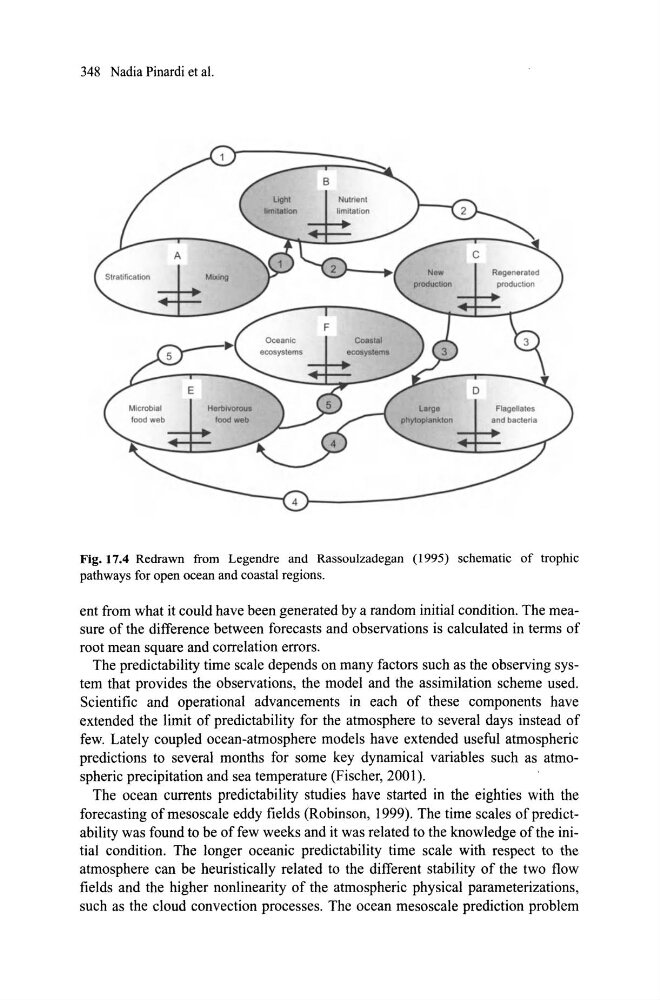
Fig. 17.4 Redrawn from Legendre and Rassoulzadegan (1995) schematic of trophic
pathways for open ocean and coastal regions.
ent from what it could have been generated by a random initial condition. The measure of the difference between forecasts and observations is calculated in terms of
root mean square and correlation errors.
The predictability time scale depends on many factors such as the observing system that provides the observations, the model and the assimilation scheme used.
Scientific and operational advancements in each of these components have
extended the limit of predictability for the atmosphere to several days instead of
few. Lately coupled ocean-atmosphere models have extended useful atmospheric
predictions to several months for some key dynamical variables such as atmospheric precipitation and sea temperature (Fischer, 2001).
The ocean currents predictability studies have started in the eighties with the
forecasting of mesoscale eddy fields (Robinson, 1999). The time scales of predictability was found to be of few weeks and it was related to the knowledge of the initial condition. The longer oceanic predictability time scale with respect to the
atmosphere can be heuristically related to the different stability of the two flow
fields and the higher nonlinearity of the atmospheric physical parameterizations,
such as the cJoud convection processes. The ocean mesoscale prediction problem
Fig. 17.4 Redrawn from Legendre and Rassoulzadegan (1995) schematic of trophic
pathways for open ocean and coastal regions.
ent from what it could have been generated by a random initial condition. The measure of the difference between forecasts and observations is calculated in terms of
root mean square and correlation errors.
The predictability time scale depends on many factors such as the observing system that provides the observations, the model and the assimilation scheme used.
Scientific and operational advancements in each of these components have
extended the limit of predictability for the atmosphere to several days instead of
few. Lately coupled ocean-atmosphere models have extended useful atmospheric
predictions to several months for some key dynamical variables such as atmospheric precipitation and sea temperature (Fischer, 2001).
The ocean currents predictability studies have started in the eighties with the
forecasting of mesoscale eddy fields (Robinson, 1999). The time scales of predictability was found to be of few weeks and it was related to the knowledge of the initial condition. The longer oceanic predictability time scale with respect to the
atmosphere can be heuristically related to the different stability of the two flow
fields and the higher nonlinearity of the atmospheric physical parameterizations,
such as the cJoud convection processes. The ocean mesoscale prediction problem