

Toward Marine Environrnental Predictions in the Mediterranean Sea Coastal Areas
341
",""
-
JODO
....
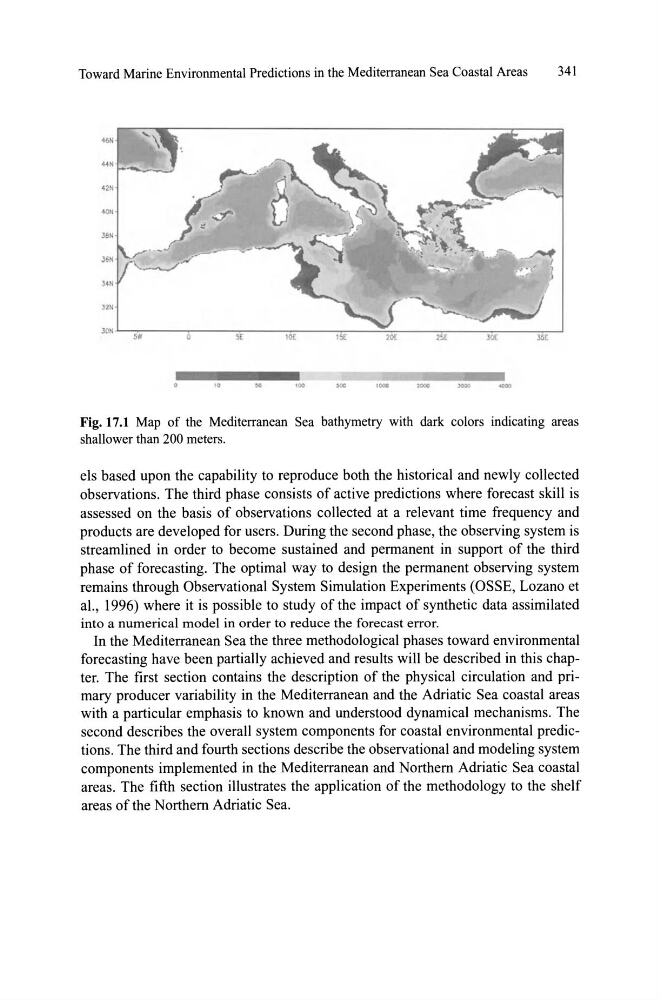
Fig. 17.1 Map of the Mediterranean Sea bathymetry with dark colors indicating areas
shallower than 200 meters.
els based upon the capability to reproduce both the historical and newly collected
observations. The third phase consists of active predictions where forecast skill is
assessed on the basis of observations collected at a relevant time frequency and
products are developed for users. During the second phase, the observing system is
streamlined in order to become sustained and permanent in support of the third
phase of forecasting. The optimal way to design the permanent observ ing system
remains through Observational System Simulation Experiments (OSSE, Lozano et
al., 1996) where it is possible to study of the impact of synthetic data assimilated
into a numerical model in order to reduce the forecast eITor.
In the MediteITanean Sea the three methodological phases toward environmental
forecasting have been partially achieved and results will be described in this chapter. The first section contains the description of the physical circulation and primary producer variability in the Mediterranean and the Adriatic Sea coastal areas
with a particular emphasis to known and understood dynamical mechanisms. The
second describes the overall system components for coastal environmental predictions. The third and fourth sections describe the observational and modeling system
components implemented in the Mediterranean and Northem Adriatic Sea coastal
areas. The fifth section illustrates the application of the methodology to the shelf
areas ofthe Northem Adriatic Sea.
341
",""
-
JODO
....
Fig. 17.1 Map of the Mediterranean Sea bathymetry with dark colors indicating areas
shallower than 200 meters.
els based upon the capability to reproduce both the historical and newly collected
observations. The third phase consists of active predictions where forecast skill is
assessed on the basis of observations collected at a relevant time frequency and
products are developed for users. During the second phase, the observing system is
streamlined in order to become sustained and permanent in support of the third
phase of forecasting. The optimal way to design the permanent observ ing system
remains through Observational System Simulation Experiments (OSSE, Lozano et
al., 1996) where it is possible to study of the impact of synthetic data assimilated
into a numerical model in order to reduce the forecast eITor.
In the MediteITanean Sea the three methodological phases toward environmental
forecasting have been partially achieved and results will be described in this chapter. The first section contains the description of the physical circulation and primary producer variability in the Mediterranean and the Adriatic Sea coastal areas
with a particular emphasis to known and understood dynamical mechanisms. The
second describes the overall system components for coastal environmental predictions. The third and fourth sections describe the observational and modeling system
components implemented in the Mediterranean and Northem Adriatic Sea coastal
areas. The fifth section illustrates the application of the methodology to the shelf
areas ofthe Northem Adriatic Sea.