

Forecasting Wind-driven Ocean Waves
WAVE_G FORECAST VERIFICATION 12Z
HEIGHT OF WAVES SURFACE LEVEL
ANOMALY CORRELATION
FORECAST
N.HEM LAT 20.000 TO 90.000 LON ·180.000 TO 180.000
T+ 24
T+72
T+12O
T+l88
T+24O
'OOT%~---------------------------------------------' ____ --.. __ . ___ . ____ . _______ -. ~--4 ---.--- .---.---~ - ..
110 .---.------.----.----.• - •. --.•• - •. - .•. - .•.•. - •. --.•. --.--------.-.----.----.--.-----------.--80 - - - - - - - - - - -
70 .---.----.-------.. --------.• ------------.-----.-----.. ---.------.---...
, ....... -. ... _--......,..
eo .-.-MM---·--.::.:. ~'--7·""""_t1r.-·---·-··--·-·----·----·-·-;rI""""\!.~':::·:~~~---.., ....... ;;,;;,.
, . . / ................ -. ................. _." "
:::;;;;::;=--- -....;--_._-279
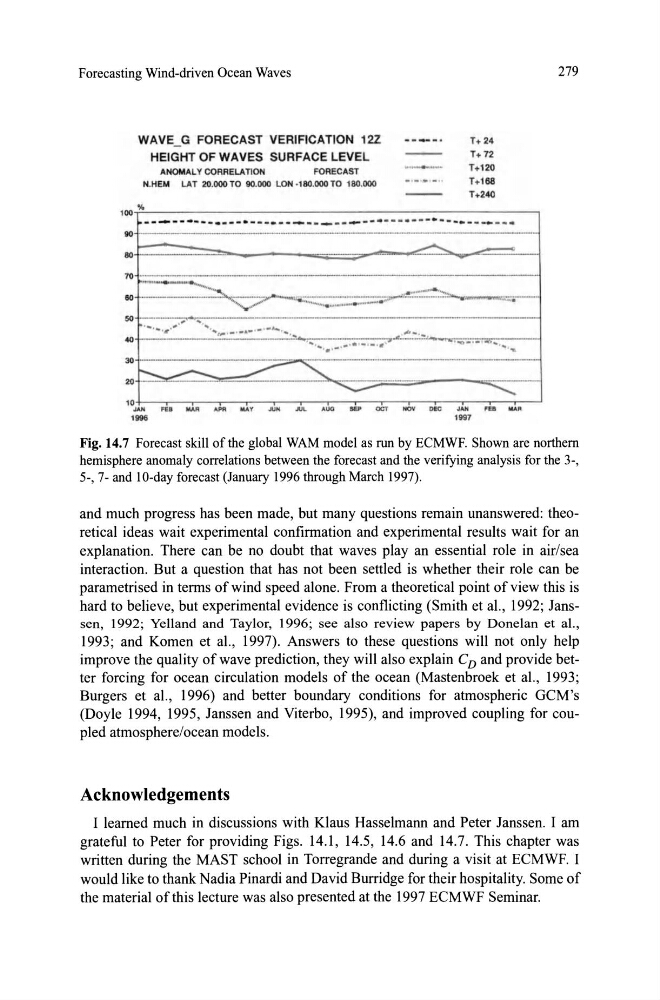
Fig. 14.7 Forecast skill ofthe global WAM model as run by ECMWF. Shown are northem
hemisphere anomaly correlations between the forecast and the verifying analysis for the 3-,
5-,7- and lO-day forecast (January 1996 through March 1997).
and much progress has been made, but many questions remain unanswered: theoreti cal ideas wait experimental confirmation and experimental results wait for an
explanation. There can be no doubt that waves play an essential role in air/sea
interaction. But a question that has not been settled is whether their role can be
parametri sed in terms of wind speed alone. From a theoretical point of view this is
hard to believe, but experimental evidence is conflicting (Smith et al., 1992; Janssen, 1992; Yelland and Taylor, 1996; see also review papers by Donelan et al.,
1993; and Komen et al., 1997). Answers to these questions will not only help
improve the quality ofwave prediction, they wiU also explain C D and provide better forcing for ocean circulation models of the ocean (Mastenbroek et al., 1993;
Burgers et al., 1996) and better boundary conditions for atmospheric GCM 's
(Doyle 1994, 1995, Janssen and Viterbo, 1995), and improved coupling for coupled atmosphere/ocean models.
Acknowledgements
1 leamed much in discussions with Klaus Hasselmann and Peter Janssen. 1 am
grateful to Peter for providing Figs. 14.1 , 14.5, 14.6 and 14.7. This chapter was
written during the MAST school in Torregrande and during a visit at ECMWF. 1
would like to thank Nadia Pinardi and David Burridge for their hospitality. Some of
the material of this lecture was also presented at the 1997 ECMWF Seminar.
WAVE_G FORECAST VERIFICATION 12Z
HEIGHT OF WAVES SURFACE LEVEL
ANOMALY CORRELATION
FORECAST
N.HEM LAT 20.000 TO 90.000 LON ·180.000 TO 180.000
T+ 24
T+72
T+12O
T+l88
T+24O
'OOT%~---------------------------------------------' ____ --.. __ . ___ . ____ . _______ -. ~--4 ---.--- .---.---~ - ..
110 .---.------.----.----.• - •. --.•• - •. - .•. - .•.•. - •. --.•. --.--------.-.----.----.--.-----------.--80 - - - - - - - - - - -
70 .---.----.-------.. --------.• ------------.-----.-----.. ---.------.---...
, ....... -. ... _--......,..
eo .-.-MM---·--.::.:. ~'--7·""""_t1r.-·---·-··--·-·----·----·-·-;rI""""\!.~':::·:~~~---.., ....... ;;,;;,.
, . . / ................ -. ................. _." "
:::;;;;::;=--- -....;--_._-279
Fig. 14.7 Forecast skill ofthe global WAM model as run by ECMWF. Shown are northem
hemisphere anomaly correlations between the forecast and the verifying analysis for the 3-,
5-,7- and lO-day forecast (January 1996 through March 1997).
and much progress has been made, but many questions remain unanswered: theoreti cal ideas wait experimental confirmation and experimental results wait for an
explanation. There can be no doubt that waves play an essential role in air/sea
interaction. But a question that has not been settled is whether their role can be
parametri sed in terms of wind speed alone. From a theoretical point of view this is
hard to believe, but experimental evidence is conflicting (Smith et al., 1992; Janssen, 1992; Yelland and Taylor, 1996; see also review papers by Donelan et al.,
1993; and Komen et al., 1997). Answers to these questions will not only help
improve the quality ofwave prediction, they wiU also explain C D and provide better forcing for ocean circulation models of the ocean (Mastenbroek et al., 1993;
Burgers et al., 1996) and better boundary conditions for atmospheric GCM 's
(Doyle 1994, 1995, Janssen and Viterbo, 1995), and improved coupling for coupled atmosphere/ocean models.
Acknowledgements
1 leamed much in discussions with Klaus Hasselmann and Peter Janssen. 1 am
grateful to Peter for providing Figs. 14.1 , 14.5, 14.6 and 14.7. This chapter was
written during the MAST school in Torregrande and during a visit at ECMWF. 1
would like to thank Nadia Pinardi and David Burridge for their hospitality. Some of
the material of this lecture was also presented at the 1997 ECMWF Seminar.